
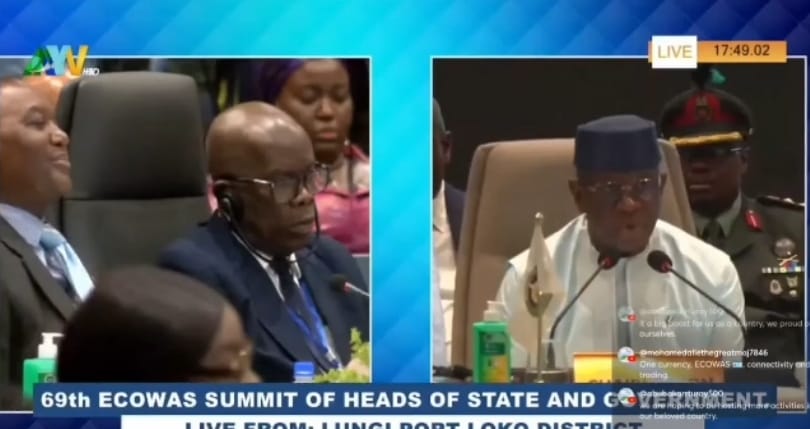
The signing, on July 19, 2026 in Freetown, of the Intergovernmental Agreement (IGA) on the Africa-Atlantic Gas Pipeline has put the spotlight back on one of the continent’s most ambitious infrastructure projects.
The project was not born of an isolated technocratic initiative: its roots trace back to a vision shared as early as 2016 by His Majesty King Mohammed VI and the late former Nigerian President Muhammadu Buhari, during a historic royal visit.
President Bola Ahmed Tinubu has since carried that torch forward.
On the ground, the National Office of Hydrocarbons and Mines (ONHYM) and the Nigerian National Petroleum Company Limited (NNPC Ltd.) are jointly developing the project, under the personal oversight of the Moroccan Sovereign, for whom this dossier is central to his vision of an integrated, energy-sovereign Africa.
Despite its solemn character, the Freetown ceremony is not the project’s endpoint.
It forms part of a sequence internal to ECOWAS, allowing member states to formally, legally, join the project’s framework.
Morocco, not a member of the organization, took part as the pipeline’s sponsor — Freetown marks ECOWAS’s accession, but above all, it sets the stage for the next sequence, planned in Morocco this fall.
That upcoming ceremony, considered the most emblematic of the process, will see the solemn signing, on Moroccan soil, of the agreement establishing the pipeline’s management company, headquartered in the Kingdom — the pivotal moment when the project shifts into its operational phase.
Three heads of state are expected: His Majesty King Mohammed VI, President Tinubu, and the President of Mauritania.
Understanding this project is impossible without examining the bilateral relationship underpinning it: a partnership built over time, grounded in mutual trust and a shared vision of African integration, extending well beyond energy matters to economic, political, and security concerns.
ONHYM-NNPC coordination is cited as a model of South-South cooperation, proof that established trust between Rabat and Abuja allows the project to advance steadily, step by step.
Beyond the infrastructure, its promoters see it as a corridor of integration and a lever for energy sovereignty, set to strengthen regional energy security, support industrialization, create jobs, and open new markets toward Europe.
The project fits within the King’s Atlantic vision, which positions the Atlantic as a space connecting Africa, Europe, and the Americas — a highway of energy and development for a West Africa that is integrated and forward-looking.