

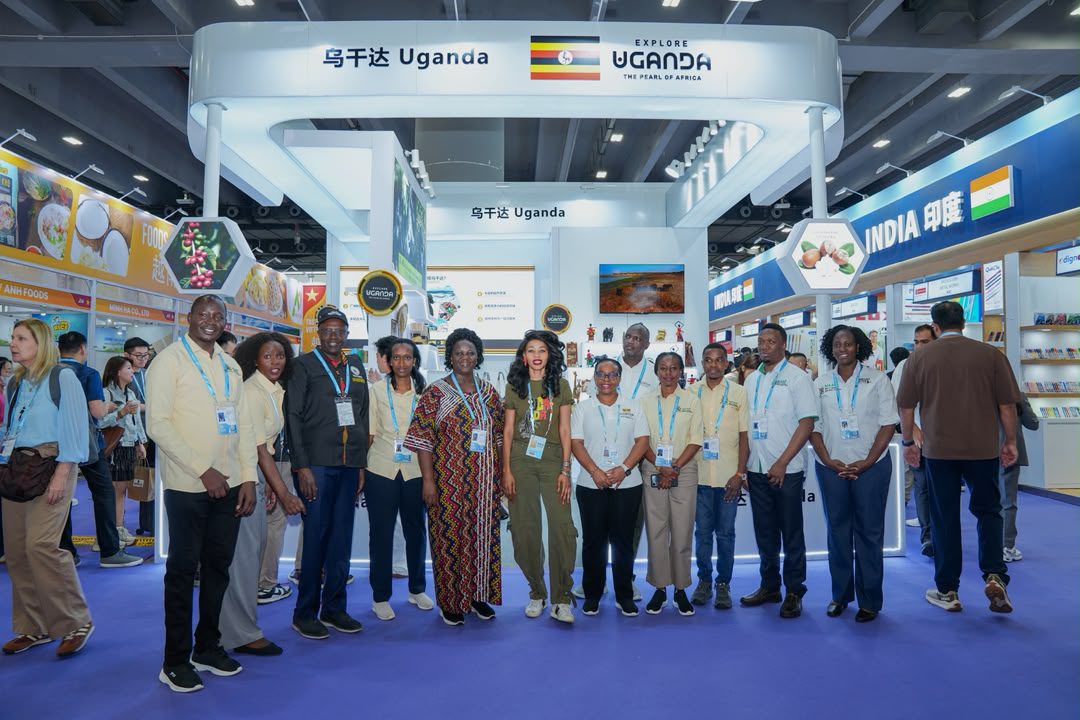
Uganda participated in the Third Phase of the 140th China Import and Export Fair, also known as the Canton Fair, held from 31 October to 4 November 2026 in Guangzhou city, China, as part of ongoing efforts to promote Ugandan exports, expand market access and strengthen trade relations with China.
Uganda’s participation was spearheaded by the Consulate General of the Republic of Uganda in Guangzhou, led by Amb. Judyth Nsababera, in collaboration with the Embassy of Uganda in Beijing, and support from the Ministry of Foreign Affairs and the Ministry of Agriculture, Animal Industry and Fisheries (MAAIF).
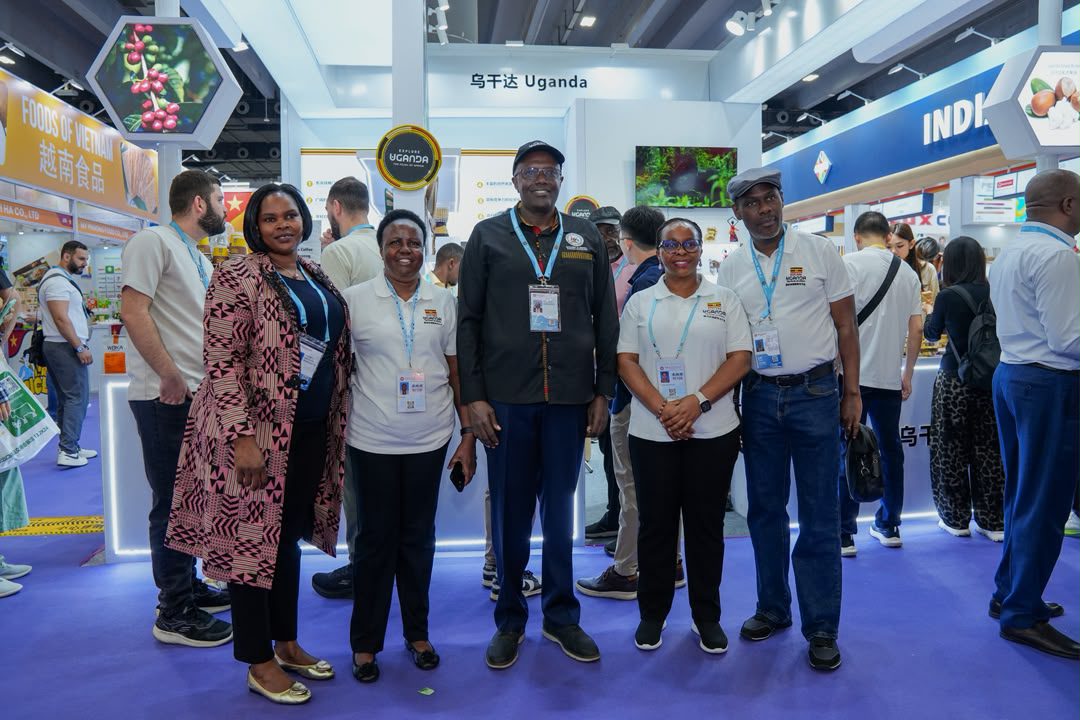
The Ministry of Foreign Affairs delegation was headed by Amb. Richard Kabonero, Head of the Regional Economic Cooperation and Economic and Commercial Diplomacy Hub.
Other participants included Her Worship Joyce Kidulu Matuka, Mayor of Mbale City; a MAAIF team led by Ms. Eunice Mutungi Kabibi, Assistant Commissioner for Enforcement and Regulation; and representatives of Uganda’s diplomatic missions, including Amb. Betty Bigombe, Uganda’s High Commissioner to Malaysia.
The Canton Fair is China’s biggest trade fair and one of the largest in the world. Phase Three covers food and farm products, textiles, garments, footwear, household goods and other consumer products.
That made it a useful place for Uganda’s processed farm products and crafts.
The 140th session drew 352,000 overseas buyers. On-site intended export deals across the Fair reached US$26.75 billion.
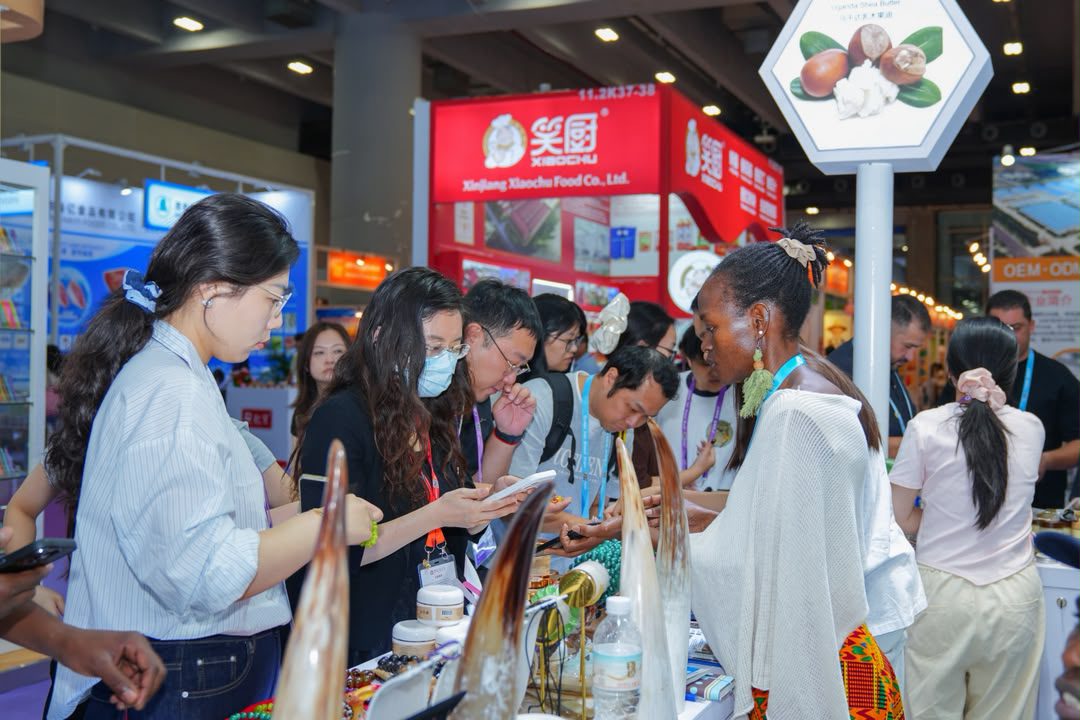
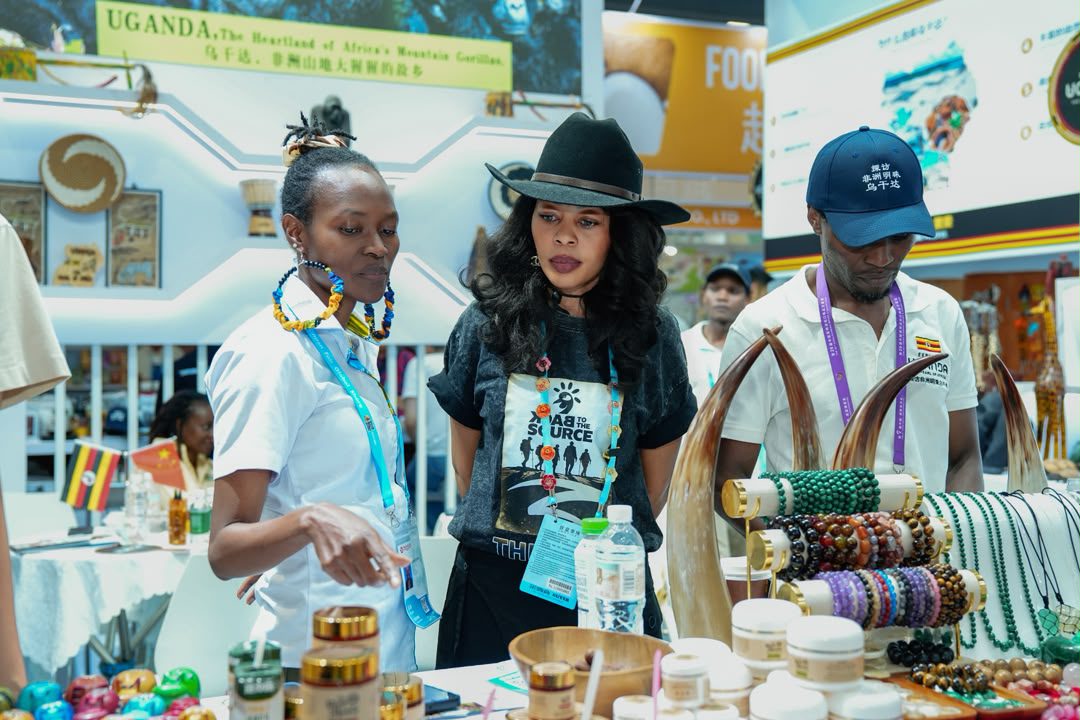
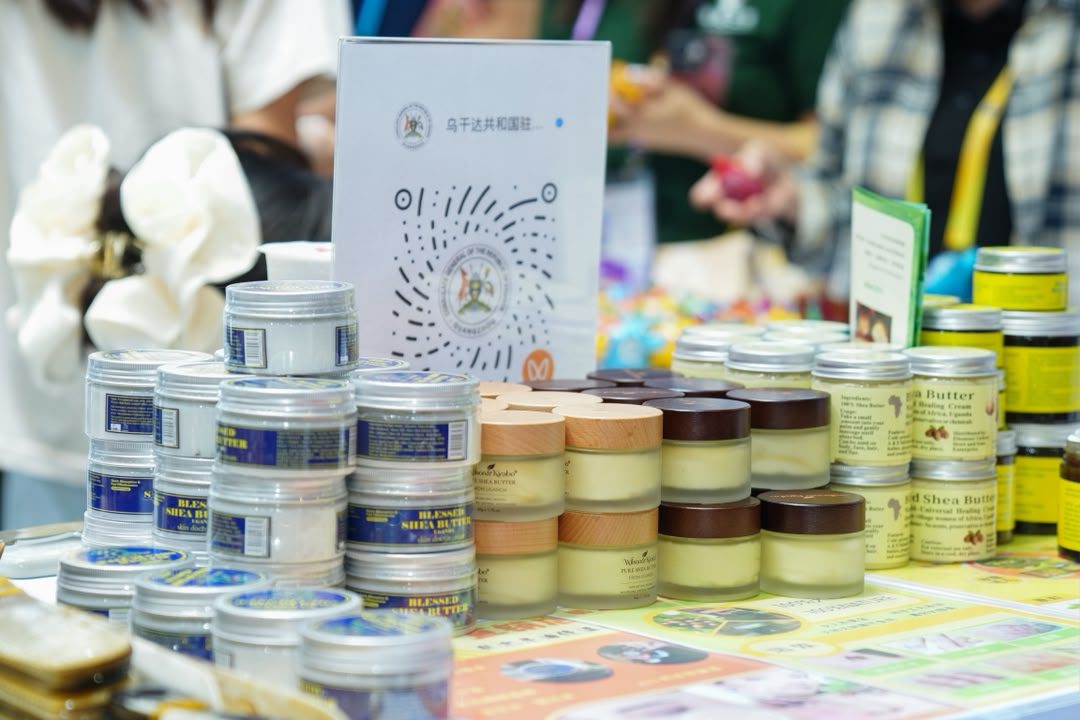
At the Uganda Booth were ten exhibitors: five in coffee, two in shea butter and three in crafts, including The Shea House, Ebenezer Ltd, Obato Industries Limited, SeedStar Speciality Coffee Ltd and Champion Coffee.
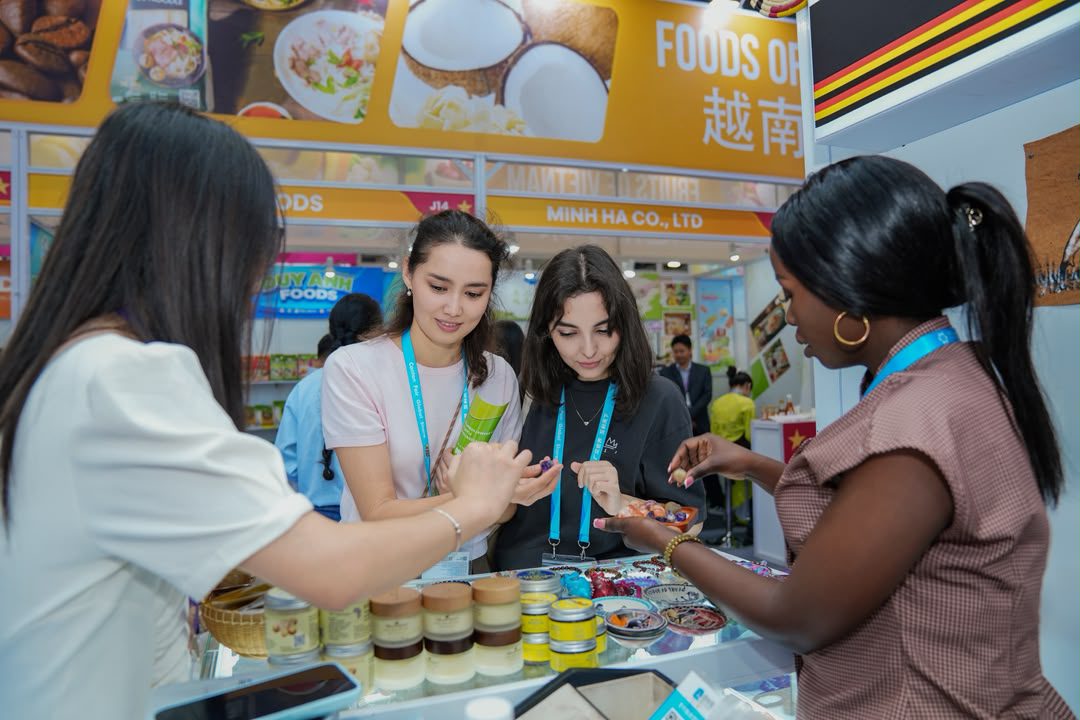
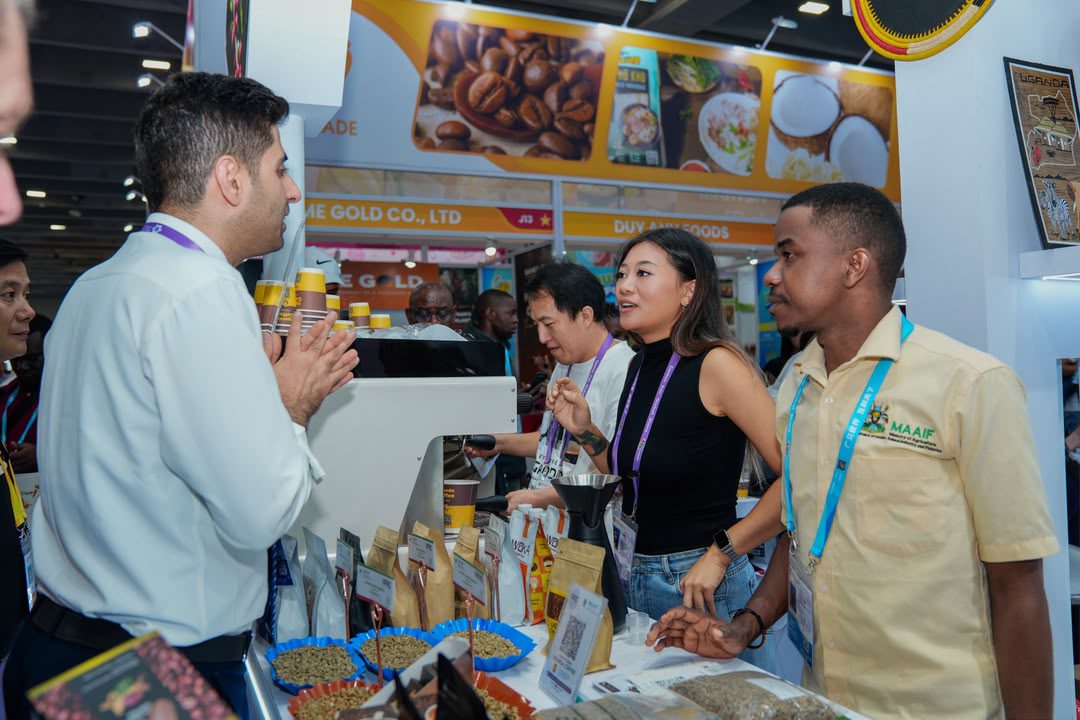
They held tastings, met buyers, discussed prices and exchanged contacts for follow-up business.
Coffee was the main draw, but the Booth also showed what Uganda can offer in natural cosmetics and creative products.
From Exhibition to Jobs, Value and Wealth:
The point of going was not just to exhibit.
It was to turn market access into something concrete back home: more processing and packaging in Uganda, more of the earnings staying in Uganda, and from that, more jobs and better incomes for farmers and cooperatives.
Amb. Nsababera said the aim is to keep more value in Uganda, rather than exporting raw produce and buying back the finished product.
“Our participation was more than exhibiting products. It was about value addition, value retention, and prosperity along the value chain, from farmer to buyer,” Amb. Nsababera said. “When farmers process, package and brand at home, they earn more from the same crop. That is how a trade fair in Guangzhou becomes income in a village in Uganda.”
Amb. Kabonero said commercial diplomacy has to be judged by what it delivers for ordinary Ugandans, not by how many meetings are held. “When we add value in Uganda and retain more of that value in Uganda, we create jobs in processing and packaging,” Amb. Kabonero said. “Our work is to connect the farmer in Uganda to the buyer in China, and to make sure that connection is fair, predictable and lasting. That is what will keep young people in productive work and keep rural incomes growing.”
What buyers asked for:
At the Canton Fair, Coffee led the way. Ms. Doryn Negesa, Agriculture and Trade Attaché in Guangzhou, said Uganda’s coffee exports to China rose from 62,980 60-kg bags in FY2023/24 to 245,533 bags in FY2025/26.
Uganda is Africa’s largest coffee exporter and one of the world’s leading Robusta producers, and the growth shows it can win a bigger share of China’s premium market.
For farmers, the real test at the Fair was simple: who wants to buy, at what price, and will they come back? Meeting buyers face to face helped farmers, aggregators, cooperatives, processors and exporters hear exactly what is wanted.
For Arabica, buyers asked about altitude, washed and natural processing, cupping score, moisture content and defect count.
For Robusta, they asked about consistency, screen size and clean cup. How coffee is handled, dried and stored decides whether an order is won and what price it gets.
Shea butter and crafts faced the same kind of scrutiny. For shea butter, buyers asked about unrefined, cold-pressed production, fatty-acid profile, oleic and stearic content, shelf life and cosmetic-grade standards.
For crafts, they looked at design, finish, whether each order would look the same, and whether the packaging was good enough for a shop shelf.
In every case, the question behind the question was whether the producer could deliver the same quality again, in bigger volumes, and on time.
An open market, with standards to meet:
Uganda also benefits from China’s zero-tariff treatment for least developed countries (LDCs), under which China applies a zero rate to 100% of tariff lines for originating LDC products.
The benefit is handled by the General Administration of China Customs (GACC) and depends on meeting rules of origin, correct Harmonized System (HS) classification, direct consignment, and a valid Certificate of Origin.
For food products, exporters must also meet GACC market-access requirements, including phytosanitary and food-safety controls and, where applicable, registration of overseas food production enterprises under GACC Decrees 248 and 249.
Zero tariff removes the duty, although it does not by itself guarantee market access.
What Uganda heard in Guangzhou was that access to the Chinese market depends as much on what happens at home as on the tariff treatment offered in Beijing, with buyers looking for quality, safety and traceability that can be repeated order after order, alongside volumes large enough to meet their needs.
A producer who delivers good quality but cannot supply enough will struggle to hold a large contract, just as a producer who can supply volume but lets quality slip will struggle to keep a buyer.
Amb. Nsababera said China offers practical help to producers trying to meet those standards, and that Uganda should make full use of it. “China has appropriate machinery for processing, packaging and branding that is suitable for Ugandan producers,” Amb. Nsababera said. “This helps our producers to meet the quality standards required to access the Chinese market. We should not be afraid to learn, to adopt what works, and to use technology to improve what we already produce well.”
She urged farmers, cooperatives and processors to use the Chinese technologies and machinery now available for drying, sorting, grading, processing, packaging and branding.
Used well, and together with good farming and handling, they can cut post-harvest losses, make quality more consistent, raise processing capacity and help Uganda meet buyer specifications at scale.
That is how partnership with China can support Uganda’s own push to upgrade production, add more value and sell more in the Chinese market.
The MAAIF team was led by Ms. Eunice Mutungi Kabibi, Assistant Commissioner for Enforcement and Regulation.
At the Booth, the team helped exhibitors with quality, presentation and market requirements.
Looking ahead, Amb. Nsababera encouraged exhibitors to keep using the twice-yearly Canton Fair to show their products and meet Chinese and international buyers.
The 141st Canton Fair will take place from 15 April to 5 May 2027.