
By Don Edwarles MKM
A comprehensive look at the Ministry, its directorates, departments, agencies and the expanding TVET system driving Uganda’s education, skills and sports agenda
Education is one of the most powerful instruments for national transformation. From the first years of childhood learning to universities, technical colleges, vocational institutions and sports academies, Uganda’s education and skills system plays a central role in preparing citizens for life, work, innovation and national development.
At the centre of this vast national system is the Ministry of Education and Sports (MoES)—the government institution responsible for providing policy leadership, planning, coordination, guidance and oversight for education, training and sports.
The Ministry’s work reaches far beyond classrooms and examination halls. It involves curriculum development, national assessment, teacher education, vocational skills, higher education, educational standards, inclusive learning, research, planning, sports development and the regulation of specialized institutions.
As Uganda continues to implement curriculum reforms, digital transformation and a new Technical and Vocational Education and Training framework, understanding the institutions behind the country’s education system has become increasingly important.

A MINISTRY AT THE HEART OF NATIONAL DEVELOPMENT
The Ministry of Education and Sports is responsible for providing national leadership in education, training and sports.
Its broad mission is to guide, coordinate, regulate and promote the delivery of quality education and sports services in support of individual and national development.
The Ministry works with public institutions, private providers, faith-based organisations, local governments, development partners, teachers, parents, employers and communities.
Its responsibilities extend across the education journey:
– Early childhood and pre-primary learning;
– Primary education;
– Secondary education;
– Teacher and instructor education;
– Technical and vocational training;
– Universities and higher education;
– Special-needs and inclusive education;
– Education planning and research; and
– Physical education and sports.
The effectiveness of this system has major consequences for Uganda’s economic growth, employment, social development and international competitiveness.

LEADERSHIP AND NATIONAL POLICY DIRECTION
The Ministry operates under political leadership provided by the Minister of Education and Sports and the respective Ministers of State responsible for higher education, primary education and sports.
The Permanent Secretary provides technical and administrative leadership for the Ministry and is responsible for coordinating its day-to-day operations within the framework of government policy and public administration.
However, the Ministry’s work cannot be understood only through its political leadership. Behind the national policies is an extensive network of directorates, departments, agencies and statutory institutions with specialized responsibilities.
THE THREE MAJOR EDUCATION DIRECTORATES
Uganda’s Ministry of Education and Sports operates through major directorates that form the institutional backbone of the education sector.
THE DIRECTORATE OF BASIC AND SECONDARY EDUCATION
This Directorate provides leadership and coordination for the foundational stages of Uganda’s formal education system.
Its work covers areas including pre-primary and primary education, secondary education and other school-level programmes.
The Directorate supports the implementation of national programmes aimed at expanding access to education and strengthening the quality of learning.
Primary education remains the foundation of the formal education system. It is at this stage that learners develop literacy, numeracy, communication and other essential competencies.
Secondary education builds upon these foundations and prepares learners for further academic study, technical and vocational training, employment and entrepreneurship.
The Directorate also works within a wider environment that includes a substantial number of private and faith-based education providers.
The growing diversity of Uganda’s school system requires effective coordination, clear standards and reliable information to ensure that learners receive meaningful educational opportunities.

THE DIRECTORATE OF HIGHER, TECHNICAL AND VOCATIONAL EDUCATION AND TRAINING
This Directorate is responsible for some of the most important pathways connecting education to skills, employment and national development.
Its areas of engagement include higher education, teacher and instructor education, technical education and vocational skills development.
Uganda’s economic transformation requires competent professionals, technicians, researchers, entrepreneurs and innovators.
Universities and tertiary institutions contribute through professional education, research and knowledge creation.
Technical and vocational institutions provide practical skills required in agriculture, manufacturing, construction, ICT, energy, hospitality and other sectors.
Teacher and instructor education is equally important because the quality of an education system depends significantly on the competence of those responsible for teaching and training the nation’s learners.
The Directorate therefore plays a strategic role in preparing Uganda’s human resource base for a changing economy.
THE DIRECTORATE OF EDUCATION STANDARDS
Access to education must be accompanied by quality.
The Directorate of Education Standards is responsible for supporting the monitoring and improvement of standards across the education and training system.
Its areas of focus include the inspection and quality assurance of:
– Basic education;
– Secondary education;
– Teacher and instructor education; and
– Business, technical and vocational education and training.
The Directorate’s work helps government identify gaps in teaching, infrastructure, school management and learning environments.
Quality assurance is particularly important as Uganda expands education access and introduces new competency-based approaches to learning.
A school system cannot be judged simply by the number of children enrolled. The more important question is whether learners are receiving meaningful education and acquiring the competencies required for their future.
EDUCATION PLANNING: THE POWER OF DATA AND RESEARCH
One of the Ministry’s most strategic functions is education planning, policy analysis and research.
The education sector serves millions of learners and involves thousands of institutions and education personnel. Effective planning therefore requires accurate information.
The Ministry’s planning functions support:
– Education statistics;
– Monitoring and evaluation;
– Policy analysis;
– Strategic planning;
– Budgeting;
– Research; and
– Development project planning.
Reliable data helps government understand where schools are located, how many learners are enrolled, where teachers are required and which communities face serious infrastructure challenges.
Evidence-based planning can help ensure that public resources are directed towards areas of greatest need.
As Uganda’s population continues to grow, the importance of accurate education statistics and long-term planning will become even greater.
SPECIAL NEEDS AND INCLUSIVE EDUCATION
An education system can only be considered successful if it provides meaningful opportunities to learners with different abilities and circumstances.
The Ministry’s Special Needs Education function supports efforts to make education more inclusive.
Learners with visual, hearing, physical and other disabilities may require accessible classrooms, specialized teaching materials, assistive technologies and appropriately trained teachers.
Inclusive education also requires school leaders and communities to create environments free from discrimination and exclusion.
Uganda’s national development agenda cannot afford to leave behind learners whose talents and potential can contribute to society.
GUIDANCE AND COUNSELLING: HELPING LEARNERS FIND THEIR PATH
Education is not simply about passing examinations.
Learners must also make important decisions about careers, further study, personal development and the opportunities available to them.
The Ministry’s Guidance and Counselling function supports learner welfare and career development.
As Uganda develops multiple education pathways—including academic, technical, vocational and entrepreneurial routes—career guidance is becoming increasingly important.
A learner should be able to understand that success can be achieved through different forms of education and training.
Not every young person will become a university graduate, but every young person should have an opportunity to develop useful knowledge, practical competence and a productive future.
FINANCE, ADMINISTRATION AND HUMAN RESOURCE MANAGEMENT
Behind every education programme is an institutional system responsible for managing people, finances and public resources.
The Ministry’s Finance and Administration functions support:
– Financial management;
– Accounts;
– Procurement;
– Infrastructure and construction management;
– Communication and information management; and
– Internal audit.
Human Resource Management supports the development and management of the Ministry’s workforce through policy, staff development, performance management, compensation and other personnel functions.
Strong administration and accountability are essential because education involves substantial public investment.
Resources intended for classrooms, teachers, learning materials and infrastructure must be managed transparently and efficiently.
PHYSICAL EDUCATION AND SPORTS: DEVELOPING TALENT AND NATIONAL UNITY
Sports is an integral part of the Ministry’s mandate.
The Physical Education and Sports function promotes physical activity, talent identification and sports development.
Sports contributes to health, discipline, teamwork, youth development and national unity.
It also has growing potential to create employment and professional opportunities.
Through sports institutions, schools and national associations, Uganda continues to identify and develop talented athletes capable of competing at regional and international levels.
Investment in sports infrastructure, coaching and physical education can therefore contribute both to public health and national development.
THE SPECIALISED AGENCIES: THE ENGINE ROOM OF UGANDA’S EDUCATION SYSTEM
The Ministry does not carry out all education functions directly.
It works with specialized agencies and statutory institutions responsible for curriculum, examinations, higher education, skills development, staffing and sports.
NATIONAL CURRICULUM DEVELOPMENT CENTRE (NCDC)
The National Curriculum Development Centre is responsible for curriculum development and related educational materials.
Its work influences what learners study and the competencies they are expected to acquire.
NCDC has played a central role in Uganda’s transition towards competency-based education, which seeks to strengthen practical learning, critical thinking, creativity, communication and problem-solving.
The success of curriculum reform depends on teachers, learning materials, assessment systems and the ability of schools to provide practical learning opportunities.
UGANDA NATIONAL EXAMINATIONS BOARD (UNEB)
The Uganda National Examinations Board is responsible for national assessment and examination functions.
Assessment is a critical component of the education system because it helps establish whether learners have achieved the expected learning outcomes.
UNEB’s work supports national examinations, assessment and certification processes.
As education increasingly emphasizes competencies, assessment systems will continue to play an important role in measuring not only what learners remember but also what they understand and can apply.
NATIONAL COUNCIL FOR HIGHER EDUCATION (NCHE)
The National Council for Higher Education plays an important regulatory and quality-assurance role in higher education.
It works within its legal mandate to support standards in universities and other higher education institutions.
Higher education has a major responsibility in preparing professionals, conducting research and developing innovations that can address Uganda’s development challenges.
NCHE’s work contributes to public confidence in the quality and credibility of higher education programmes and institutions.
EDUCATION SERVICE COMMISSION
The Education Service Commission performs important functions relating to personnel within the education service.
Professional education personnel are essential to the functioning of schools and institutions.
The Commission contributes to the administration of human resources through functions assigned to it under the law, including matters relating to appointments and other education service personnel processes.
A professional, motivated and competent workforce remains one of the most important requirements for improving education quality.
DIRECTORATE OF INDUSTRIAL TRAINING
The Directorate of Industrial Training has played an important role in Uganda’s occupational skills development, assessment and certification landscape.
Skills development is particularly important for people who acquire competence through practical training, apprenticeships and other non-traditional learning pathways.
Uganda’s evolving TVET reforms seek to strengthen the recognition and assessment of practical competence while ensuring that qualifications remain credible and nationally relevant.

NATIONAL COUNCIL OF SPORTS
The National Council of Sports is an important institution within Uganda’s sports governance environment.
Its work supports the organization, development and regulation of sports activities and institutions.
Sports administration requires coordination between government, national sports organizations, schools, athletes and other stakeholders.
A strong sports governance framework can help Uganda develop talent while promoting transparency and responsible management.
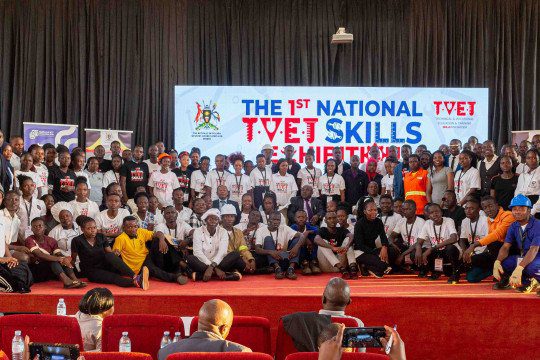
THE TVET REVOLUTION: A NEW ERA FOR SKILLS DEVELOPMENT
One of the most significant developments in Uganda’s education sector is the strengthening of the Technical and Vocational Education and Training system.
TVET is increasingly being recognized as a strategic pathway for employment, entrepreneurship and industrial development.
Uganda needs people who can design, build, repair, produce, innovate and manage enterprises.
The country needs skilled technicians, farmers, electricians, builders, mechanics, ICT specialists, designers, hospitality professionals and many other skilled workers.
The emerging TVET framework is designed to strengthen the connection between education, industry and the labour market.
THE TVET COUNCIL: REGULATION AND STRATEGIC OVERSIGHT
The TVET Council, established within the framework of Uganda’s TVET legislation, represents an important development in skills-sector governance.
Its broad role is to support the regulation, standards, licensing and strategic oversight of TVET provision.
The Council is intended to strengthen the quality and credibility of training while promoting closer engagement between education institutions and employers.
This employer-focused approach is important because training programmes should respond to the real skills needs of the economy.
THE TVET SECRETARIAT
The TVET Secretariat serves as the operational and administrative structure supporting the implementation of the Council’s work.
Its functions support the day-to-day administration of the TVET regulatory framework.
The distinction between the Council and the Secretariat is important: the Council provides strategic governance and oversight, while the Secretariat supports implementation and administration.
SECTOR SKILLS EXPERT COMMITTEES
A major innovation in the evolving TVET framework is the use of Sector Skills Expert Committees.
These structures are designed to bring employers, industry experts and skills-development stakeholders closer to the education system.
Their contribution can help identify:
– Emerging skills needs;
– Labour-market gaps;
– Occupational standards;
– Industry requirements; and
– Areas where training programmes need to be improved.
This approach has the potential to make education more responsive to the economy.
Rather than developing training programmes in isolation, education institutions can benefit from regular input from the industries that eventually employ graduates.
TVET ASSESSMENT AND CERTIFICATION
A credible TVET system requires trusted systems for assessing competence.
Assessment and certification bodies are responsible for evaluating whether learners have achieved required occupational standards within their respective mandates.
The broader objective is to ensure that a certificate represents genuine knowledge and practical competence.
This is particularly important for Uganda’s growing workforce, where employers need confidence that graduates and trainees possess the skills represented by their qualifications.
THE MANY FACES OF TVET
Modern TVET is broader than the traditional image of a workshop.
Uganda’s skills development system covers areas including:
– Technology and engineering;
– Business and entrepreneurship;
– Agriculture;
– Health sciences;
– Home sciences;
– ICT and digital technology;
– Sports training;
– Creative industries; and
– Other emerging occupational fields.
TVET institutions include technical colleges, vocational training institutions, skills development centres and specialised sector-based institutions.
Both public and private providers have a role to play, provided they operate within the national regulatory and quality-assurance framework.
CONNECTING EDUCATION TO EMPLOYMENT
The greatest test of Uganda’s education system is not simply how many certificates it awards.
The more important question is whether learners can use their knowledge and skills to improve their lives and contribute to national development.
The Ministry’s expanding focus on competency-based education and TVET offers an opportunity to close the gap between classroom learning and the world of work.
Schools and institutions should strengthen:
– Practical learning;
– Entrepreneurship;
– Digital literacy;
– Industrial training;
– Apprenticeships;
– Work-based learning; and
– Partnerships with employers.
Uganda’s young people need both knowledge and the ability to apply that knowledge.
A SYSTEM THAT REQUIRES COORDINATION:
The Ministry of Education and Sports operates within a complex ecosystem.
The Ministry provides national policy leadership and sector coordination.
Specialized institutions perform distinct functions:
Institution| Core Role
Ministry of Education and Sports| Policy, planning and sector leadership
NCDC| Curriculum development
UNEB| National assessment and examinations
NCHE| Higher education quality assurance and regulation
Education Service Commission| Education service personnel functions
Directorate of Industrial Training| Occupational skills development and assessment functions
TVET Council| TVET regulation and strategic oversight
TVET Secretariat| Operational support and implementation
Sector Skills Expert Committees| Industry and employer guidance on skills
National Council of Sports| Sports governance and development
The effectiveness of the entire system depends on coordination.
Curriculum developers must understand labour-market needs. Teachers need appropriate training. Assessment institutions must measure relevant competencies. Regulators must maintain standards. Employers must participate in skills development.
Most importantly, learners must remain at the centre of every policy and institutional decision.
THE ROAD AHEAD
Uganda’s Ministry of Education and Sports faces both enormous opportunities and significant challenges.
The country must continue to address:
Access and equity: Ensuring that children and young people from all communities can participate in education and training.
Quality: Improving teaching, learning materials, infrastructure and institutional standards.
Teacher development: Supporting teachers and instructors to deliver competency-based and practical education.
Skills and employment: Ensuring that education responds to economic opportunities and changing labour-market demands.
Digital transformation: Expanding access to technology while preventing the digital divide from deepening educational inequality.
Inclusive education: Ensuring that learners with disabilities and other barriers receive meaningful educational opportunities.
Financing and accountability: Ensuring that public and private education resources are managed effectively and produce measurable results.
Sports development: Building infrastructure and systems capable of developing Uganda’s sporting talent.
CONCLUSION: BUILDING UGANDA THROUGH EDUCATION, SKILLS AND TALENT
The Ministry of Education and Sports is more than a government office. It is the centre of a national ecosystem responsible for preparing Uganda’s people for the future.
From a child’s first experience in a classroom to university research, from a vocational workshop to a national sports stadium, the Ministry and its specialized institutions influence the development of the country’s human capital.
The three major education directorates—the Directorate of Basic and Secondary Education, the Directorate of Higher, Technical and Vocational Education and Training, and the Directorate of Education Standards—provide the institutional foundation for the sector.
They are supported by specialized functions in planning, finance, administration, special-needs education, guidance and counselling, human resource management and sports.
Meanwhile, agencies such as NCDC, UNEB, NCHE, the Education Service Commission, the Directorate of Industrial Training and the National Council of Sports perform specialized responsibilities that help the national system function.
The emerging TVET Council, TVET Secretariat and Sector Skills Expert Committees add a new dimension to Uganda’s skills-development agenda by placing greater emphasis on quality, industry participation, practical competence and employability.
The future of Uganda will depend significantly on how well these institutions work together.
The ultimate goal must not be to produce certificates alone, but to nurture knowledgeable, skilled, ethical, creative and productive citizens capable of building their communities and transforming their country.
For Uganda, the classroom, laboratory, workshop, farm, sports field and digital space are all part of one national mission: developing the human potential of a nation and preparing its people for the opportunities and challenges of the future.