

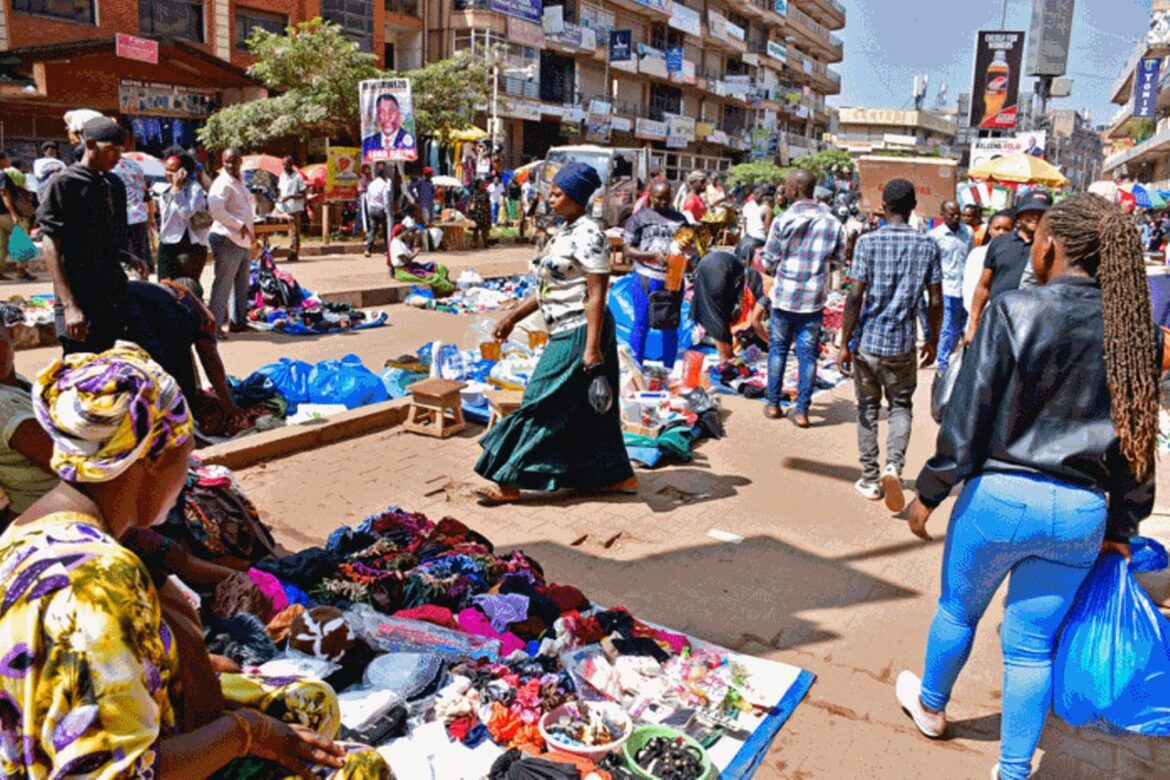
A defining message once echoed across Uganda’s economic landscape: citizens were urged to “kulembeka”—to hustle, innovate, and use every available opportunity to build livelihoods.
The call, widely associated with Yoweri Museveni, helped energize a generation of small-scale entrepreneurs who turned streets, kiosks, and informal spaces into engines of survival and growth.
Today, that same informal sector finds itself at the center of a national debate—after the introduction of a new trade order that is reshaping how and where business can be conducted.
A Policy Shift with Real Consequences
The new trading regulations are part of a broader government effort to reorganize urban spaces, improve sanitation, and formalize commerce. Officials say the reforms are necessary to modernize cities like Kampala and align them with long-term development goals.
But on the ground, interviews with traders and local leaders paint a more complicated picture.
Many small business owners—particularly those operating kiosks, roadside stalls, and informal markets—report:
- Evictions or relocation from long-standing trading spots
- Reduced customer access due to zoning restrictions
- Sudden drops in daily income
For traders who built their businesses in response to earlier calls for self-reliance, the shift feels abrupt.
The “Kulembeka” Legacy
Over the years, the “kulembeka” message became more than a slogan. It translated into:
- Expansion of informal enterprises
- Growth of urban micro-economies
- Increased self-employment among youth and low-income households
Economists note that Uganda’s informal sector now employs a large share of the population—making any disruption to it highly sensitive.
“The informal economy filled gaps where formal jobs were limited,” one analyst explained. “It became a survival system.”
Tension Between Policy and Practice
The current trade order highlights a core policy dilemma: how to balance urban order with economic inclusion.
Government officials argue that:
- Unregulated trading contributes to congestion and public health risks
- Formalization is necessary for sustainable growth
- Organized markets can improve working conditions over time
However, critics say the transition has been too fast and insufficiently inclusive.
“There’s a disconnect between policy design and implementation,” said a Kampala-based business observer. “People were encouraged to start small—but now face barriers without clear alternatives.”
Are Livelihoods Being ‘Clipped’?
The phrase increasingly used by affected traders is that their businesses are being “clipped”—restricted or displaced before they can evolve into more stable enterprises.
Field observations suggest:
- Some traders have failed to secure space in designated markets
- Others cannot afford new compliance costs
- Many lack access to financing to transition into formal setups
This has fueled a perception—though debated—that earlier economic encouragement is now being overtaken by stricter regulation.
Government Response
Authorities maintain that the reforms are not meant to destroy businesses but to reorganize them.
Officials emphasize:
- Plans to relocate traders into structured markets
- Long-term benefits of formalization
- Commitment to improving infrastructure
Yet, implementation challenges—such as limited space and uneven enforcement—continue to draw criticism.
A Broader Economic Question
At its core, the issue is not just about kiosks or street vendors. It reflects a larger question facing Uganda’s development path:
Can a country transition from informal survival economies to structured growth without disrupting the very people it once encouraged?
Experts argue that successful transitions require:
- Gradual implementation
- Financial and technical support for small traders
- Inclusive policy dialogue
Conclusion: Policy at a Crossroads
The contrast between the earlier “kulembeka” message and the current trade order has sparked a powerful national conversation.
For some, it appears as a contradiction. For others, it is a necessary evolution of policy.
What is clear is that Uganda’s economic future depends on how well it manages this transition—ensuring that reform does not come at the cost of the livelihoods it once inspired.
As the debate continues, the challenge remains: aligning past encouragement with present policy in a way that keeps opportunity—not uncertainty—at the center of Uganda’s growth story.