
By Lions Club of Entebbe
A call to parents, communities and Lions to recognise, refer and save lives
When a child develops a persistent fever, loses weight, becomes unusually weak, develops a swelling or has an abnormal-looking eye, it is easy to assume that it is malaria, an infection or another common childhood illness. Sometimes it is. But sometimes, these may be warning signs of childhood cancer.
Childhood cancer refers to cancers that develop in children and adolescents, generally from birth to 19 years. Unlike many cancers in adults, the causes of most childhood cancers are not known, and they are generally difficult to prevent. The good news is that many childhood cancers can be cured when detected and treated early.
A global problem, but a much bigger challenge in Africa
According to the World Health Organization (WHO), about 400,000 children and adolescents aged 0–19 develop cancer every year. The latest International Agency for Research on Cancer (IARC) estimates recorded more than 275,000 new cases in 2024, with more than 100,000 deaths. The difference between estimates reflects differences in methods and data coverage. Importantly, childhood cancer is substantially underdiagnosed in many countries.
The inequality is striking. In high-income countries, more than 80% of children with cancer can be cured, while in many low- and middle-income countries fewer than 30% are cured. Nearly 94% of childhood cancer deaths occur in Africa, Asia, Latin America and the Caribbean.
Africa therefore faces a double challenge: children are dying from cancers that are potentially curable, while many cases are never diagnosed or recorded. IARC reports that inadequate diagnostic and treatment facilities contribute to under-reporting of cancers such as leukaemia and brain tumours, while some cancers—including Burkitt lymphoma and retinoblastoma—occur at particularly high rates in parts of Africa.
What about East Africa and Uganda?
East African countries continue to strengthen childhood cancer surveillance, diagnosis and treatment. Kenya, for example, estimates approximately 2,300 new childhood cancer cases each year.
Uganda has an estimated 3,000 new childhood and adolescent cancer cases every year, yet WHO reported that only about 30% reach cancer treatment centres. This means that thousands of children may be diagnosed late, never reach specialised care or remain completely undiagnosed.
Uganda’s commonly reported childhood cancers include:
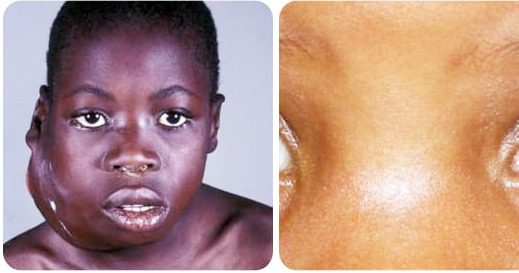
– Burkitt lymphoma (a cancer of lymphatic cells, often causing rapidly growing swellings, particularly around the jaw or face).
– Acute leukaemia (a cancer of the blood-forming tissues, especially bone marrow, leading to abnormal blood cells).
– Wilms tumour (a cancer of the kidney, usually presenting as a swelling or mass in the abdomen).
– Rhabdomyosarcoma (a cancer arising from developing muscle and soft-tissue cells, which can occur in the head, neck, limbs or other parts of the body).
– Retinoblastoma (a cancer of the retina—the light-sensitive layer at the back of the eye—which mainly affects young children).
– Brain and other central nervous system tumours (cancers affecting the brain or spinal cord).
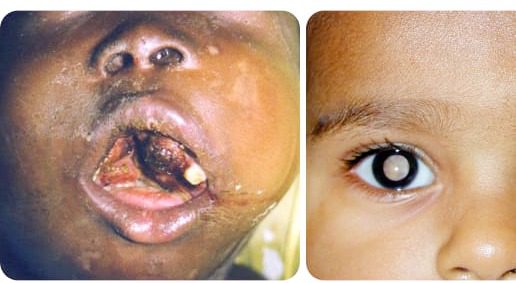
The Uganda Cancer Institute reports Burkitt lymphoma as the most common childhood cancer seen there, frequently affecting the facial bones.
Surveillance matters
We cannot fight what we cannot see. Cancer registries and reliable reporting help governments know how many children are affected, which cancers are occurring, where they occur and whether treatment is working.
Unfortunately, only about 15% of the world’s children are currently covered by population-based cancer registries, making the true global burden difficult to measure.
Uganda has the Kampala Cancer Registry and specialised childhood cancer services at the Uganda Cancer Institute. Strengthening referral systems, pathology, imaging, cancer registration, treatment and follow-up remains essential.
WHO’s Global Initiative for Childhood Cancer aims to achieve at least 60% survival for children with cancer by 2030, through earlier diagnosis, better treatment, access to essential medicines, supportive care and stronger health systems.
What should every parent and community member watch for?
Childhood cancer can mimic common illnesses. One symptom does not mean cancer, but persistent, unusual or progressively worsening symptoms deserve medical assessment.
Watch for:
a. Unexplained weight loss, persistent tiredness or loss of appetite.
b. Persistent or recurrent fever without an obvious cause.
c. An unusual lump or swelling, especially in the abdomen, neck, jaw or other parts of the body.
d. Persistent bone or joint pain, unexplained limping or reluctance to walk or play.
e. Persistent headaches, especially when associated with vomiting, seizures, visual problems or changes in behaviour.
f. Unusual bleeding, easy bruising, marked paleness or persistent weakness.
g. A persistent abdominal swelling or mass.
h. A white or abnormal-looking pupil, a newly developed squint, loss of vision, a swollen eye or an eye that appears to protrude.
i. Persistent enlargement of lymph nodes or other unexplained swellings.
These symptoms may be caused by infections, malaria, anaemia and many other conditions. The message is not to diagnose cancer at home, but to recognise when further medical assessment is necessary.
What should you do?
Do not wait indefinitely. Do not repeatedly treat unexplained symptoms without reassessment.
Take the child to a health facility for examination. If cancer is suspected, the child should be referred promptly to a facility capable of diagnosing and treating childhood cancer.
Early diagnosis can reduce suffering and improve the chance of successful treatment. WHO emphasises that delayed diagnosis, misdiagnosis, difficulty accessing treatment and abandonment of treatment are major contributors to avoidable deaths in low- and middle-income countries.
A Lions call to action: BE VIGILANT
For Lions Club of Entebbe, childhood cancer awareness is not simply another health campaign. It is an opportunity to save lives through community vigilance.
Lions are present where health professionals may not always be: in schools, churches, markets, workplaces, families, communities and service projects.
Every Lion can become a community sentinel.
When we see a child with an unusual swelling, persistent unexplained illness, severe weight loss, abnormal bleeding, unexplained bone pain or an abnormal-looking eye, we should not ignore it. We should encourage the family to seek appropriate medical attention and support them through referral.
We must also fight the stigma and myths surrounding cancer. Cancer is not a punishment, a curse or a contagious disease. A child with cancer needs understanding, timely medical care and a supportive community.
Lions can support childhood cancer through awareness, early recognition, referral, family support, fundraising, partnerships with health facilities and advocacy for stronger cancer surveillance and treatment services.
The call is simple:
LOOK. RECOGNISE. REFER. SUPPORT.
A child’s unusual symptom may be nothing serious—or it may be the first warning of cancer.
Let us notice it early. Let us act early. Let us save a child’s life.
WE SERVE
Author is Lion Edwin Niwagaba is immediate past president, Zone 3 Chair, D411B and
Proprietor, Entebbe Central Clinic