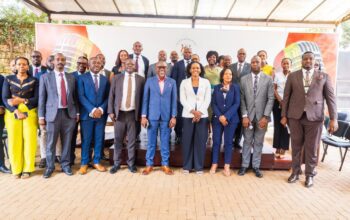

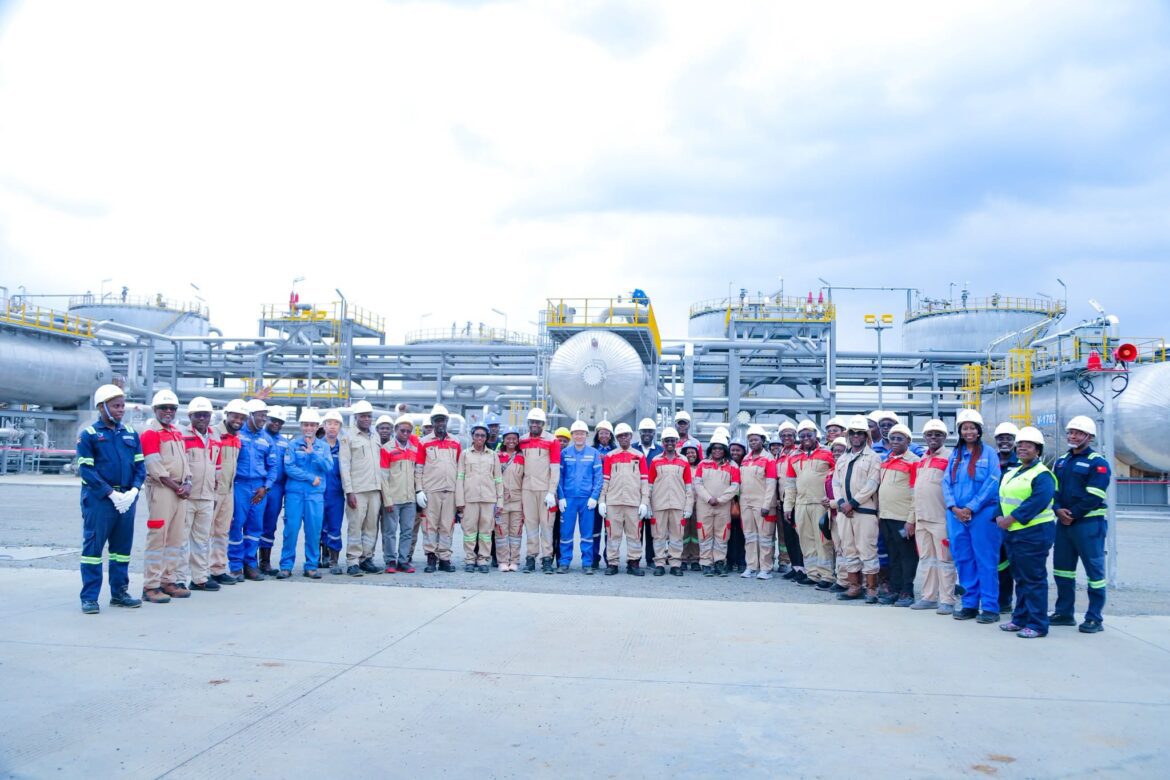
The Bank Of Uganda Governor Atingi-Ego has recently visited the Kingfisher oil field in Kikuube District with Chief Justice Flavian Zeija, Deputy Chief Justice Hon. Moses Kazibwe Kawumi, and others plus Judiciary officials.
Up to 40,000 barrels of oil per day and 20,000 tonnes of cooking gas (LPG) per year are set to be produced in this project along the shores of Lake Albert.
Governor Atingi-Ego learned how the oil will be pumped from reservoirs that are 2.5kms below the bottom of the lake into a Central Processing Facility where it will be cleaned before making the 1,443km journey via pipeline to Tanzania’s Tanga port for export.
About $2.5 billion dollars has been invested in the Kingfisher oil field and combined with the other oil production sites in Uganda, these projects are projected to generate average revenues of between $1 to $2.5 billion dollars annually depending on the international oil price.
The Governor appreciated the opportunity to verify first-hand Uganda’s oil and gas developments, saying “A lot hinges on what is happening in the oil sector; from the UGX1.4 trillion expected from oil revenues in the budget for this financial year, to Balance of Payments projections of foreign exchange flows into the domestic market, to the employment opportunities being created here.
The Governor also visited the 0km mark of the East African Crude Oil Pipeline in Kabaale, Hoima, where he was “very much impressed” with what he learned is one of the most innovative and smart pipelines in the world.
He wrapped up the day with a tour of the $6 million-dollar Luwero Industries Waste Management Facility, a joint venture between Uganda’s National Enterprise Corporation and Chinese company HBP.
The facility has treated 70,000 metric tonnes of petroleum waste from the Kingfisher field since its commissioning in 2023.
The USD $15 billion dollars that has so far been invested in Uganda’s oil and gas sector is the largest concentration of long-term investment this country has ever hosted.
Uganda’s Charter for Fiscal Responsibility 2021-2026 requires that monies generated from oil and gas activities be put into the Petroleum Fund, and from this only up to 0.8% of the preceding year’s non-oil GDP can be transferred to the Consolidated Fund where it must be spent on infrastructure development and not recurrent expenditure.
The rest (99.2%) of oil revenue is to be transferred to the Petroleum Revenue Investment Reserve (PRIR) which BoU holds on the nation’s behalf and must invest offshore so that oil wealth does not flood the domestic economy and price exporters out of the markets that sustain them.
The PRIR will ensure that Uganda’s future generations continue to benefit from oil long after most of it has been pumped out.