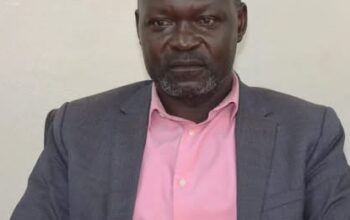

From Masaka’s community-development initiatives to creative arts, education, research, security coordination and youth empowerment, the story of Prince Mawanda raises a fundamental question: how much can one citizen contribute to a nation’s development?
By Don Edwarles MKM
Gateway News | Special Independence Anniversary Feature
Friday, 9 October 2026
INTRODUCTION: INDEPENDENCE IS A RESPONSIBILITY, NOT JUST A CELEBRATION
As Uganda celebrates 64 years of independence on 9 October 2026, the country finds itself at another important moment of reflection. Beyond the national celebrations, historical commemorations and official speeches, Independence Day provides an opportunity to examine the contributions of individuals, institutions, communities and successive generations to the country’s social, economic, cultural and political development.
Uganda attained independence from British colonial rule on 9 October 1962, beginning a new chapter in its national history. Since then, the country has experienced significant political transformations, educational expansion, infrastructure development, economic change and the continuing struggle to build inclusive prosperity.
The official theme for the 2026 Independence Day celebrations is “Embracing Our Sovereignty with Hope and Visionary Leadership.” The theme invites Ugandans to reflect on the relationship between national independence, responsible leadership, economic self-reliance and the participation of citizens in shaping their country’s future. The Uganda Media Centre has similarly emphasised that the responsibility of the present generation is to transform political independence into economic opportunity.
For the country’s approximately 50 million citizens, national development is not the responsibility of government alone. It also depends on teachers who prepare future generations, public servants who strengthen institutions, entrepreneurs who create opportunities, researchers who generate knowledge, artists who preserve cultural identity, journalists who inform the public and community leaders who mobilise people around shared priorities.
It is against this broader understanding of development that the professional journey of Prince Mawanda Edward Charles Don Edwarles MKM, born on 13 October 1985, merits examination.
Associated with Masaka’s community-development landscape and professional activities in education, research, creative arts, media, leadership and security coordination, Mawanda represents a category of Ugandan professional whose influence is best examined through the institutions he serves, the initiatives he supports and the communities his work seeks to reach.
His story also offers an opportunity to explore an important development question: what happens when an individual combines education, public service, research, communication and community mobilisation in pursuit of national progress?
The answer requires looking beyond personal titles to the practical value of professional service.
1. A GENERATION BORN AFTER INDEPENDENCE: THE RESPONSIBILITY OF BUILDING UGANDA’S FUTURE
Prince Mawanda was born on 13 October 1985, nearly 23 years after Uganda attained independence.
His generation grew up in a country undergoing significant political, economic and institutional changes. For many Ugandans born after independence, the national challenge has shifted from the struggle for colonial self-government to the task of building institutions capable of delivering education, healthcare, employment, security, innovation and sustainable livelihoods.
By the time Uganda celebrates its 64th Independence Anniversary in 2026, Mawanda is approaching his 41st birthday.
His professional journey can therefore be situated within a generation that has spent its formative years in independent Uganda and has increasingly assumed responsibilities in education, administration, business, community leadership and public service.
The significance of this generation lies not simply in its age but in its capacity to transform national opportunities into tangible results.
Uganda’s development depends on whether citizens can turn their education into innovation, their professional experience into improved services, their businesses into employment opportunities and their leadership positions into meaningful public value.
Mawanda’s work, as described in his professional profile, spans several of these areas.
Rather than presenting his career as proof that he has independently transformed Uganda, a more meaningful assessment examines how his activities relate to the national development priorities of education, human-capital development, institutional strengthening, cultural preservation, community participation and responsible public service.
2. EDUCATION AND HUMAN-CAPITAL DEVELOPMENT: INVESTING IN THE PEOPLE WHO BUILD THE NATION
Education remains one of the most important instruments through which Uganda can improve productivity, reduce poverty and prepare its population for a changing economy.
The country requires graduates who can do more than obtain academic qualifications. It needs people with practical competencies, entrepreneurial abilities, digital literacy, creativity, critical thinking and the capacity to solve problems within their communities.
Mawanda’s educational background, as outlined in his professional materials, includes studies in social work and social administration at Kampala University, postgraduate training in development management through the Open University, and doctoral candidacy in psychology and leadership studies.
These areas of study intersect with several national development priorities.
Social work and social administration examine the relationship between individuals, families, communities and institutions. Development management focuses on planning, implementation, accountability and the use of resources to improve social and economic conditions. Psychology and leadership studies examine human behaviour, organisational relationships, motivation and decision-making.
When applied effectively, these disciplines can contribute to better programme design, community mobilisation, institutional management and the delivery of public services.
Mawanda has also identified teaching, academic coordination, research and academic development among his professional responsibilities at Michelangelo College of Creative Arts in Kisubi.
This work is particularly relevant at a time when Uganda must strengthen the connection between education and employment.
The country needs educational institutions that prepare young people for emerging opportunities in digital communication, graphic design, multimedia production, computer systems, software development, cybersecurity and other technology-related fields.
Within a creative-arts college, the integration of practical training, research, digital technology and professional communication can help students develop competencies that extend beyond conventional classroom learning.
Mawanda’s involvement in academic development and creative-arts research therefore represents a potentially important contribution to human-capital development.
However, the ultimate measure of such contribution is not the number of academic titles held by an individual. It is the quality of teaching, the relevance of curricula, the number of students reached, the competencies acquired by learners and the opportunities graduates subsequently secure.
For Uganda to achieve its development ambitions, professionals working in education must continually demonstrate that their work improves learning outcomes and equips citizens to participate productively in society.
3. MICHELANGELO COLLEGE OF CREATIVE ARTS: CONNECTING EDUCATION, TECHNOLOGY AND CULTURAL IDENTITY
One of the identifiable institutional contexts associated with Mawanda’s work is Michelangelo College of Creative Arts, Kisubi.
The institution provides a setting in which education, creative expression, practical skills and cultural preservation can intersect.
According to Mawanda’s professional profile, he has undertaken responsibilities connected with college coordination, technical advisory work, research, academic development and community engagement.
Such responsibilities can contribute to institutional development through curriculum improvement, academic planning, collaboration, research coordination and the identification of opportunities for students.
The wider importance of this work lies in the economic potential of Uganda’s creative industries.
Graphic design, photography, film, digital content production, animation, visual communication, sculpture and other creative disciplines can support employment, entrepreneurship, advertising, tourism, education and cultural preservation.
These fields also offer opportunities for young Ugandans who may possess artistic and technical abilities that are not fully developed through traditional academic pathways.
Creative-arts institutions can help bridge this gap by providing structured training, practical assignments, access to production technologies and opportunities to engage with real clients and community projects.
Mawanda’s association with academic and research activities at Kisubi is therefore relevant to a national conversation about the place of creative education in Uganda’s development.
The question for policymakers and education leaders is whether creative-arts training is sufficiently connected to market demand, technological change and the development of sustainable enterprises.
For institutions such as Michelangelo College of Creative Arts, the opportunity is to demonstrate how practical education can equip students to become not only job seekers but also designers, producers, freelancers, entrepreneurs and employers.
Such outcomes would provide a more concrete measure of the institution’s contribution to Uganda’s economy.
4. PRESERVING UGANDA’S HISTORY THROUGH CREATIVE ARTS AND RESEARCH
Perhaps one of the more distinctive aspects of Mawanda’s documented professional activities is his association with research exploring the representation of the Uganda Martyrs through wooden high-relief sculpture.
A report published by Gateway News on 23 September 2026 describes a research project at Michelangelo College of Creative Arts involving Rev. Bro. Frederick Musaazi of the Bannakaroli Brothers, the Michelangelo Iconographic Church Art Studio in Kisubi, Kirles Digital Studioz and the college’s research structures.
The project, running from January to October 2026, explores how sculpture can preserve and communicate the historical and religious memory associated with the Uganda Martyrs.
Mawanda is identified in the published report as participating in the initiative through Kirles Digital Studioz, working alongside the other project participants.
The report presents the project as an interdisciplinary undertaking connecting sculpture, religious heritage, historical interpretation, African identity and contemporary visual documentation.
This is a significant subject within Uganda’s cultural landscape.
The Uganda Martyrs occupy an important place in the country’s religious and historical consciousness. Their story is preserved through written accounts, oral traditions, pilgrimage, religious celebrations, monuments and artistic representations.
Creative research can provide another means of communicating this heritage to younger generations.
A carefully researched sculpture can function as an educational resource, an object of artistic study and a means of encouraging public engagement with history.
The project also illustrates how creative work can become a research activity rather than remaining solely an exercise in decoration or visual expression.
For Uganda’s development, the broader lesson is that national heritage can contribute to education, tourism, scholarship, cultural identity and the creative economy.
However, the project’s long-term contribution will depend on the quality of its historical research, the completion and documentation of the artwork, its accessibility to students and the public, and the extent to which it supports further scholarship.
The published report establishes a basis for discussing Mawanda’s participation in this specific research initiative. It does not, by itself, establish the project’s completed outputs, financial value or measurable national impact.
Nevertheless, it identifies a tangible example of how creative research can connect an individual’s professional work with the preservation of Uganda’s historical memory.
5. SECURITY AND PUBLIC SERVICE: THE IMPORTANCE OF RESPONSIBLE LOCAL COORDINATION
National development requires more than schools, roads, hospitals and commercial enterprises. It also requires public confidence, institutional cooperation and an environment in which citizens can pursue their livelihoods safely.
Mawanda’s professional profile identifies his appointment as a Gombolola Internal Security Officer in Buwunga in 2020.
This role places his reported public-service experience within the broader field of local security coordination and community-level administration.
At the local level, security-related responsibilities may involve information coordination, engagement with community leaders, identification of emerging concerns, cooperation with relevant authorities and support for lawful efforts to protect people and property.
Effective local security coordination can contribute indirectly to development.
Farmers need to access their gardens and markets. Traders need to transport goods. Teachers and health workers need to reach their workplaces. Businesses require confidence that their premises, employees and customers can operate without intimidation or criminal interference.
Where security institutions work professionally and lawfully, communities can devote more attention to production, education, investment and social development.
Nevertheless, security must be understood as a public responsibility governed by law, accountability and respect for human rights.
The contribution of a security officer should therefore be evaluated through professional conduct, lawful coordination, public confidence, the quality of information management and the effectiveness of cooperation with the relevant authorities.
Mawanda’s reported experience in local security administration provides a basis for examining the relationship between security and development in communities such as Buwunga.
It would, however, be inappropriate to attribute reductions in crime, particular security operations or district-wide improvements to him without independent records demonstrating those results.
The broader lesson is clear: development is strengthened when security institutions protect citizens, uphold the law and work constructively with communities.
6. COMMUNITY DEVELOPMENT IN MASAKA: FROM LOCAL INITIATIVE TO NATIONAL RELEVANCE
Uganda’s national development agenda ultimately succeeds or fails in its communities.
While national policies establish priorities, the everyday experience of development is shaped by whether households can earn incomes, children can attend school, farmers can access markets, women can participate in economic activities and young people can find productive opportunities.
Mawanda’s professional and community-development profile is associated with Lwanyi and the wider Masaka area.
His activities and initiatives have included community mobilisation, development planning, volunteer engagement and proposals intended to connect local needs with institutional and partnership support.
One example is Lwanyi Connect International Group, an initiative described in his project materials as focusing on community organisation and local development.
The group’s stated areas of activity include community participation and savings-related initiatives. Its proposed activities provide a basis for examining how locally organised groups can help residents mobilise resources, develop relationships and identify shared priorities.
Community-based organisations can be important instruments of development because they create structures through which residents discuss problems, coordinate activities and pursue common interests.
However, the success of such organisations depends on transparent leadership, sound financial management, realistic planning and the participation of intended beneficiaries.
For a community initiative to demonstrate its contribution to Uganda’s development, it must move beyond the establishment of a name or leadership structure.
It should be able to show how many people participate, what activities have been completed, what resources have been mobilised, what services have been delivered and what measurable changes have occurred in the lives of members.
The significance of community development is particularly evident in rural and peri-urban areas, where households often depend on agriculture, small businesses, informal employment and collective initiatives to improve their livelihoods.
If community organisations help members save consistently, acquire useful skills, improve agricultural production or establish sustainable enterprises, the benefits can extend beyond individual households.
Such gains can strengthen local markets, improve household resilience and contribute to the wider district economy.
Mawanda’s involvement in community initiatives is therefore best understood as part of the broader effort to organise local participation in development.
The next step is to document results systematically and demonstrate the extent to which these initiatives have delivered lasting benefits.
7. VOLUNTEERISM AND SOCIAL DEVELOPMENT: SUPPORTING COMMUNITIES BEYOND COMMERCIAL INTERESTS
Another dimension of Mawanda’s reported professional activities concerns volunteerism and social development.
His profile identifies leadership responsibilities associated with the Blessed Foster Family Foundation and related volunteer activities.
Volunteer-led organisations can contribute to development by mobilising people, supporting vulnerable households, facilitating community activities and connecting local needs with potential partners.
Such organisations are particularly important where public resources are limited and communities require additional support.
However, volunteerism is most effective when it complements rather than replaces the responsibilities of government and established service providers.
Successful volunteer programmes need clear objectives, safeguarding measures, transparent financial systems, reliable partnerships and monitoring arrangements.
Where organisations work with children, vulnerable families or people with disabilities, appropriate protection procedures and professional standards are especially important.
Mawanda’s involvement in volunteer and community-development structures reflects an approach that seeks to connect personal initiative with collective action.
Its long-term contribution will depend on the activities actually delivered, the beneficiaries reached, the resources mobilised and the sustainability of the programmes.
The wider message for Uganda at 64 is that citizenship involves more than receiving services from the state. It also includes opportunities to contribute time, knowledge, professional skills and resources to the welfare of others.
8. ENTREPRENEURSHIP, CONSULTANCY AND THE DEVELOPMENT OF LOCAL CAPACITY
Uganda’s economic transformation requires productive enterprises capable of creating employment, improving services and responding to emerging market opportunities.
Mawanda’s professional materials identify entrepreneurial and consultancy interests in areas including education marketing, media, creative production and development consulting.
Such activities can potentially connect communication, research, institutional planning and business development.
For example, digital communication can help small enterprises reach customers. Professional photography and graphic design can improve the presentation of local products. Research and development consultancy can help organisations identify problems, establish objectives and plan the use of limited resources.
Education marketing can help institutions communicate their programmes to prospective learners, while digital production can create opportunities for young people with technical and creative skills.
These functions are increasingly relevant in an economy where information, branding, online visibility and professional communication influence the ability of enterprises to compete.
However, the economic value of consultancy and entrepreneurship should be assessed through evidence of actual business activity.
Relevant indicators include jobs created, contracts completed, clients served, enterprises supported, revenue generated and skills transferred.
It is therefore more accurate to describe Mawanda’s entrepreneurial activities as potential channels for economic contribution than to claim that they have already produced particular national economic outcomes without supporting records.
Uganda’s future prosperity will depend partly on its ability to help small enterprises move from informal activity towards productive, well-managed and sustainable businesses.
Professionals who can combine technical competence with sound management and community engagement have an opportunity to contribute to that transition.
9. MEDIA, DIGITAL COMMUNICATION AND PUBLIC AWARENESS
The media has an important place in national development because it connects citizens with information, gives visibility to public issues and provides a platform for discussing institutional performance.
Mawanda is associated with Gateway News under the byline Don Edwarles MKM.
His published work includes reporting and commentary on education, religious heritage, public affairs and community development.
The September 2026 Gateway News report on the wooden high-relief sculpture of the Uganda Martyrs provides a specific example of his association with coverage of research and cultural heritage.
Such reporting can contribute to public awareness by making institutional projects and research activities more accessible to readers.
The media can also help document local initiatives that might otherwise receive limited attention beyond their immediate communities.
For example, coverage of community savings groups, educational innovations, volunteer programmes and cultural research can encourage public discussion and help other organisations learn from local experiences.
Nevertheless, journalism’s contribution to development depends on accuracy, fairness, verification and a clear distinction between reporting, commentary and promotional material.
A responsible assessment of any individual’s influence through the media must consider the quality and reach of published work, the accuracy of its reporting, the diversity of issues covered and the extent to which it informs public understanding.
Mawanda’s association with journalism offers a further example of how communication can intersect with education, research and community engagement.
It also highlights an important responsibility: media coverage should recognise genuine achievements while examining challenges and demanding evidence of results.
10. THE INDIRECT CONTRIBUTION: CONNECTING INSTITUTIONS, PEOPLE AND IDEAS
An individual’s influence on development is not always visible in a completed building, a large investment or a nationally recognised programme.
Some contributions are indirect.
A lecturer can influence the professional choices of students. A researcher can introduce a new way of documenting cultural heritage. A community organiser can encourage residents to work together. A journalist can bring attention to an overlooked development issue. A public servant can help coordinate information between institutions.
These activities can create conditions in which other people make decisions, develop skills or pursue opportunities.
This is particularly important in Uganda, where development challenges often require cooperation among government agencies, educational institutions, community organisations, religious bodies, private enterprises and development partners.
Mawanda’s reported involvement in education, research, media, community mobilisation and public service brings these different areas into one professional profile.
The potential advantage of such a multidisciplinary approach is that problems can be examined from more than one perspective.
An education initiative, for example, may require academic expertise, communication, financial planning and community engagement. A cultural heritage project may require historical research, artistic skill, digital documentation and institutional coordination.
A community-development programme may need local knowledge, leadership, resource mobilisation and monitoring.
When these competencies are combined effectively, they can strengthen the implementation of development activities.
Yet the existence of several professional roles does not automatically prove that the activities have produced a combined impact.
The critical question is whether the connections between them lead to better outcomes.
For Uganda, the value of multidisciplinary professionals will increasingly depend on their capacity to translate knowledge and relationships into measurable public benefit.
11. UGANDA’S DEVELOPMENT CHALLENGES: WHERE INDIVIDUAL CONTRIBUTION MUST MAKE A DIFFERENCE
As Uganda marks 64 years of independence, the country continues to face important development challenges.
These include youth unemployment and underemployment, gaps in educational quality, limited access to productive finance, regional inequalities, pressure on natural resources, public-service delivery challenges and the need to strengthen institutional accountability.
No single professional, organisation or government department can resolve these challenges independently.
However, individuals can make useful contributions by concentrating their skills on practical problems.
For a professional working across education and creative arts, the priorities might include strengthening vocational competencies, supporting digital innovation and helping young people establish viable enterprises.
For a person involved in community development, the priorities might include improving local organisation, encouraging household savings, supporting women’s economic participation and helping communities identify realistic development projects.
For a professional associated with security coordination, the priorities might include lawful information management, professional conduct and cooperation that helps communities remain safe.
For someone working in media and research, the priorities might include documenting local achievements, investigating development challenges and communicating evidence that can inform public decisions.
These are different activities, but they can support a common national objective: improving the ability of citizens and institutions to solve problems.
The challenge for Mawanda, as for other Ugandan professionals, is to demonstrate how his work responds to these priorities through documented achievements rather than relying exclusively on professional titles or the number of initiatives associated with his name.
12. ACCOUNTABILITY: HOW SHOULD UGANDA MEASURE AN INDIVIDUAL’S CONTRIBUTION?
Independence anniversaries often encourage the celebration of distinguished citizens. Such recognition can be valuable, particularly when it encourages younger generations to participate in national development.
However, credible recognition should be accompanied by evidence.
In evaluating Mawanda’s contribution, several indicators would help establish the scale and practical value of his work.
Education: How many students have benefited from programmes he has helped develop or coordinate? What competencies have they acquired? What improvements have occurred in teaching, research or graduate opportunities?
Cultural preservation: What outputs have emerged from the Uganda Martyrs sculpture research? Has the work been completed, exhibited, documented or incorporated into educational activities?
Community development: How many households or community members have participated in initiatives associated with his work? What projects have been implemented, and what changes have they produced?
Volunteerism: What services have participating organisations delivered? How many beneficiaries have been reached, and how have the activities been sustained?
Entrepreneurship: What businesses have been established or supported? How many jobs have been created, and what economic value has been generated?
Public service: What responsibilities has he performed, what institutional objectives has he supported, and what independently verifiable outcomes can be attributed to his work?
Media and research: What publications have appeared, what evidence do they communicate, and how have they contributed to public understanding or institutional learning?
These questions are not intended to diminish individual effort.
On the contrary, they provide a practical framework for recognising achievements accurately and identifying opportunities for improvement.
A professional who documents results can demonstrate the value of his work more convincingly than one who relies on titles alone.
Such an approach is consistent with the wider national interest in transparent institutions, accountable leadership and effective use of resources.
13. A LEGACY STILL IN PROGRESS: WHAT THE NEXT DECADE COULD HOLD
At nearly 41 years of age, Mawanda remains part of a generation with substantial time to deepen its contribution to Uganda’s development.
The coming decade could provide opportunities to consolidate existing activities and establish clearer measures of impact.
In education, this could mean supporting stronger links between academic programmes and employment opportunities.
In research, it could involve producing further scholarly publications, improving documentation and developing collaborations that preserve Uganda’s cultural heritage.
In community development, it could mean strengthening organisational governance, mobilising resources transparently and documenting changes in household livelihoods.
In entrepreneurship, it could involve building sustainable enterprises, supporting young people’s technical skills and creating opportunities for professional collaboration.
In media, it could mean expanding evidence-based reporting on education, local government, public service and community development.
In public service, it could mean continuing to demonstrate professional integrity, respect for the law and a commitment to the public interest.
These possibilities should be understood as future opportunities rather than completed achievements.
Their significance will depend on the choices made, the quality of implementation, the partnerships developed and the results achieved.
The most enduring professional legacy is rarely established by the number of positions an individual has occupied.
It is built through the institutions strengthened, the people equipped with useful skills, the knowledge preserved, the opportunities created and the problems solved.
14. LESSONS FOR UGANDA’S YOUNG GENERATION
Mawanda’s professional profile offers several lessons for young Ugandans who wish to participate in national development.
First, education can be most valuable when it is connected to practical problem-solving.
Academic qualifications should provide a foundation for improving institutions, developing enterprises and serving communities.
Second, professional life does not always follow a single path. Skills acquired in research, communication, leadership and technology can complement one another when applied responsibly.
Third, community development begins with understanding local needs. Initiatives are more likely to succeed when the intended beneficiaries participate in identifying problems and shaping solutions.
Fourth, cultural heritage is a development resource. Preserving Uganda’s history through research, art and education can strengthen identity while creating opportunities for learning and cultural exchange.
Fifth, public service demands accountability. Leadership should be measured by professional conduct, the quality of decisions and the benefits delivered to citizens.
Finally, sustainable development requires collaboration. Government, educational institutions, businesses, civil society, religious organisations and individuals all have roles to play.
These lessons apply far beyond one professional profile.
They speak to the responsibilities of a generation that must transform the opportunities of independence into lasting improvements in people’s lives.
CONCLUSION: THE TRUE MEASURE OF CONTRIBUTION TO UGANDA
As Uganda celebrates 64 years of independence, the story of Prince Mawanda Edward Charles Don Edwarles MKM provides an opportunity to reflect on the many ways individuals can participate in national development.
His reported professional activities span education, research, creative arts, cultural preservation, community initiatives, media and public service. A published Gateway News report provides a specific documentary reference to his participation in research concerning the representation of the Uganda Martyrs through wooden high-relief sculpture.
Other aspects of his profile, including his educational background, community-development activities and institutional responsibilities, offer further areas in which his contribution can be examined through appropriate records and measurable results.
Taken together, these areas illustrate the breadth of opportunities available to Ugandans who seek to apply their knowledge and professional experience to public and community needs.
They do not, on their own, establish that one individual has independently transformed the country’s development trajectory. Uganda’s progress is the product of many generations, institutions, communities and citizens working under different circumstances.
The more useful question is how effectively each person contributes within his or her sphere of responsibility.
For Mawanda, the long-term test will be whether his educational activities strengthen learners, whether his research preserves knowledge, whether his community initiatives improve livelihoods, whether his professional engagements create opportunities and whether his public service reflects integrity and accountability.
For Uganda, the wider challenge is to create institutions and partnerships that allow such individual efforts to produce measurable and lasting benefits.
Sixty-four years after independence, the country must continue moving beyond the celebration of potential towards the demonstration of results.
National development is built when knowledge becomes innovation, leadership becomes service, creativity becomes opportunity and community participation becomes sustainable progress.
That is the enduring responsibility of every generation of independent Uganda.
As the national flag flies on 9 October 2026, the message is clear: Uganda’s future will be shaped not only by the achievements of its celebrated leaders, but also by the everyday contributions of citizens who use their knowledge, skills, resources and opportunities to improve the lives of others.
The measure of a citizen’s legacy is ultimately not the number of titles attached to a name, but the enduring value of the work left behind. (By Don Edwarles MKM)