

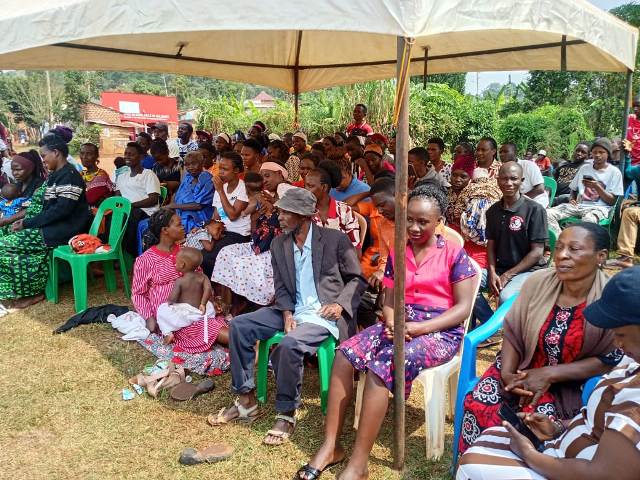
WAKISO, UGANDA — A new community-driven development vision is emerging in Bulwanyi Ward, Kajjansi Town Council, as residents and community development actors explore the establishment of the Kama Bumpenje Joint Villages Community Development Agency (KBJVCDA)—an ambitious platform designed to bring neighbouring communities together around a common development agenda.
The proposed initiative seeks to transform the development landscape of communities including Kama Kakaze 1 Cell and Bumpenje Cell, while creating a framework through which other neighboring communities can participate in joint planning, resource mobilization, enterprise development, infrastructure advocacy and social development.
The initiative comes at a time when Kajjansi and the wider Wakiso area are experiencing rapid urbanization and major infrastructure investment.
Official Wakiso District information indicates that Kajjansi Town Council has 11 wards and 62 cells, while district officials have identified roads, service delivery, education and local revenue mobilization among important development priorities.
The proposed KBJVCDA therefore seeks to turn the challenges and opportunities created by this transformation into a coordinated community development movement.
A NEW DEVELOPMENT MODEL FOR KAMA AND BUMPENJE
At the heart of the proposal is a simple but powerful idea:
«“United Communities, Shared Development, Sustainable Prosperity.”»
Instead of individual villages and cells approaching development challenges separately, the proposed Agency would create a mechanism for communities to work together on priorities that affect them collectively.
These priorities include:
- Roads and drainage.
- Water and sanitation.
- Health
- Education
- Youth unemployment.
- Women’s economic empowerment.
- Small-business development.
- Savings and cooperatives.
- Environmental management.
- Community safety.
- Digital transformation.
- Sports and creative industries.
- Social protection.
The concept proposes a five-year transformation programme running from 2027 to 2031.
Why The Initiative Matters Now?
The development proposal comes against the backdrop of significant infrastructure activity in Kajjansi Town Council and Wakiso District.
In March 2026, Wakiso District announced the commencement of civil works under the Greater Kampala Metropolitan Area Urban Development Programme (GKMA-UDP), involving major road projects worth about UGX 110 billion.
Among the roads being upgraded are the Seguku–Nalumunye–Bandwe–Kinaawa–Kyengera Road and the Namulanda–Bweya–Kajjansi Road. The Namulanda–Bweya–Kajjansi project alone was reported by Wakiso District at approximately UGX 57 billion.
The projects are supported under the World Bank-backed urban development programme and are expected to strengthen connectivity within the Greater Kampala Metropolitan Area.
For communities such as Kama Kakaze 1 and Bumpenje, such infrastructure development could create opportunities for businesses, employment, property development, transport, markets and improved access to services.
But the proposed community agency argues that infrastructure must be matched with human development and economic empowerment.
From Roads To Household Prosperity
The KBJVCDA concept does not define development merely in terms of roads and buildings.
Its philosophy is based on a broader development chain:
Household → Village/Cell → Joint Community → Local Economy → Shared Prosperity
The concept proposes that households should receive support to acquire skills, save, establish businesses, access markets and increase incomes.
Villages and cells, meanwhile, should collaborate on infrastructure, sanitation, environmental management and community services.
The wider joint community can then create stronger markets, cooperatives, investment opportunities and advocacy platforms.
The 15-Pillar Development Agenda
The proposed Agency has outlined 15 major development pillars.
- Community Governance
KBJVCDA would establish participatory community structures responsible for development planning, monitoring and accountability.
The proposed system would include community meetings, development committees, project-monitoring structures and community feedback mechanisms.
The objective is to make residents participants rather than passive recipients of development.
- Roads, Drainage and Infrastructure
Road connectivity is expected to remain one of the most important priorities.
The Agency proposes:
- Mapping community roads.
- Identifying infrastructure gaps.
- Advocating for priority road improvements.
- Improving drainage.
- Addressing flood-prone areas.
- Improving pedestrian access.
- Promoting community lighting.
- Developing community facilities.
The proposal complements the wider infrastructure investments already underway around Kajjansi.
However, it recognizes that local roads and drainage require continuous attention even where major metropolitan roads are being upgraded.
- WATER, SANITATION AND HYGIENE
The proposed Clean Communities Programme would promote:
- Improved household sanitation.
- Safe water access.
- Hand washing
- Wastewater management.
- Community hygiene education.
- Public sanitation facilities where required.
- Community clean-up campaigns.
The goal is to ensure that physical urbanization does not occur at the expense of public health.
- HEALTH AND COMMUNITY WELLBEING
The Agency proposes a community health outreach programme focusing on preventive healthcare.
Potential interventions include:
- Maternal and child health awareness.
- Nutrition.
- Immunization mobilization.
- HIV/AIDS prevention.
- Non-communicable disease awareness.
- Mental wellbeing.
- Health screening outreaches.
- Sanitation and disease prevention.
The programme would work with qualified health providers and existing government health structures rather than duplicate statutory services.
- EDUCATION AND SKILLS DEVELOPMENT
The development concept identifies education as one of the most important long-term investments.
The proposed programme would promote:
- Vocational training.
- Digital literacy.
- Adult education.
- Scholarships and bursary linkages.
- Apprenticeship.
- Career guidance.
- Entrepreneurship education.
Priority vocational skills would include:
ICT, tailoring, fashion design, hairdressing, beauty, welding, carpentry, plumbing, electrical installation, construction, motor-vehicle mechanics, catering, bakery, graphics, photography and multimedia.
The intention is to move young people from simply seeking jobs toward acquiring skills that can generate employment and enterprises.
- YOUTH ENTERPRISE AND INNOVATION
One of the flagship proposals is the establishment of a:
Kama-Bumpenje Youth Enterprise and Innovation Hub
The proposed facility would provide:
- Computer and ICT training.
- Internet access.
- Entrepreneurship training.
- Business advisory services.
- Job information.
- Business incubation.
- Digital marketing.
- Creative-industry facilities.
- Apprenticeship linkages.
The concept views youth not as a problem to be managed, but as a development asset and economic force.
- WOMEN’S ECONOMIC EMPOWERMENT
Another major component is a dedicated programme for women.
The proposed initiative would support:
- Women’s savings groups.
- Small enterprises.
- Financial literacy.
- Business management.
- Market access.
- Cooperative development.
- Food processing.
- Tailoring.
- Catering.
- Poultry
- Agriculture
- Beauty services.
- Retail and digital businesses.
A future Women’s Economic Empowerment Centre is proposed as a possible flagship facility.
- HOUSEHOLD ECONOMIC EMPOWERMENT
The KBJVCDA concept introduces a household development model built around:
ASSESS → TRAIN → SAVE → INVEST → PRODUCE → MARKET → EARN → REINVEST
Under this model, household development would begin with understanding the economic circumstances of families before linking them to skills, savings, enterprise opportunities and markets.
The ultimate objective is to increase household resilience and reduce economic vulnerability.
- SACCOs AND COOPERATIVES
The proposal also envisions a:
Kama-Bumpenje Community SACCO and Cooperative Platform
The platform could provide opportunities for:
- Saving
- Productive loans.
- Youth enterprise financing.
- Women’s enterprise financing.
- Agricultural finance.
- Emergency savings.
- Financial education.
Any SACCO established would need to comply with applicable Ugandan legal and regulatory requirements.
- AGRICULTURE IN AN URBANIZING COMMUNITY
Although the area is experiencing urbanisation, the development concept argues that agriculture should not be abandoned.
Instead, it proposes urban and peri-urban agriculture, including:
- Vegetable production.
- Container gardening.
- Poultry.
- Rabbit keeping.
- Mushroom production.
- Fruit production.
- Nursery enterprises.
- Compositing.
Such activities could contribute to household nutrition while creating supplementary sources of income.
- KAMA-BUMPENJE CLEAN AND GREEN CAMPAIGN
Environmental management is another major pillar.
The proposed campaign would address:
- Waste collection.
- Waste segregation.
- Recycling.
- Plastic reduction.
- Tree planting.
- Drainage protection.
- Community clean-ups.
- Environmental clubs.
- Climate awareness.
- Clean-energy promotion.
The campaign would carry the message:
«“Clean Communities, Healthy Families, Green Future.”»
The objective is to ensure that rapid urban development does not create an unhealthy and environmentally degraded settlement.
- COMMUNITY SAFETY
The proposed Agency would work with legally mandated security and local government institutions to promote safer communities.
Areas of focus include:
- Community safety awareness.
- Community-policing partnerships.
- Child protection.
- Road safety.
- Fire-safety awareness.
- Disaster preparedness.
- Emergency information.
- Conflict prevention.
- Strategic lighting advocacy.
- SPORTS, ARTS, CULTURE AND TALENT
The proposal also seeks to make room for creativity.
A Kama-Bumpenje Creative and Talent Development Programme would support:
- Football
- Netball
- Volleyball
- Athletics
- Music
- Visual arts.
- Dance
- Drama
- Film
- Digital content creation.
A future Joint Community Sports and Creative Arts Centre is proposed as a flagship investment.
- DIGITAL TRANSFORMATION
The proposed community transformation agenda recognizes that technology is increasingly connected to education, employment and business.
The Agency would promote:
- Community ICT centres.
- Computer training.
- Internet access.
- Digital financial literacy.
- E-commerce.
- Digital marketing.
- Online learning.
- Digital entrepreneurship.
- Cyber-safety awareness.
This could help residents participate more effectively in Uganda’s growing digital economy.
- SOCIAL PROTECTION AND INCLUSION
The Agency’s proposed development framework also puts vulnerable residents at the centre.
Priority groups would include:
- Orphans and vulnerable children.
- Older persons.
- Persons with disabilities.
- Vulnerable women.
- Unemployed youth.
- Extremely vulnerable households.
- Children at risk of dropping out of school.
The Agency would focus on connecting vulnerable residents with relevant government and development programmes.
THE PROPOSED COMMUNITY DEVELOPMENT CENTRE
One of the most ambitious ideas under the proposal is a:
Kama-Bumpenje Joint Villages Community Development Centre
The proposed centre would serve as a shared platform for:
- Community meetings.
- Training
- ICT
- Youth programmes.
- Women’s programmes.
- Enterprise development.
- Community information.
- Development coordination.
Rather than building separate facilities for every activity, the joint-community model could allow communities to pool resources and develop multifunctional facilities.
THE PROPOSED FIVE-YEAR ROADMAP
The proposed transformation programme would be implemented in five phases.
2027 – Foundation and Baseline
The first year would focus on:
- Community consultations.
- Baseline surveys.
- Household mapping.
- Infrastructure mapping.
- Needs assessment.
- Governance structures.
- Stakeholder mapping.
- Resource mobilization.
2028 – Infrastructure and Human Capital
The second year would priorities:
- Roads
- Drainage
- WASH
- Skills development.
- Youth enterprise.
- Women’s empowerment.
- Digital literacy.
2029 – Economic Transformation
The third year would focus on:
- SACCOs
- Cooperatives
- Enterprise development.
- Market linkages.
- Value addition.
- Agriculture
- Creative industries.
2030 – Expansion and Investment
The final year would focus on:
- Impact assessment.
- Evaluation
- Institutional strengthening.
- Sustainability
- Investment mobilization.
Preparation of the next five-year development framework.
A Proposed Ugx 11.8 Billion Development Envelope
The concept proposes an indicative five-year investment envelope of approximately UGX 11.8 billion.
The proposed allocation includes approximately:
- UGX 3 billion for roads and drainage.
- UGX 900 million for water, sanitation and hygiene.
- UGX 800 million for education and skills.
- UGX 700 million for youth empowerment.
- UGX 600 million for women’s economic empowerment.
- UGX 1 billion for enterprise and cooperative development.
- UGX 550 million for environment and climate resilience.
- UGX 600 million for sports, arts and culture.
- UGX 450 million for digital transformation.
- UGX 500 million for health and wellbeing.
- Other resources for governance, social protection, community safety and programme management.
The proposed figure is a planning envelope rather than an approved budget. Detailed technical assessments, architectural designs, engineering designs, market surveys and Bills of Quantities would be required before major construction projects are financed.
WHY JOINT ACTION COULD MATTER
The concept’s strongest argument is that communities can achieve more by working together.
A single cell may struggle to finance a major development facility.
But several neighbouring communities can potentially combine:
People + Ideas + Savings + Land + Skills + Partnerships + Investment
to create projects with greater impact.
This is particularly relevant in a rapidly urbanising area where infrastructure, business and social services frequently cross administrative boundaries.
KAJJANSI’S DEVELOPMENT MOMENT
The proposed initiative arrives during a period of significant development activity in Kajjansi.
Wakiso District’s own monitoring report identifies Kajjansi’s economic potential while noting challenges including limited funding for road upgrading, education infrastructure gaps and the need for stronger local revenue mobilization and planning.
The 2024 census profile also illustrates the scale of the population and household environment within Kajjansi Town Council and Bulwanyi Ward, reinforcing the importance of planning for rapidly changing communities.
This creates an important question for local communities:
How can infrastructure growth be converted into household prosperity?
The KBJVCDA concept attempts to answer that question through collective community development.
From Development Projects To A Development Movement
The proposal is therefore bigger than a single road project, community centre or youth programme.
It proposes a development movement built around four words:
UNITY
Bringing neighbouring communities together.
EMPOWERMENT
Building the capacity of households, youth and women.
TRANSFORMATION
Improving infrastructure, services and livelihoods.
PROSPERITY
Creating sustainable economic opportunities.
THE PROPOSED DEVELOPMENT BRAND
The proposed identity of the initiative is:
KBJVCDA TRANSFORMATION 2031
“United Communities, Shared Development, Sustainable Prosperity.”
Another proposed campaign message is:
“One Partnership • Many Villages • Shared Prosperity.”
The long-term vision is for participating communities to become:
UNITED • SAFE • CLEAN • HEALTHY • SKILLED • PRODUCTIVE • DIGITAL • GREEN • INCLUSIVE • PROSPEROUS
The Road Ahead
Before the ambitious vision becomes a reality, the concept proposes a comprehensive baseline survey.
This would establish reliable information on:
- Fishing
- Households
- Education
- Health
- Employment
- Income
- Businesses
- Youth
- Women
- Disability
- Agriculture
- Roads
- Drainage
- Water.
- Sanitation
- Security
- Enviroment
- Digital access.
- Existing community organisations.
The baseline would help determine which interventions should be implemented first and provide a benchmark against which progress can be measured.
A Call For Community Ownership
The success of the proposed Agency will ultimately depend on whether the communities themselves own the vision.
Development cannot be sustained through donors alone.
The concept therefore proposes a financing model involving:
Government + Community + Private Sector + Development Partners + Faith-Based Organisations + Civil Society + Diaspora + Investors
Community contributions could include savings, volunteerism, local expertise, project monitoring and, where legally appropriate and properly documented, land or local resources.
Conclusion
The Kama Bumpenje Joint Villages Community Development Agency represents a bold attempt to redefine community development in an increasingly urbanising part of Wakiso District.
Its proposed approach moves away from fragmented interventions toward joint planning, collective resource mobilisation and integrated development.
For Kama Kakaze 1, Bumpenje and neighbouring communities, the ambition is clear: better roads should lead to better markets; better skills should lead to employment; better sanitation should lead to healthier families; stronger savings groups should lead to stronger businesses; digital access should lead to new opportunities; and community unity should lead to greater bargaining power and investment.
The proposed transformation is therefore not simply about constructing buildings or roads.
It is about building people, institutions, enterprises and opportunities.
If effectively organized, professionally managed and transparently governed, the KBJVCDA model could provide a platform through which participating communities engage government, investors, development partners and residents around a shared development agenda.
The ultimate aspiration is captured in the proposed development philosophy:
«“Development begins with the household, grows through the community and becomes sustainable through collective action.”»
Kama-Bumpenje 2031
United Communities. Shared Development. Sustainable Prosperity.
By Don Edwarles MKM,Gateway News