
By Don Edwarles MKM
How grassroots political organization, strategic mobilization, public service and reconciliation are reshaping the NRM’s political future in Bukoto East, particularly Buwunga and Bukakata Sub-counties
INTRODUCTION: THE STORY BEHIND THE NRM’S POLITICAL REBIRTH
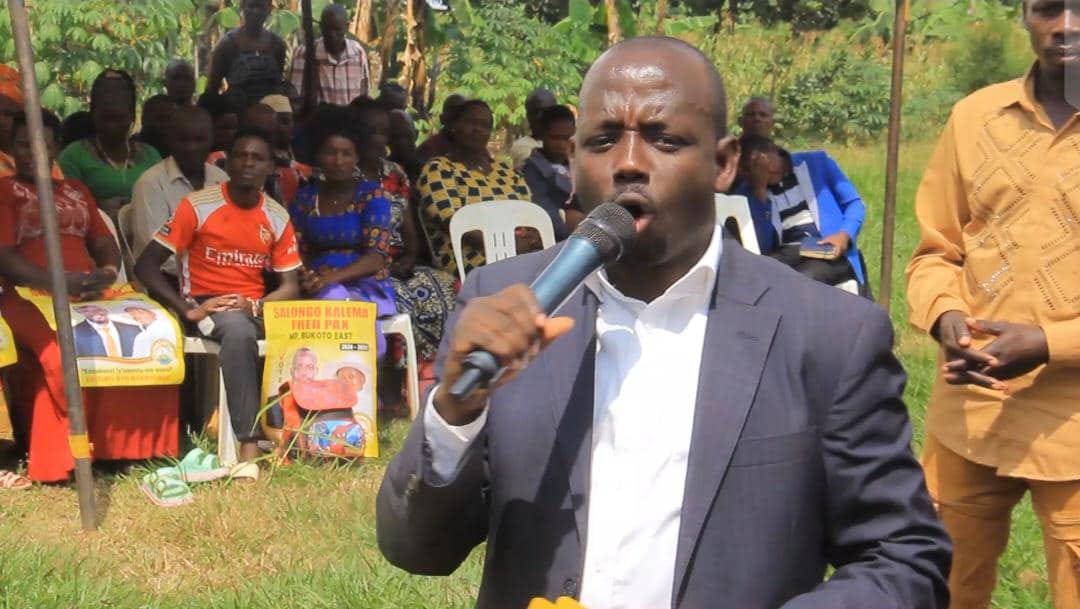
In the evolving political landscape of Greater Masaka, the story of Hon. Pax Kalema Fred, popularly known as Fred Pax Kalema, presents an interesting chapter in the political organisation, mobilisation and attempted revival of the National Resistance Movement (NRM).
For supporters who have followed his political journey, Kalema is more than a former Deputy Resident District Commissioner and parliamentary aspirant. He is regarded as one of the important political organisers associated with the NRM’s grassroots revitalisation in Masaka District, particularly in Bukoto East Constituency, covering Buwunga and Bukakata Sub-counties.
His political journey reflects a broader struggle within the ruling party: how to rebuild political confidence, reconnect with grassroots communities, strengthen party structures and restore electoral competitiveness in areas where opposition political movements have gained considerable influence.
The NRM Renaissance, or NRM Rebirth, is therefore an important political theme in understanding the changing dynamics of Masaka politics.
At the centre of this discussion is a leadership question: How can a political party rebuild itself from the village level to the national level while maintaining unity, discipline and public confidence?
Hon. Pax Kalema Fred’s political involvement provides an interesting case through which this question can be examined.
THE POLITICAL CHALLENGE: WHY MASAKA NEEDED AN NRM RENAISSANCE
The political transformation of Buganda during the 2021 general elections presented a significant challenge to the NRM.
The Greater Masaka region experienced considerable opposition mobilisation, with the National Unity Platform (NUP) and other opposition political organisations strengthening their presence in several constituencies.
Bukoto East was among the constituencies where the NRM faced the challenge of strengthening its political machinery and reconnecting with voters.
Buwunga and Bukakata Sub-counties became important areas in this political conversation.
The 2021 local government election results demonstrated the competitive nature of the political environment. In Buwunga, the NRM candidate for LCIII Chairperson, Ssebude Gerevazio, reportedly received 1,364 votes, while in Bukakata, the NRM candidate Jjuuko Aloysius secured victory with 2,682 votes.
These contrasting results illustrated that the NRM’s political fortunes varied across the constituency.
The party needed more than occasional campaign rallies. It needed organised grassroots structures, committed village mobilisers, effective communication and a strategy capable of translating national political support into local electoral competitiveness.
It was against this challenging political environment that the importance of grassroots political organisation became increasingly evident.
PAX KALEMA: FROM PUBLIC ADMINISTRATION TO POLITICAL MOBILISATION
Hon. Pax Kalema Fred’s transition from public administration into active elective politics marked an important stage in his political career.
Having served as Deputy Resident District Commissioner of Bukomansimbi District, Kalema gained experience within Uganda’s central-government coordination and district administrative framework.
The RDC system plays an important role in monitoring government programmes, coordinating central-government activities, following up on public-service delivery and engaging with security and local government structures.
In 2025, Kalema resigned from his government position to pursue his parliamentary ambitions in Bukoto East.
His candidature was associated with concerns about healthcare, education, infrastructure, land disputes and the need for improved access to government development programmes.
His entry into the parliamentary contest therefore represented an attempt to translate his public-administration experience into elective political leadership.
However, his political significance extended beyond his personal parliamentary ambition.
For his supporters, his involvement represented an opportunity to strengthen the NRM’s political organisation and reconnect the party with communities at the grassroots.
THE GRASSROOTS STRATEGY: BUILDING THE NRM FROM THE VILLAGE TO THE NATIONAL LEVEL
One of the most important dimensions of the NRM Renaissance is the recognition that political strength begins at the village level.
A sustainable political organisation cannot depend exclusively on national leaders, district officials or parliamentary candidates. It must have a functioning grassroots network that understands local concerns and communicates effectively with the party’s wider leadership.
The political organisation of Buwunga and Bukakata requires coordination across several levels:
– Village-level NRM structures and mobilisers.
– Parish-level political coordination.
– Sub-county party leadership.
– District-level political organisation.
– Youth and women’s mobilisation.
– Engagement with religious, cultural and community leaders.
– Communication with regional and national party structures.
This village-to-national approach is central to the political philosophy associated with the NRM Renaissance in Masaka.
Kalema’s supporters identify him as one of the key figures behind these mobilisation and organisational efforts.
The importance of such political organisation should be measured not simply by the number of rallies held but by the ability to maintain relationships with communities, resolve internal disagreements and communicate development priorities to the appropriate authorities.
THE 2025 NRM PRIMARIES: A TEST OF POLITICAL STRENGTH AND PARTY DEMOCRACY
Kalema’s political journey reached a significant turning point during the 2025 NRM parliamentary primaries for Bukoto East.
He competed against Sarah Babirye Kityo, the former Central Region Youth Member of Parliament, in a closely watched internal party contest.
According to figures reported by Uganda Radio Network, Sarah Babirye Kityo received 6,423 votes, while Fred Pax Kalema obtained 3,023 votes.
The difference was 3,400 votes.
Following the announcement of the results, Kalema challenged the outcome before the NRM Electoral Disputes Tribunal, raising allegations concerning irregularities, intimidation and the conduct of the electoral process.
The tribunal dismissed his petition and upheld Kityo’s victory, finding that the evidence presented did not justify overturning the results.
Kalema subsequently announced an independent candidature, attracting support from sections of NRM members who were dissatisfied with the primary election outcome.
This development demonstrated the complexities of internal party democracy, particularly where competing candidates have established their own grassroots support networks.
For the NRM, the challenge was clear: how could it prevent internal competition from becoming a permanent division within its political structures?
THE NRM RENAISSANCE: RECONCILIATION, UNITY AND STRATEGIC MOBILISATION
Political organisations are strengthened not only by winning elections but also by their capacity to manage disagreements.
The developments in Masaka demonstrated the importance of reconciliation among NRM leaders and political aspirants.
In January 2025, NRM leaders in Masaka discussed joint campaign approaches intended to reduce divisions and political violence during the party primaries.
Later, on 10 October 2025, an important NRM mobilisation and reconciliation gathering took place at Nakiyaga Village in Buwunga Sub-county.
The gathering brought together NRM political figures, including Sarah Babirye Kityo and Fred Pax Kalema, in a broader effort to strengthen party unity.
Minister Haruna Kyeyune Kasolo played a prominent role in the reconciliation efforts.
The engagement demonstrated the importance of bringing competing political interests together under a common party agenda.
For the NRM, this was not merely an internal political exercise. It was part of the wider effort to rebuild confidence and strengthen the party’s organisational presence in Greater Masaka.
Kalema’s involvement in this reconciliation environment further illustrated why his political journey deserves attention.
FROM INDEPENDENT CANDIDATURE TO POLITICAL RECONCILIATION
In November 2026, Mulengera News published a report titled:
“NRM’s Pax Kalema Quits Bukoto East Race for Sarah Kityo Babirye.”
According to the publication, Kalema communicated his decision to withdraw from the independent parliamentary contest during an NRM harmonisation process at Hotel Africana.
The report indicated that he communicated his decision through a text message to Kiwanuka Kiryowa, who reportedly read the message to leaders attending the meeting.
The development was welcomed as an opportunity to strengthen NRM unity and consolidate support behind Sarah Babirye Kityo.
The report also indicated that discussions involved Kalema’s concerns regarding his former RDC position and the possibility of further engagement with the relevant leadership.
Although any future government appointment remains subject to the appropriate official procedures, the reported withdrawal represents a significant political development.
It potentially opens a new chapter in Kalema’s relationship with the NRM leadership.
His decision also raises an important political lesson: electoral competition should not necessarily become permanent political hostility.
A party that wants to grow must have the capacity to accommodate different ambitions, manage grievances and bring its members together around shared objectives.
BUWUNGA AND BUKAKATA: THE FOUNDATION OF THE NRM’S POLITICAL FUTURE
The NRM’s political future in Bukoto East cannot be separated from the socioeconomic realities of Buwunga and Bukakata.
Political mobilization must be connected to development.
BUWUNGA SUB-COUNTY
Buwunga has six parishes: Kasaka, Mazinga, Kanywa, Buwunga, Kamwozi and Ggulama.
Its development priorities include:
1. Improvement of community access roads.
2. Expansion of safe and clean water services.
3. Rehabilitation and improvement of educational institutions.
4. Better access to healthcare.
5. Agricultural modernisation and farmer support.
6. Youth employment and entrepreneurship.
7. Effective implementation and monitoring of the Parish Development Model.
8. Improved electricity and digital connectivity.
BUKAKATA SUB-COUNTY
Bukakata has a distinct development profile shaped by its fishing communities, agriculture, transport and tourism opportunities around Lake Victoria.
Its development priorities include:
1. Modernisation of fishing and aquaculture.
2. Improvement of landing sites and fisheries infrastructure.
3. Environmental conservation and sustainable fisheries management.
4. Improvement of community roads and transport services.
5. Youth and women’s economic empowerment.
6. Access to healthcare and education.
7. Tourism investment and employment creation.
8. Financial inclusion and community enterprise development.
These are the issues that should define political leadership and mobilisation in the constituency.
The NRM’s renaissance will become meaningful when grassroots political structures are transformed into effective channels for communicating community needs and monitoring government interventions.
WHY PAX KALEMA’S POLITICAL EXPERIENCE MATTERS
Kalema’s political journey brings together three important dimensions of leadership.
First: Public administration.
His experience as a former Deputy RDC gives him exposure to government coordination, administrative structures and the monitoring of public programmes.
Second: Political organisation.
His participation in the NRM primaries and subsequent independent candidature demonstrates his engagement with the competitive political environment of Bukoto East.
Third: Political reconciliation.
His reported withdrawal from the independent race creates an opportunity for renewed engagement with the NRM’s official political structures.
These experiences could provide a foundation for further contributions to party organisation, public-service delivery and community development.
His future political influence will depend on the ability to turn political relationships into practical results.
THE BIGGER PICTURE: THE NRM RENAISSANCE MUST GO BEYOND ELECTIONS
The renaissance of the NRM in Masaka should not be understood simply as a campaign to defeat opposition political organisations.
It should be understood as an institutional renewal agenda.
The party must strengthen its relationship with young people, women, farmers, entrepreneurs, religious institutions, fishing communities, educational institutions and other stakeholders.
It must also demonstrate that government programmes are reaching the intended beneficiaries.
In Buwunga and Bukakata, political credibility will increasingly depend on visible progress in roads, healthcare, education, water, agriculture, employment and household incomes.
Political mobilisation without development risks becoming an exercise in temporary electoral enthusiasm.
Equally, development programmes without effective community engagement may fail to achieve their intended impact.
The NRM therefore needs political organisers who understand both the party’s organisational interests and the socioeconomic needs of the communities they seek to mobilise.
WHAT NEXT FOR HON. PAX KALEMA FRED?
The question now is how Kalema will position himself in the next chapter of his political journey.
His experience could be relevant in several areas:
– Strengthening NRM grassroots mobilisation in Masaka.
– Supporting reconciliation among party leaders and former contestants.
– Improving coordination between village, parish, sub-county and district structures.
– Promoting peaceful political participation.
– Supporting government programme monitoring.
– Advocating for improved service delivery in Bukoto East.
– Contributing to broader NRM organisational renewal in Buganda.
Whether through party leadership, public administration or community development, his future contribution should be judged by measurable achievements rather than political titles alone.
EDITORIAL COMMENT: A NEW POLITICAL CHAPTER FOR MASAKA
The story of Hon. Pax Kalema Fred provides an opportunity to reflect on the future of political organisation in Greater Masaka.
The NRM cannot rebuild its political influence through confrontation, internal divisions or occasional political rallies alone.
It must rebuild trust.
It must listen to communities.
It must respect internal democratic processes.
It must strengthen its village structures.
It must promote accountability in government programme implementation.
Above all, it must demonstrate that political leadership can improve the everyday lives of ordinary citizens.
For Buwunga and Bukakata, the real measure of political renewal will be whether residents experience better roads, reliable water, improved schools, accessible healthcare, stronger agricultural markets and meaningful economic opportunities.
The reported withdrawal of Kalema from the independent parliamentary contest could become an important step towards reconciliation, provided that the spirit of unity is translated into sustained cooperation.
The NRM Renaissance must therefore be a collective undertaking rather than the achievement of one individual.
CONCLUSION: FROM POLITICAL MOBILISATION TO DEVELOPMENTAL LEADERSHIP
Hon. Pax Kalema Fred’s journey from public administration to parliamentary competition, grassroots mobilisation and reported political reconciliation represents an interesting chapter in the changing politics of Bukoto East.
For his supporters, he is one of the important figures associated with the NRM’s attempted rebirth in Masaka, particularly in Buwunga and Bukakata.
His political experience illustrates the importance of grassroots organisation, strategic engagement, political dialogue and reconciliation.
However, the ultimate success of the NRM Renaissance will not be determined by political slogans or personalities.
It will be determined by the party’s ability to rebuild its institutions, earn public confidence and translate political commitments into development outcomes.
The future of NRM in Masaka must begin in the villages, grow through the parishes and sub-counties, strengthen at district level and find expression in national leadership.
And that is the real meaning of the NRM Renaissance.