
Three Ugandan schools, St. Kizito High School Namugongo in Kampala, Suubi Community Schools in Mubende and Kyaninga Child Development Centre (KCDC) in Fort Portal, have been named in the top 50 shortlist for the Global Schools Prize 2026.
This is an initiative of the Varkey Foundation celebrating the world’s most innovative and impactful schools that are reimagining education for the future.
The schools were selected from almost 3,000 nominations and applications from 113 countries around the world.
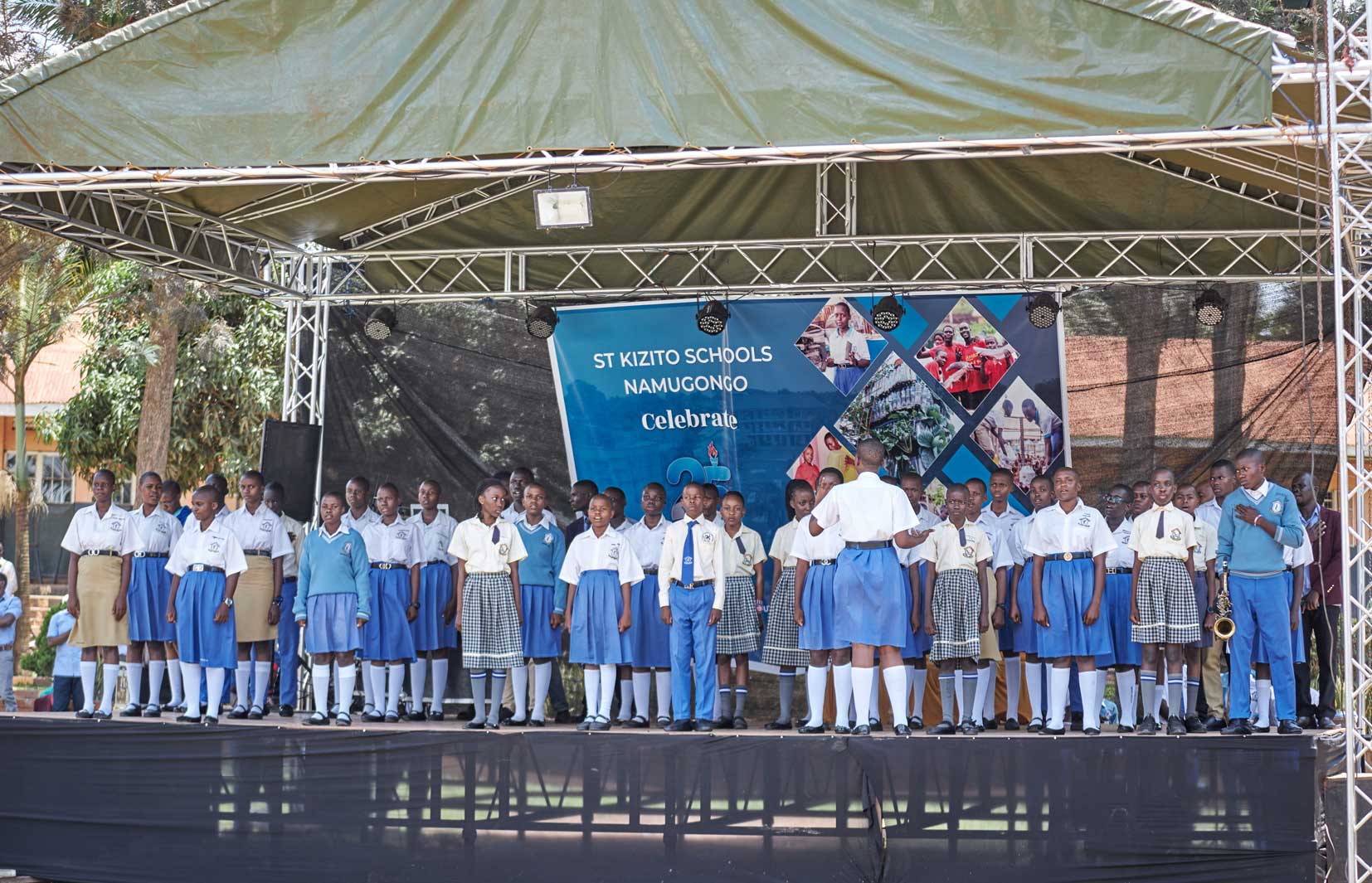
St. Kizito High School Namugongo is a finalist in the Sustainability category, supported by World’s Largest Lesson, a global education initiative that brings the Sustainable Development Goals into classrooms around the world.
Suubi Community Schools is a finalist in the Inclusive Education category and KCDC is a finalist in the Health and Wellbeing category.
Founded by renowned education pioneer and philanthropist Sunny Varkey, the $1 million Global Schools Prize is the largest prize of its kind.
Today’s top 50 announcement recognizes outstanding schools worldwide that demonstrate exceptional drive and ambition for their students, regardless of circumstance, ensuring every learner has the chance to thrive.
The top 50 shortlisted schools are awarded a Global Schools Prize Badge, symbolizing world-class impact and achievement in areas ranging from AI transformation to teacher development.
These schools are also welcomed into the Global Schools Network, gaining access to partnerships, professional development, and global collaboration opportunities with other leading institutions.
St. Kizito High School Namugongo is a living laboratory where students become climate problem-solvers before graduation.
Rooted in Uganda and serving many learners from low-income households, the school believes young people should have the skills to shape the future, not just study it.
Over the last decade, St. Kizito has become one of East Africa’s strongest models of practical climate education.
Students build miniature hydro-dams, run solar-powered irrigation systems, and produce eco-briquettes from agricultural waste that now fuel school kitchens.
In partnership with the FAO, the school established East Africa’s first AI-monitored organic hydroponics garden, while students also lead wetland restoration across Mukono and Semuto.
A standout circular economy project converts over 500 kilograms of daily food waste into livestock feed for 32 local farmers.
Its Clean Cooking Capacity Building Project, supported by IRENA and funded by the UAE Government, has reached over 10,000 students and 500 teachers across Uganda.
The school’s Annual Green Expo attracts over 6,000 participants and 50 schools nationwide. Its hands-on model even influenced Uganda’s new Competence-Based Curriculum.
Today, 85% of students pursue STEM and green careers, and 72.6% of alumni have launched green enterprises — proving education can solve real problems.
Suubi Community Schools, founded by Daniel Sebugwawo and serving 570 students aged 5-19, is a beacon of inclusive education in a region where fewer than half of children achieve basic literacy and numeracy.
Born from the belief that every child can learn, Suubi delivers a structured catch-up model grounded in foundational skills, formative assessment, individualized learning plans, and adaptive, multi-sensory teaching for learners with reading difficulties, attention challenges, language barriers, and trauma-related gaps from the Ebola and COVID-19 school closures.
Its most innovative practice, assigning SEND learners leadership roles in STEM, arts, and vocational projects, has transformed student confidence and become a replicable model.
Teacher development runs across four quarterly cycles informed by UNICEF and World Bank frameworks.
Partnerships with Riverflow International, alongside a new solar power system, are unlocking digital inclusion.
Strong Parent-Teacher engagement and community dialogue challenge disability stigma, particularly for girls.
Recognized with a Resolution Project Award and further project honours, Suubi would use Prize funds to expand teacher training, hire staff, scale STEM and vocational programmes, and strengthen after-class catch-up learning, proving meaningful inclusion is possible in resource-constrained settings.
Since 2014, KCDC in Fort Portal, Uganda, has transformed the lives of children with disabilities aged 0–18 through specialist therapy, inclusive education, and community empowerment.
Registered both as a Ugandan NGO and a UK charity, KCDC delivers physiotherapy, occupational and speech therapy, psychosocial care, nutritional support, and orthopaedic rehabilitation, backed by a robust Child Protection Policy aligned with Uganda’s Children’s Act, the UN Convention on the Rights of the Child, and the African Charter.
At its core sits the Kyaninga Inclusive Model School (KIMS), licensed by Kabarole District Local Government under the Education Act 2008.
KIMS educates children with and without disabilities together, using creative, hands-on teaching methods in welcoming, adapted classrooms.
Pupils in custom bamboo wheelchairs march publicly behind banners reading “Our Strength is Visibility – Inclusion Starts Here!”, turning awareness into celebration.
Major achievements include certified teacher-training cohorts equipping educators with inclusive teaching skills, thriving community outreach clinics supporting mothers and caregivers, and high-profile civic events uniting local government, military, and international partners behind the cause.
KCDC’s four-pillar model, therapy, education, training, and social enterprise, is changing what’s possible for every child.
Sunny Varkey, Founder of the Varkey Foundation, the Global Schools Prize, and GEMS Education, said; “Congratulations, St. Kizito High School Namugongo, Suubi Community Schools and Kyaninga
Alison Bellwood, Executive Director Youth and Education, Project Everyone and World’s Largest Lesson, said; “World’s Largest Lesson is honoured to support the Global Schools Prize’s Sustainability category. Congratulations to this year’s finalists – your commitment is not only transforming your communities, but inspiring schools everywhere to be creative, bold, and determined in building a better future for people and planet.”
The Top 50 will be narrowed down to 10 category winners, who will each be awarded $50,000. Of those, one extraordinary school will receive the Global Schools Prize and $500,000 to scale its impact.
The categories are:
- AI Transformation
- Arts, Culture and Creativity
- Character and Values Driven Education
- Global Citizenship and Peacebuilding
- Health and Wellbeing
- Overcoming Adversity
- SEND/Inclusive Education
- STEM Education
- Sustainability
- Teacher Development
The winner is expected to be announced at the Education World Forum in London in May.
A Global Schools Prize Council, made up of some of the most respected and influential figures in global education, technology, and philanthropy, is guiding the prize and providing strategic insight.
It is co-chaired by Stefania Giannini, former Assistant Director-General for Education at UNESCO, and Dame Christine Ryan, former Chair of the Ofsted Board.
Its members include Rosalia Arteaga, former President and Vice-President of Ecuador, Nuno Crato, Portugal’s former Education Minister, Andreas Schleicher, Director of Education and Skills at the OECD, Dina Ghobashy, Director of Education Transformation, Microsoft, Lasse Leponiemi, Co-Founder and Chairman, HundrED Foundation, Deborah Quazzo, Managing Partner, GSV Ventures and co-founder of the ASU+GSV Summit, Heekyung (Jo) Min, Executive Vice President, CJ CheilJedang, Jonnie Noakes, Director of The Tony Little Centre for Innovation and Research in Learning, Eton, 2019 Global Teacher Prize winner Peter Tabichi, 2023 Global Student Prize winner Nhial Deng, and Global Student Prize finalists Kenisha Arora and Kekhashan Basu.
The Council is part of a wider Global Schools Prize Academy, which will choose the winner.
The Global Schools Prize joins the Global Teacher Prize and Global Student Prize, completing a powerful trilogy that celebrates educators, learners, and now schools as institutions of innovation and change.
Together, the three prizes spark a 360-degree conversation about what it takes to deliver the best possible education, equipping children to face the future with confidence – while rethinking the future of learning for generations to come.