

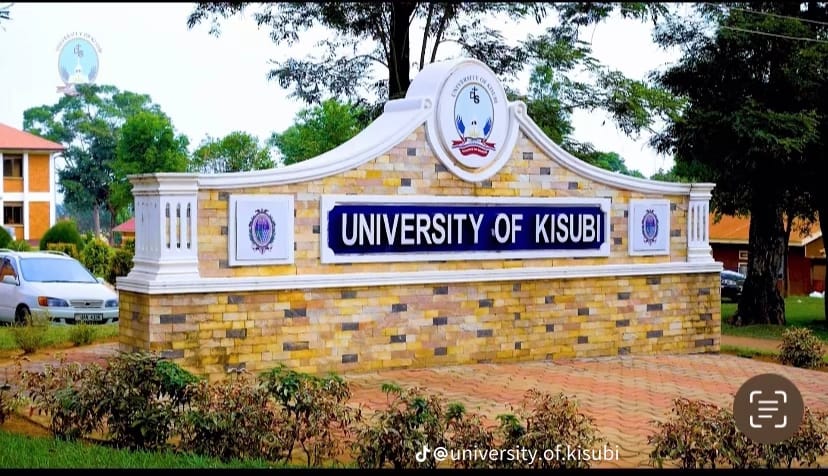
KISUBI, WAKISO — As the Brothers of Christian Instruction celebrate a historic century of educational and missionary service in Uganda, the University of Kisubi (UniK) is emerging as one of the most significant contemporary expressions of that 100-year educational legacy.
From the arrival of the Brothers in Uganda in 1926 to the establishment of a university centre in 2004, the transformation into a constituent university college in 2009, its independent licensing in 2015 and eventual attainment of a University Charter, UniK represents a remarkable institutional journey from a missionary educational vision to a modern higher-education institution.
Today, the University stands at another defining crossroads: how to convert a century of educational heritage into a future shaped by artificial intelligence, research, innovation, entrepreneurship, digital learning, health sciences, creative industries and community transformation.
The university currently describes itself as a private Chartered University owned by the Registered Trustees of the Uganda Brothers of Christian Instruction, rooted in Catholic ethos but open to qualified students of all backgrounds. It is located along the Kampala–Entebbe Highway at Kisubi.
A University Born From A Century-Long Mission
The story of UniK begins long before the university itself existed.
The Brothers of Christian Instruction arrived in Uganda in 1926, establishing an educational mission that would eventually extend from nursery and primary education through secondary education and, ultimately, university education.
According to UniK’s current Vice Chancellor, Rev. Bro. Deogratias Mugema, the university is the culmination of this long educational ministry.
The university’s historical mission was not simply to produce academically qualified people, but to educate the whole person—developing the intellect, character, practical abilities and sense of responsibility needed to serve society.
That philosophy is closely associated with the educational heritage of Venerable Jean-Marie Robert de La Mennais, founder of the Brothers of Christian Instruction.
It is this heritage that UniK seeks to carry into contemporary higher education: head, heart and hands.
From Kisubi Brothers Centre To Chartered University
The modern institutional history of UniK began on 15 August 2004, when the Brothers of Christian Instruction entered into a Memorandum of Understanding with Uganda Martyrs University to establish the Kisubi Brothers Centre of Uganda Martyrs University (KBUMU).
On the 27th March 2009, the National Council for Higher Education granted the institution constituent-college status, transforming it into Kisubi Brothers University College (KBUC), a constituent college of Uganda Martyrs University.
On the 29th June 2015, NCHE granted the institution an independent operational license under its new name, University of Kisubi (UniK).
The institution subsequently progressed to full Charter status.
UniK’s current institutional profile describes it as a Chartered University, while the university’s 2026 centenary reflection identifies the Charter as a major milestone in its institutional development.
The university’s own historical account therefore tells a story of progressive institutional maturation.
From Educational mission → University Centre → Constituent College → Independent University → Chartered University.
The Brothers Who Built The University Vision
The development of the university was not the work of a single individual.
In a speech associated with the university’s Charter milestone, UniK acknowledged several Brothers who played important roles in reviving and negotiating the idea of establishing a university at Kisubi.
Among those acknowledged were Br. Barigye Vincent, who re-awakened the idea of a university at Kisubi, and other Brothers including Yiga Andrew, Mubiru Tibyasa, Aloysius Byaruhanga, Deogratias Mugema and Kasendwa Henry, who were involved in negotiations with Uganda Martyrs University.
The university also pays tribute to Br. Francis Blouin, its first Principal, who helped organize the institution during its formative years.
UniK further recognizes the support of the American Brothers of Christian Instruction, Kampala Archdiocese and Uganda Martyrs University in the development of the institution.
This history demonstrates that UniK was built through institutional collaboration rather than through a single founder’s initiative.
At the centre of UniK’s current transformation is Rev. Bro. Deogratias Mugema, the university’s Vice Chancellor and, according to the university, its first Brother Vice-Chancellor.
His leadership comes at a particularly symbolic moment.
The university is simultaneously consolidating its post-Charter identity and participating in the 1926–2026 centenary celebrations of the Brothers of Christian Instruction in Uganda.
In his recent dialogue with the Centenary Magazine, Bro. Mugema argued that UniK must preserve the educational heritage of the Brothers while responding to contemporary national and global challenges.
His leadership message is clear: UniK can’t survive on history alone.
The university must continuously improve the relevance of its curricula, strengthen research, embrace technology, develop practical skills, commercialize innovations and deepen partnerships.
According to the Vice Chancellor, the university currently has more than 1,800 students and over 150 employees.
That makes UniK not only an academic institution but also a significant socio-economic institution in the wider Kisubi, Kawuku, Entebbe and Kampala–Entebbe corridor.
Its economic footprint extends into accommodation, transport, food, retail, printing, ICT, professional services and other businesses serving the university community.
The Vice Chancellor notes that the university is both a consumer of local goods and services and a provider of services to the surrounding community.
UniK’s academic structure has evolved considerably.
Its current institutional website identifies major academic areas including the Faculty of Education, Faculty of Business and ICT, Faculty of Social Sciences and Psychology, Faculty of Health Sciences and School of Graduate Studies and Research.
The Faculty of Education remains one of the university’s most important areas, reflecting the Brothers’ historical commitment to teacher formation.
The university provides programmes covering primary and secondary education, including Arts and Sciences.
Business, economics, information technology and computer science form another major component of the university’s academic portfolio.
These programmes are increasingly important as Uganda’s economy moves toward digitalization and as employers demand graduates who combine conventional academic knowledge with technological competence.
UniK’s programmes in counselling psychology, social work, political science, public administration, communication and other social disciplines reinforce its human-development orientation.
One of the institution’s distinctive areas is Child Protection and Development, an area that UniK leadership highlights as part of its contribution to safeguarding children and vulnerable populations.
UniK provides training connected to biomedical laboratory sciences, nursing and midwifery, while the National Council for Higher Education conducted an assessment in 2026 as part of the accreditation process for three proposed programmes aimed at strengthening the university’s contribution to science education and healthcare.
UniK also offers programmes in areas including Fashion and Design, Music and Industrial Art and Design.
This gives the institution potential to become a stronger player in Uganda’s creative economy, particularly where art, fashion, design, communication, technology and entrepreneurship intersect.
UniK’s School of Graduate Studies and Research coordinates graduate education and research.
Its postgraduate portfolio includes programmes in Leadership, Information Technology, Business Administration,Clinical Psychology and Counselling, Social Work,Child Protection, Counselling Psychology,Monitoring and Evaluation,Dance Education & Management.
The Graduate School provides UniK with an important platform for moving beyond undergraduate teaching toward advanced research and knowledge production.
The university also hosts academic research activities and conferences, providing opportunities for researchers and scholars to present and disseminate their work.
Perhaps one of the most interesting developments at UniK is the university’s growing emphasis on innovation.
UniK has showcased innovations in e-mobility, solar energy applications and energy-saving cooking technologies.
Among the innovations highlighted by the Vice Chancellor are the Eco Bike and the UniK SolGen Trike, a solar-powered three-wheeler.
The university says these innovations have been recognized and registered through the Uganda Registration Services Bureau.
UniK was also recognized as Second Runner-Up at the National Council for Higher Education Annual Exhibitions in 2024 and 2025, where it showcased innovations including e-mobility and solar-energy applications.
This is significant because it points toward a different model of African university—one that does not merely consume imported knowledge but attempts to generate locally relevant solutions.
The biggest transformation facing UniK—and universities across Uganda—is technological.
Artificial intelligence is changing teaching, research, administration, employment and the nature of professional work.
UniK leadership acknowledges that AI, automation, digital learning, climate change and e-mobility are reshaping society.
The university is consequently working to integrate AI into its operations and strengthen computer science, ICT and digital learning.
UniK has also invested in digital infrastructure, including a Tier 3 server, intended to support Open, Distance and e-Learning.
This could eventually enable the university to reach students far beyond the physical Kisubi campus.
The year 2026 is perhaps the most historically significant year in the university’s development.
The Brothers of Christian Instruction are celebrating 100 years since their arrival in Uganda in 1926.
For UniK, the centenary is more than an anniversary.
It’s an opportunity to ask a fundamental question
What should the next 100 years of the Brothers’ educational mission look like?
The university’s answer is increasingly visible through scholarships, research, innovation, technology, community engagement and partnerships.
The centenary therefore provides an opportunity to transform institutional memory into a development agenda.
One of the most concrete centenary initiatives is the UniK Centenary Scholarship Scheme.
The university announced 100 fully and partially funded tuition scholarships for the August 2026 intake.
The scheme is open to qualifying applicants with academic potential, strong values and commitment to personal development.
Special consideration is given to talent in football, basketball, music performance and academic excellence.
This initiative gives practical meaning to the centenary.
Instead of celebrating the past only through ceremonies, the university is investing in the education of another generation.
UniK is also participating in the James Aryam Scholarship for Postgraduate Studies 2026, which supports refugees and conflict-affected individuals, particularly women, to pursue postgraduate education.
The programme is implemented through Windle Trust International and partners, with UniK among the eligible host universities in Uganda.
Such partnerships position UniK within a wider international development agenda involving education,refugee empowerment,women’s leadership, community development & post-conflict recovery.
Modern universities cannot operate successfully in isolation.
UniK has developed relationships with institutions and organizations including Walsh University, UNESCO, Uganda Martyrs University, Marywood University, Uganda Virus Research Institute, Windle Trust, Porticus and other partners.
The university also reports collaboration in research and innovation with Ugandan institutions, including work associated with climate research.
The strategic importance of these relationships lies not simply in signing agreements but in converting partnerships into student exchanges,scholarships, joint research, staff development, internships, innovation, technology transfer,international conferences, community programmes.
The university’s mission places strong emphasis on social transformation.
One example is the Serve & Save Project, involving the Uganda Red Cross Society, UniK Red Cross Club and Service Learning Club.
Such programmes allow students to apply classroom knowledge to real community challenges.
This is particularly relevant to disciplines such as social work, psychology, education, child protection,public health,development studies,business & environmental sustainability.
In this model, the community becomes not merely an object of study but a partner in learning and transformation.
UniK’s institutional philosophy is built around holistic education.
It’s current institutional profile defines it’s core values through the acronym The university describes itself as Catholic-based but open to all qualified students.
Its Catholic identity is presented as an educational ethos rather than a barrier to admission.
The institution seeks to produce graduates who are not only employable but also responsible, ethical and committed to the common good.
Despite its progress, UniK’s future ambitions require substantial investment.
A university with more than 1,800 students must continuously invest in classrooms, laboratories, health-sciences facilities, ICT infrastructure,student accommodation, research facilities,innovation laboratories,libraries and digital resources ,staff development,accessibility infrastructure, sports and recreation, e-learning & renewable energy.
The university’s development challenge is therefore not simply to attract more students.
It is to ensure that infrastructure, academic quality, research capacity and technology grow at the same pace as enrolment.
Perhaps the greatest strategic opportunity for UniK is commercialization.
The university already has innovations in e-mobility and solar technologies.
The next step should be to build a formal pipeline:
From Research → Prototype → Intellectual Property → Incubation → Investment → Production → Market.
If successfully implemented, this could enable UniK to generate income from knowledge and innovation while creating employment for graduates.
It could also position the university as an important contributor to Uganda’s emerging innovation economy.
UniK’s programmes in fashion, music and industrial art and design provide another potentially powerful strategic niche.
Uganda’s creative economy is growing rapidly across from fashion,music,film, photography, graphic design,digital media,advertising, cultural tourism, crafts to performing arts.
UniK could develop a comprehensive Creative Industries and Design Innovation Centre, connecting academic training with production, entrepreneurship, digital technology and markets.
Such a centre could also establish collaborations with creative institutions, universities, fashion houses, media organizations and international cultural organizations.
The university’s expansion into health-related education could also become a major strategic pillar.
Biomedical laboratory technology, nursing and midwifery require specialized laboratories, clinical partnerships, simulation facilities and highly qualified personnel.
As Uganda’s population grows and demand for health workers increases, UniK could position itself as a significant private provider of health-professions education.
The 2026 NCHE verification exercise for proposed programmes indicates movement in this direction.
Looking beyond the centenary, UniK could build its next strategic decade around five major transformations, the digital & AI university,expansion of Artificial Intelligence, data science, cybersecurity, computer science, digital education,e-learning, educational technology.
A dedicated innovation ecosystem focused on e-mobility,solar energy, climate technology, agricultural technology, assistive technology & energy efficiency.
Building on strengths in psychology, counseling, social work, education,child protection & community development.
Connecting from Fashion, Music,Design, Media, Technology & Entrepreneurship.
Transforming partnerships into joint research, international scholarships, exchange programmes, visiting professors, joint degrees, international conferences & regional African programmes.
As the Brothers of Christian Instruction commemorate 100 years in Uganda, UniK’s greatest responsibility may be to ensure that the centenary does not become simply a historical milestone.
The real test will be what the institution builds after the celebrations.
Can the centenary produce a permanent scholarship endowment?
Can it finance new laboratories?
Can it expand research?
Can it create a technology and innovation park?
Can it establish new international partnerships?
Can it support disadvantaged students?
Can it strengthen the creative economy?
Can it produce technologies that solve Ugandan problems?
Can it create thousands of opportunities for young people?
These questions define the next chapter.
The university’s location gives it another strategic advantage.
Situated along the Kampala–Entebbe corridor, UniK is positioned close to Uganda’s capital, Entebbe and the country’s principal international gateway.
Its proximity to Kampala, Wakiso, Entebbe and the wider metropolitan economy creates opportunities for attracting students, researchers, investors and international partners.
The university’s ambition, however, should go beyond geographical proximity.
Its stated aspiration is to remain responsive to national and global needs.
That means developing an institution whose graduates can compete not only in Uganda but throughout East Africa and the international labour market.
University of Kisubi is ultimately a story about institutional evolution.
The Brothers arrived in Uganda in 1926 with an educational mission.
A century later, that mission has produced a university with:
Charter status has more than 1,800 students,more than 150 employees, multiple faculties,graduate programmes,research capacity, innovation projects, international partnerships,scholarship initiatives,health-sciences ambitions,digital transformation plans & a growing commitment to community service.
It’s history provides legitimacy.
It’s Catholic ethos provides identity.
It’s Charter provides institutional recognition.
It’s students provide energy.
It’s researchers provide knowledge.
It’s innovators provide possibility.
It’s partnerships provide connectivity.
And it’s centenary provides an extraordinary opportunity to define the future.
The University of Kisubi stands today at the intersection of heritage and innovation.
It is a university born from a century-old educational mission, but it is increasingly confronting some of the newest challenges facing humanity: artificial intelligence, climate change, digital transformation, unemployment, skills gaps, health needs and social inequality.
The central challenge for UniK’s next chapter will therefore be to combine the wisdom of it’s history with the demands of the future.
As Uganda enters another era of economic and technological transformation, the University of Kisubi has the opportunity to become more than a place where students obtain degrees.
It can become a centre of knowledge, innovation, character formation, entrepreneurship, research and social transformation.
And if the first 100 years of the Brothers of Christian Instruction in Uganda were about establishing an educational foundation, the next century could be about building an institution capable of exporting knowledge, innovation, ethical leadership and practical solutions from Kisubi to Uganda, Africa and the world.
The centenary, therefore, should not be viewed as the end of a journey.
It should be the beginning of UniK’s next hundred years.(By Don Edwarles MKM)