
By Don Edwarles MKM
Wetland fish farming and community eco-tourism emerge as creative, sustainable alternatives to wetland destruction.
For many years, Uganda’s wetland conservation debate has largely been associated with enforcement operations, eviction threats, restoration orders and repeated public warnings against encroachment.
However, a new and increasingly creative conservation conversation is emerging—one that asks a fundamental question: Can communities protect wetlands if conservation itself becomes a source of livelihood, education and sustainable economic opportunity?
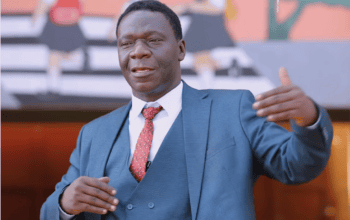
It is within this changing conservation landscape that Majo David Muwanga Senkubuge Kibirango of the Internal Security Organisation (ISO), through his agency SEMUDA Uganda, is championing a new approach to wetland restoration and community environmental conservation.
Through wetland fish farming and community eco-tourism, SEMUDA Uganda is promoting what conservationists and community development actors increasingly describe as an alternative, creative and sustainable solution to wetland degradation across Uganda.
The initiative is anchored on a simple but powerful philosophy: conservation should not only tell communities what to stop doing; it should also provide them with sustainable alternatives that allow them to earn, learn and prosper while protecting the environment.
Rethinking The Wetland Conservation Model
Uganda’s wetlands are vital natural ecosystems. They regulate water systems, support biodiversity, provide breeding grounds for aquatic life and sustain the livelihoods of many communities.
Yet, across the country, wetlands continue to face enormous pressure from human activities, including cultivation, settlement, drainage, waste disposal and unplanned development.
The traditional conservation approach has often focused heavily on stopping illegal activities.
While enforcement remains important, Majo David Muwanga Senkubuge Kibirango and SEMUDA Uganda are advancing a complementary model—one that focuses on changing the economic relationship between communities and wetlands.
Under this model, the wetland is not viewed merely as land to be cleared for cultivation or construction.
Instead, it becomes a living conservation asset capable of supporting sustainable fish production, environmental education, recreation and community tourism.
This is the thinking behind SEMUDA’s growing Eco Tourism and Fish Farming Centre concept.
Semuda: Where Conservation Meets Community Development
SEMUDA Uganda is positioning itself at the intersection of environmental conservation, fish farming and eco-tourism.
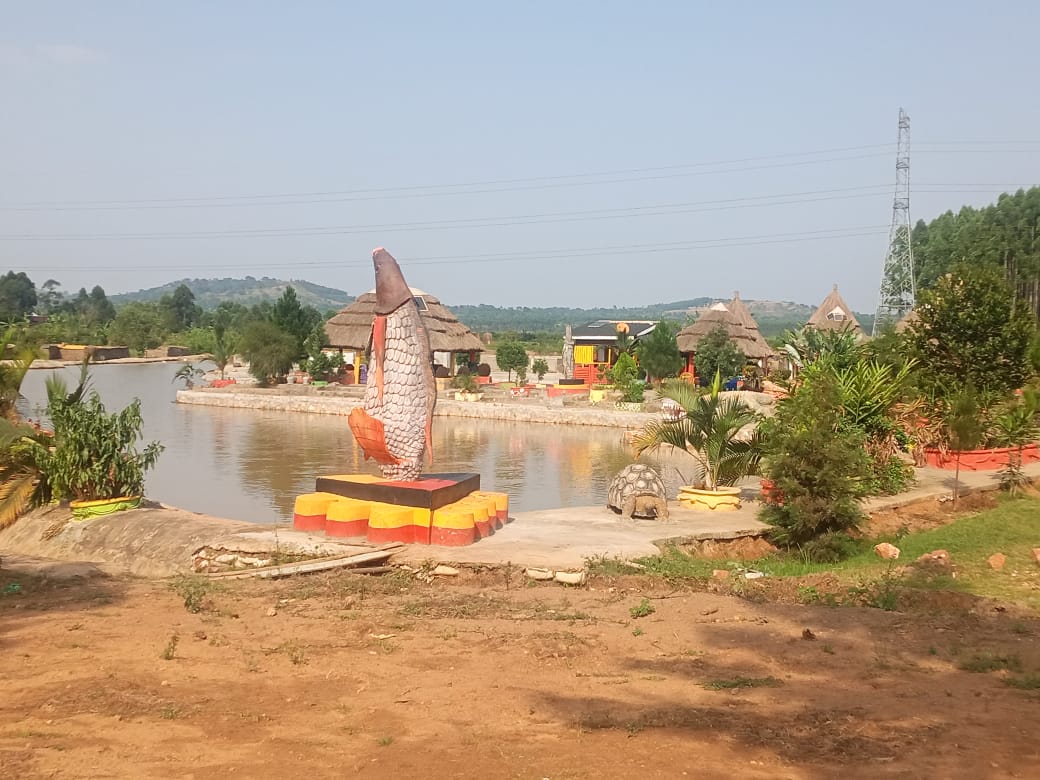
The agency’s vision is visibly represented through its eco-tourism and fish farming centre concept at Nabusanke along the Masaka Road in Kayabwe Town Council, Mpigi District.
The SEMUDA concept combines the beauty of a natural wetland environment with fish farming, a water-based ecosystem, traditional architectural heritage, community activities and environmental education.
The centre’s visual identity—featuring fish, wetland vegetation, a traditional thatched structure, a canoe and a rich natural landscape—reflects the agency’s wider message: wetlands can be conserved and transformed into centres of sustainable community opportunity.
At the heart of the initiative is the belief that a community that benefits responsibly from its natural environment is more likely to become a custodian of that environment.
Wetland Fish Farming As An Alternative To Destructive Activities
One Of Semuda Uganda’s Most Notable Interventions Is The Promotion Of Wetland Fish Farming As A Sustainable Livelihood Alternative.
For Many Communities Living Around Wetlands, Economic Hardship Is One Of The Factors That Pushes People Into Activities That Degrade Natural Ecosystems.
By Promoting Responsible Fish Farming, Semuda Seeks To Demonstrate That Communities Can Generate Income From Aquatic Resources Without Destroying The Entire Wetland Ecosystem.
Fish farming provides opportunities for household income generation,
youth employment, community enterprise development, food and nutrition security,skills development in aquaculture and sustainable utilization of water-related resources.
The SEMUDA Model, However, Is Not About Encouraging Uncontrolled Fish Farming In Wetlands.
Rather, Its Wider Conservation Philosophy Is Based On Planned, Environmentally Responsible And Community-Centered Fish Farming Practices That Respect The Ecological Importance Of Wetlands.
This Distinction Is Critical.
The Question Is Not Whether Wetlands Should Be Exploited. The Question Is Whether Communities Can Be Supported To Develop Sustainable Activities That Protect Wetland Functions While Creating Legitimate Economic Opportunities.
Community Eco-Tourism: Making Conservation Visible And Valuable
The second major pillar of the SEMUDA campaign is community eco-tourism.
Eco-tourism offers a unique opportunity to transform wetlands from neglected or threatened ecosystems into educational, cultural and economic destinations.
Through eco-tourism, communities can showcase, wetland biodiversity,traditional fishing practices, indigenous knowledge, local food and culture, natural landscapes, traditional architecture and community conservation initiatives.SEMUDA’s eco-tourism model is designed to make conservation visible, practical and economically meaningful.
A visitor who comes to experience a wetland environment, learn about fish farming or enjoy a community eco-tourism attraction contributes to the local economy.
This creates a powerful conservation incentive.
The wetland becomes more valuable alive than destroyed.
According to the conservation philosophy associated with the SEMUDA initiative, eco-tourism can also serve as a platform for environmental education.
Children, students, local leaders and visitors can learn about the importance of wetlands through direct experience rather than relying only on classroom lessons or public notices.
The Major David Muwanga Senkubuge Kibirango Approac
What distinguishes the campaign championed by Major David Muwanga Senkubuge Kibirango is its emphasis on creative conservation solutions.
His approach, through SEMUDA Uganda, appears to challenge the assumption that environmental conservation must always be driven by fear, restrictions and punishment.
Instead, the campaign promotes a broader development question:
> How can Uganda protect its wetlands while helping the communities living around them to improve their livelihoods?
This approach is particularly important in a country where environmental degradation is often linked to poverty, unemployment and limited livelihood options.
If communities are only told to stop using wetlands without being offered viable alternatives, conservation efforts may face resistance or remain unsustainable.
SEMUDA’s philosophy is therefore built around conservation, empowerment and transformation.
A Possible Model For Wetland Restoration Across Uganda
Uganda has hundreds of communities living near wetlands and water ecosystems.
The SEMUDA model raises an important national question: Can similar community-based conservation centres be developed in other parts of the country?
From the wetlands of central Uganda to the lake regions and other water ecosystems, different communities could potentially develop conservation-based enterprises tailored to their local environment.
Such initiatives could include Community fish farming centers, Wetland learning & demonstration sites, Nature trails ,Bird-watching activities, Traditional cultural tourism, Community conservation museums, Youth environmental clubs and Local environmental enterprise hubs.
However, experts and stakeholders would need to ensure that such initiatives are properly planned, environmentally compliant and based on sound wetland management principles.
The SEMUDA experience demonstrates that conservation can be connected to local innovation and community entrepreneurship.
The Role Of Security And Community Environmental Awareness
The involvement of a figure associated with ISO in a conservation and community development initiative also raises a wider conversation about the changing nature of national security.
In the modern world, environmental degradation is increasingly recognized as a contributor to community vulnerability, livelihood insecurity and social tension.
When wetlands disappear, communities may face reduced water security, declining biodiversity and increased pressure on available land and resources.
Therefore, environmental protection is not only a conservation issue.
It is also a community resilience and national development issue.
The SEMUDA initiative presents an example of how environmental awareness, community engagement and sustainable enterprise can be incorporated into a broader national conversation about the future of Uganda’s natural resources.
From Campaign To Movement
The SEMUDA wetland restoration campaign is still part of a wider and evolving conservation journey.
But its message is already clear.
Uganda does not have to choose between wetland conservation and community development.
With innovation, planning and responsible investment, the two can work together.
Through wetland fish farming and community eco-tourism, Major David Muwanga Senkubuge Kibirango, through SEMUDA Uganda, is championing an alternative conversation—one that seeks to transform wetlands from areas of conflict and degradation into centres of conservation, enterprise and community opportunity.
The future of Uganda’s wetlands may ultimately depend not only on how effectively the country enforces environmental laws, but also on how creatively it empowers communities to become the custodians of the ecosystems upon which they depend.
And perhaps, as SEMUDA Uganda’s conservation message suggests, the most sustainable way to save Uganda’s wetlands is to ensure that communities see conservation not as a punishment, but as a pathway to a better future.