

By DON EDWARLES MKM
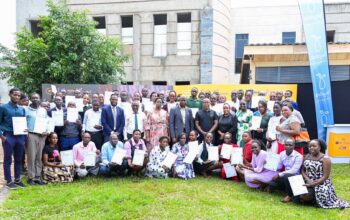
The University of Kisubi (UniK) marked its 11th Graduation Ceremony on Friday, 23 October 2026, under the inspiring theme, “Pilgrims of Hope: Sent Forth to Transform the World in Christ,” celebrating academic achievement while emphasising the importance of Christian values, professional excellence, research, innovation and community transformation.
The ceremony was scheduled to begin at 9:00 a.m. at the university’s campus in Kisubi, along the Kampala–Entebbe Highway.
Hon. Dr John Chrysostom Muyingo, Acting Minister of Education and Sports, was named Chief Guest, while Bishop Lawrence Mukasa of the Catholic Diocese of Kasana–Luweero was designated Main Celebrant.

The graduation represented an important milestone in the university’s institutional development, bringing attention to the achievements of students who had completed their respective academic programmes and the responsibilities awaiting them in their professional and personal lives.
The occasion also provided an opportunity to reflect on the contribution of higher education to Uganda’s socioeconomic transformation and the university’s educational heritage associated with the Brothers of Christian Instruction.
The ceremony’s theme, date, Chief Guest and Main Celebrant were drawn from the graduation information supplied. Details of speeches, the final number of graduands and other proceedings were not independently verified.
A THEME THAT CONNECTED FAITH, HOPE AND TRANSFORMATION
The theme, “Pilgrims of Hope: Sent Forth to Transform the World in Christ,” presented a powerful message linking academic achievement with Christian faith, responsible leadership and service to humanity.
The concept of pilgrims of hope emphasized perseverance, solidarity, faith and the determination to build a better future despite social, economic and personal challenges.

For the University of Kisubi, the theme highlighted the responsibility of graduates to take their knowledge beyond the classroom and apply it to practical challenges in workplaces, businesses, public institutions and communities.
The expression sent forth carried a particular message: graduates were not simply leaving the university with qualifications; they were entering a new stage of responsibility in which their knowledge and skills could benefit society.
The theme also reinforced the relationship between academic excellence and Christian formation, encouraging graduates to uphold integrity, respect human dignity, promote justice and contribute to the common good.
As Uganda continued to pursue socioeconomic development, the ceremony highlighted the importance of producing professionals who could combine technical competence with ethical leadership and a commitment to community wellbeing.
EDUCATION LEADERSHIP AND THE NATIONAL DEVELOPMENT AGENDA
Hon. Dr John Chrysostom Muyingo, Acting Minister of Education and Sports, was identified as the Chief Guest for the ceremony.
His designation highlighted the connection between university education and Uganda’s wider priorities in human-capital development, professional training and national transformation.
Higher education institutions have played an important role in preparing teachers, business professionals, technology specialists, health practitioners, researchers and other professionals whose expertise supports the country’s public and private sectors.
The graduation provided an opportunity to reflect on the need for universities to maintain academic standards while strengthening practical training, research, entrepreneurship and digital skills.
It also underscored the importance of ensuring that academic qualifications translated into professional competence, innovation and measurable contributions to society.
For Uganda, the long-term value of higher education has depended not only on the number of graduates produced but also on their ability to solve problems, create employment, strengthen institutions and improve service delivery.

BISHOP LAWRENCE MUKASA AND THE SPIRITUAL DIMENSION OF EDUCATION
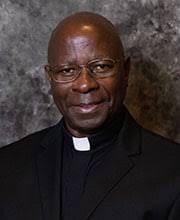
Bishop Lawrence Mukasa of the Catholic Diocese of Kasana–Luweero was designated Main Celebrant, highlighting the importance of the Catholic educational tradition within the university’s institutional identity.
Catholic education has traditionally emphasised the development of the whole person through intellectual formation, moral responsibility, spiritual growth and service to others.
This approach recognises that knowledge and professional skills achieve their greatest value when guided by sound ethical principles and respect for human dignity.
The graduation theme reinforced this understanding by presenting graduates as individuals called to use their education in the service of humanity.
In professional life, this responsibility has included rejecting corruption, maintaining professional standards, treating others fairly and using positions of responsibility to improve people’s lives.
The spiritual dimension of the ceremony therefore complemented the academic achievements of the graduands by connecting professional success with responsible conduct and service.
FROM A LONG EDUCATIONAL TRADITION TO A MODERN UNIVERSITY
The University of Kisubi’s institutional journey was closely connected to the educational mission of the Brothers of Christian Instruction in Uganda.
According to the university’s published history, its university-level development began in 2004 as the Kisubi Brothers Centre of Uganda Martyrs University.
In 2009, the institution attained constituent-college status and became Kisubi Brothers University College. In 2015, it received an independent operational licence under the name University of Kisubi.
These milestones demonstrated the institution’s progression from an earlier university-level centre to an independently licensed university.
The year 2026 was particularly significant because it marked 100 years since the Brothers of Christian Instruction began their educational mission in Uganda in 1926.
The centenary offered an opportunity to recognise the historical contribution of religious educators while reflecting on the future of education in the country.
It was important to distinguish the university’s institutional development, which began in 2004, from the longer educational history of the Brothers, which began in Uganda in 1926.
Together, these milestones provided a broader context for understanding UniK’s identity and its contribution to Uganda’s educational landscape.

“IN VIRTUE WE EDUCATE”: A COMMITMENT TO CHARACTER AND KNOWLEDGE
The university’s motto, “In Virtue We Educate,” captured its emphasis on the relationship between education and character formation.
The motto reflected the principle that education should produce individuals who combined professional knowledge with integrity, accountability and respect for others.
In contemporary society, professional competence alone has not been sufficient when separated from ethical responsibility.
Teachers have needed fairness and professionalism; business leaders have needed honesty and responsible management; technology specialists have needed to consider privacy and the ethical use of digital tools; and health professionals have needed compassion and respect for human dignity.
The university’s values-based identity therefore offered an important framework for understanding the wider purpose of the graduation.
The challenge for the graduands was to demonstrate these values through their professional decisions, relationships and contributions to society.
ACADEMIC DEVELOPMENT ACROSS PROFESSIONAL DISCIPLINES
The university’s published academic structures covered areas including education, business and information and communication technology, social sciences and psychology, health sciences, and graduate studies and research.
These areas addressed important dimensions of Uganda’s human-capital development.
Education and teacher development: Graduates in education could contribute to teaching, educational administration, curriculum implementation, research and institutional leadership.
Business and information technology: These fields provided knowledge relevant to organisational management, digital transformation, entrepreneurship and the development of technology-based services.
Social sciences and psychology: These disciplines contributed to understanding human behaviour, counselling, community relationships and social development.
Health sciences: Health-related education supported the development of professionals who could contribute to healthcare delivery, prevention and community wellbeing.
Graduate studies and research: Advanced study and research provided opportunities to develop specialised knowledge, investigate emerging problems and generate evidence for professional practice.
These academic areas demonstrated the importance of preparing graduates who could respond to changing professional requirements.
The university’s continued development in these fields would depend on maintaining academic quality, strengthening practical learning and ensuring that programmes remained relevant to professional and societal needs.
RESEARCH AND INNOVATION FOR SOCIOECONOMIC TRANSFORMATION
Research and innovation formed another important dimension of the university’s institutional development.
UniK had reported participation in national research and innovation exhibitions, including the 16th National Council for Higher Education Exhibition in 2026.
Such exhibitions created opportunities for universities to present innovations, exchange ideas and demonstrate how academic knowledge could contribute to socioeconomic transformation.
Research and innovation became increasingly important as Uganda addressed challenges involving technology, employment, environmental sustainability and public-service delivery.
The university’s future opportunities included strengthening postgraduate research, encouraging student-led innovation, developing interdisciplinary projects and expanding partnerships with government, industry and community organisations.
The long-term contribution of research would depend on the quality of knowledge produced, the problems addressed and the benefits delivered to society.
The graduation therefore provided an appropriate occasion to recognise the importance of continued learning, critical thinking and evidence-based problem-solving.
COMMUNITY ENGAGEMENT: TAKING EDUCATION BEYOND THE CLASSROOM
The university’s reported community-engagement activities illustrated how academic learning could be connected to practical development needs.
Nursing students received international recognition
On 17 October 2026, the university’s service-learning platform reported that nursing students received a €1,000 honorary mention award in the 2026 Uniservitate Service-Learning Awards.
The recognised initiative was titled A Student Journey to Community and Primary Health Care.
The report described efforts to identify community health concerns and develop practical responses using locally available resources.
The recognition highlighted the potential of student-led initiatives to connect professional training with community health priorities.
It also demonstrated how universities could support learning beyond the classroom through practical engagement with real-life challenges.
Community water-source restoration in Katabi
On 7 October 2026, the university reported a community water-source restoration exercise at Kawuku-Ssisa in Katabi Town Council.
The activity brought together the university, Buganda Kingdom’s BulungiBwansi initiative, Katabi Town Council, schools, local leaders and residents.
According to the university’s report, approximately 300 students and community members participated, while the water source was reported to serve more than 1,500 households.
The initiative illustrated the potential for universities to work with communities and local institutions to address environmental sanitation challenges.
However, water safety requires appropriate testing and continued protection against contamination; cleaning the surrounding area alone cannot establish that water is safe for drinking.
Together, the reported health and environmental initiatives illustrated how the university’s educational mission could extend into community development.
GRADUATES AND THE CHALLENGE OF EMPLOYMENT
The graduation also drew attention to the transition from academic achievement to employment, entrepreneurship and professional service.
Graduates entered a labour market increasingly shaped by digital technologies, changing professional standards and demand for practical skills.
Some would pursue formal employment, while others would continue their education, conduct research or establish businesses.
The transition from university to professional life required adaptability, discipline, communication, problem-solving ability and a willingness to continue learning.
Entrepreneurship also offered opportunities for graduates to create enterprises and employment, although success depended on market understanding, financial management, innovation and responsible business practices.
Universities could support this transition through internships, career guidance, mentorship, enterprise development and stronger partnerships with employers.
Graduate employment outcomes, business development and employer feedback would provide useful measures of the long-term value of academic training.
RECOGNISING PARENTS, GUARDIANS AND ACADEMIC STAFF
The graduation recognised a journey that had required the contribution of students, families, lecturers, administrators and other supporters.
Parents and guardians had often made significant financial and personal sacrifices to support education.
Lecturers had guided students through academic work, examinations and research, while university administrators and support staff had helped maintain the systems necessary for teaching and learning.
Their contribution formed an important part of the broader achievement represented by graduation.
The occasion therefore provided an opportunity to recognise the collective effort behind academic success and to encourage graduates to use their achievements responsibly.
A CENTENARY YEAR OF REFLECTION AND RENEWED COMMITMENT
The 11th Graduation Ceremony took place during the centenary year of the Brothers of Christian Instruction’s educational mission in Uganda.
The milestone offered an opportunity to reflect on the contribution of religious educators to the development of education and the preparation of successive generations of learners.
It also raised important questions about the future of educational institutions in a changing world.
Universities have needed to respond to technological disruption, the demand for relevant professional skills, the cost of education and the growing importance of research and innovation.
For UniK, the centenary year and the graduation provided complementary opportunities to recognise the past while preparing students and institutions for future challenges.
The lasting value of an educational heritage has depended on its ability to inspire continued service, academic improvement and meaningful contributions to society.
THE WAY FORWARD FOR THE UNIVERSITY OF KISUBI
The university’s continuing development will depend on maintaining academic quality, supporting research, expanding community engagement and strengthening relationships with employers and other institutions.
Practical priorities have included improving graduate employability, promoting innovation, supporting student welfare and ensuring that academic programmes respond to changing professional needs.
Scholarships and other appropriate student-support mechanisms have also remained important considerations for widening access to higher education.
Partnerships with government, employers, professional associations and civil society organisations could create opportunities for internships, applied research, mentoring and community projects.
These priorities reflect the wider responsibilities of universities seeking to remain relevant, accountable and responsive to society.
The challenge has been to translate institutional commitments into measurable outcomes that benefit students, communities and the country.
CONCLUSION: PILGRIMS OF HOPE, SENT FORTH TO TRANSFORM THE WORLD
The University of Kisubi’s 11th Graduation Ceremony marked an important occasion for celebrating academic achievement, recognising collective sacrifice and reaffirming the relationship between education and service.
Held under the theme “Pilgrims of Hope: Sent Forth to Transform the World in Christ,” the ceremony highlighted the importance of combining professional competence with faith, integrity, hope and responsibility.
Hon. Dr John Chrysostom Muyingo, Acting Minister of Education and Sports, was named Chief Guest, while Bishop Lawrence Mukasa of Kasana–Luweero Catholic Diocese was designated Main Celebrant.
The university’s institutional history, academic structures, research activities and reported community-engagement initiatives provided a broader context for understanding its contribution to higher education in Uganda.
Ultimately, the lasting value of the qualifications awarded will be reflected in the graduates’ professional conduct, the institutions they strengthen, the enterprises they establish and the communities they serve.
As the Brothers of Christian Instruction marked a century of educational mission in Uganda, UniK’s graduation offered an opportunity to connect that heritage with a continuing commitment to academic excellence, innovation, ethical leadership and community transformation.
The message to the graduating class was clear: knowledge should be accompanied by humility, professional responsibility and a determination to create meaningful opportunities for others.
Congratulations to the University of Kisubi, its leadership, academic staff, graduands, parents, guardians, alumni and the entire university community on the 11th Graduation Ceremony.
May the graduating class continue to embody the message of Pilgrims of Hope, sent forth to transform the world in Christ.