
Following a ten-month period of job creation, Ugandan companies saw a broad stagnation in employment levels and higher input costs during December, nonetheless driven by other factors, the monthly Stanbic Purchasing Managers Index (PMI) rose slightly to 54.0 compared to the 53.8 recorded for November 2025.
Readings above 50.0 signal an improvement in business conditions on the previous month, while readings below 50.0 show a deterioration.
Like much of 2025, business conditions continued to improve amid sustained expansions in output and new orders.
Meanwhile, input price inflation was sustained as purchase costs rose further. Prevailing demand conditions enabled firms to increase selling prices.
The December data indicated an eleventh successive monthly improvement in business conditions.
According to the latest survey, firms were also upbeat regarding the outlook for output in the coming year, which spurred greater input buying and efforts to build stocks.
That said, businesses signalled broadly unchanged employment levels.
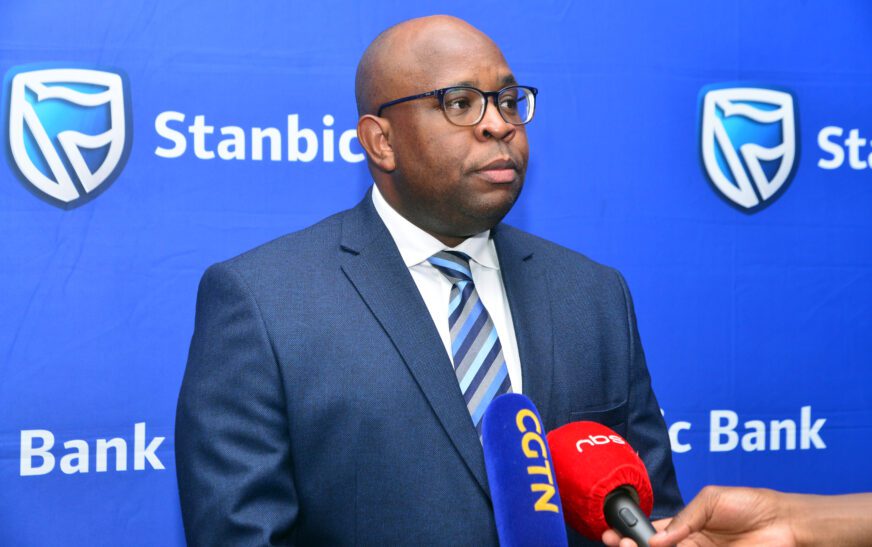
Christopher Legilisho, Economist at Stanbic Bank said, “Conditions in Uganda’s private sector were upbeat as the Stanbic Purchasing Managers Index (PMI) remained in expansion territory in December, implying that strong consumer demand conditions drove new orders and boosted output in the private sector”.
The state of employment was healthy, with staffing levels broadly steady following a ten-month period of growth, while backlogs mounted due to capacity pressure from increasing orders.
This was evident in further expansions in quantities purchased and inventories held by Ugandan firms.”
The Stanbic PMI is compiled by S&P Global from responses to questionnaires sent to about 400 purchasing managers.
The sectors covered by the survey include agriculture, mining, manufacturing, construction, wholesale, retail and services.
The index is a weighted average of the following five indices: New Orders (30%), Output (25%), Employment (20%), Suppliers’ Delivery Times (15%) and Stocks of Purchases (10%).
Legilisho said, “The rise in input prices was linked to elevated water and electricity costs in December. Purchase prices also increased due to concerns about construction costs, among other factors. Wage costs were broadly flat, while output prices increased due to robust customer demand. On the whole, this suggests that the economy is performing briskly, which should be confirmed when official growth data is released.”
Greater new orders reportedly drove the latest expansion, with new sales increasing on a continuous basis since February 2025.
Anecdotal evidence suggested that demand conditions improved amid greater client numbers.
Survey respondents noted that where workforce numbers rose it was due to a rise in temporary workers.
Greater new order inflows alongside little change in employment led to a renewed rise in backlogs during December.
At the same time, inflationary pressures built further as overall input prices and output charges increased again at the end of the year.
The rise in total operating expenses stemmed from higher purchase costs, as wage bills ticked down.
However, utility, construction material and sugar prices reportedly drove the latest increase in purchase costs.
Companies sought to pass through higher input prices to customers via greater selling prices amid the accommodative demand conditions which is characteristic of the festive season.
Meanwhile, input buying increased again at Ugandan businesses amid greater new order inflows in December.
Demand for items placed pressure on suppliers who saw lead times lengthen, but firms were able to accumulate stocks again, nonetheless.
Output expectations for 2026 across the private sector are positive.
There are hopes of stronger demand following investment in advertising and customer outreach which is reportedly underpinning the broad-based optimism.