
By Derrick Akampurira
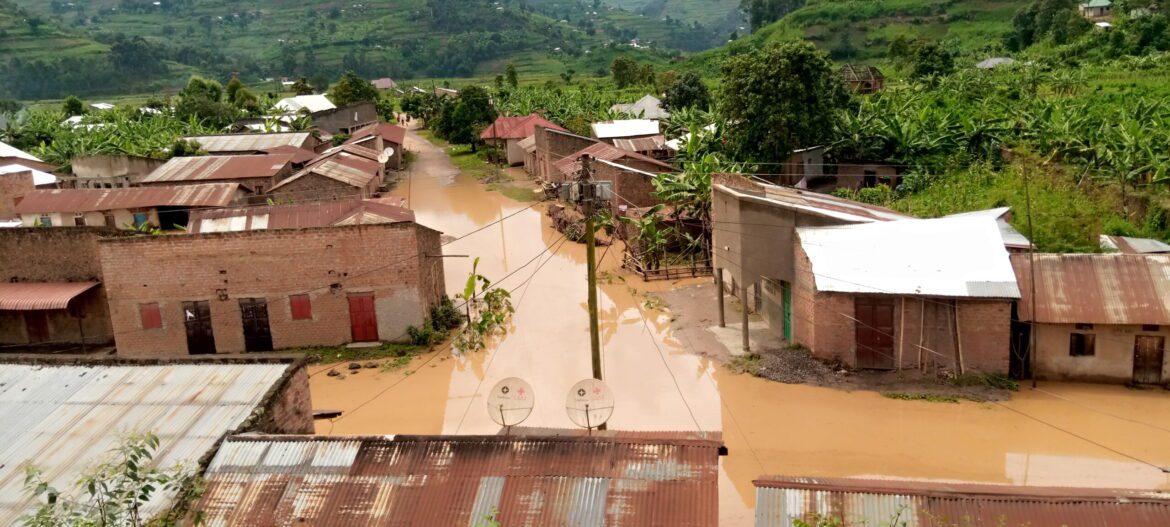
Residents in several parts of Kisoro District are counting heavy losses after persistent rains triggered floods that washed away a bridge, destroyed homes and gardens, and even exhumed a body that had been buried a week earlier.
In Bunagana Town Council, residents of Gatwe Village appealed to the government for urgent intervention after Gatwe Bridge was destroyed by strong waters from Mount Mgahinga through the Ntebeko stream.
The bridge previously connected communities to essential services but its destruction has left the road impassable, forcing residents and travelers to struggle to access markets, schools and health facilities.
Local residents say the damage has severely disrupted transport and economic activities and have called on district authorities to urgently repair the bridge.
Tourism access roads leading to Bwindi Impenetrable National Park and Mgahinga Gorilla National Park were also heavily damaged.
The Ruhezamyenda section in Nyundo Sub-county remains one of the worst affected areas, where tourists are sometimes forced to disembark from vehicles and be carried across flooded sections.
The situation has led to long and difficult journeys for visitors, with some opting to remain in Kisoro Town rather than continue to the parks.
Tour operators say this disruption is affecting tourism revenue as it becomes difficult to transport supplies to lodges and move visitors safely.
Body exhumed:
In a shocking incident, residents of Nango Village in Maziba Ward were left stunned after heavy rainwater exhumed a body that had been buried just a week earlier.
According to the LC1 Chairperson of Maziba Cell, Leo Niyibizi, a downpour that lasted more than two hours caused floods that swept through homes and gardens, leaving residents stranded.
Niyibizi said several houses and crops were destroyed and warned that the situation could worsen if proper drainage systems are not constructed.
He added that residents have repeatedly appealed to district authorities to improve drainage channels along roads, but their concerns have not yet been addressed.
In Sooko Parish, at least three houses were washed away by floods, leaving several families homeless.
The LC2 Chairperson of Sooko Parish, Emmanuel Nizeyimana, said residents suffered major losses after gardens were destroyed, warning that the damage could severely affect livelihoods and food security.
He appealed to government and well-wishers to provide urgent relief support to affected families.
Residents also expressed concern that many farmers had borrowed money to invest in agriculture and fear the destruction of their crops could push them into financial distress.
The LC5 Councilor for Nyarusiza Sub-county, John Mfitumukiza, criticized the work of the Kisoro District Disaster Management Committee, accusing it of responding too slowly to disasters.
Mfitumukiza said the committee often becomes active only after damage has already occurred instead of monitoring risk-prone areas and acting early.
Meanwhile, the LC5 Councilor for Muramba Sub-county, Martin Hakizimana, raised concerns about delays in the planned improvement of the Kisoro–Mgahinga road, suggesting the delays could be linked to contractors from Samcrete who reportedly subcontracted the work.
However, the Assistant Chief Administrative Officer of Kisoro District and Chairperson of the District Disaster Management Committee, Rukundo Manasseh, said the committee is compiling a report on affected areas and assured the public that district leaders are following up on the matter.
Meanwhile, according to the Uganda Ministry of Water and Environment, western Uganda is expected to receive near-normal to above-normal rainfall during the March–May 2026 rainy season.
The rains, which began in early to mid-March, are expected to intensify between early and late April, before gradually reducing toward the end of May.
Experts warn that while the rains will benefit agriculture, they may also increase the risk of floods, landslides, and infrastructure damage, particularly in mountainous districts like Kisoro.