

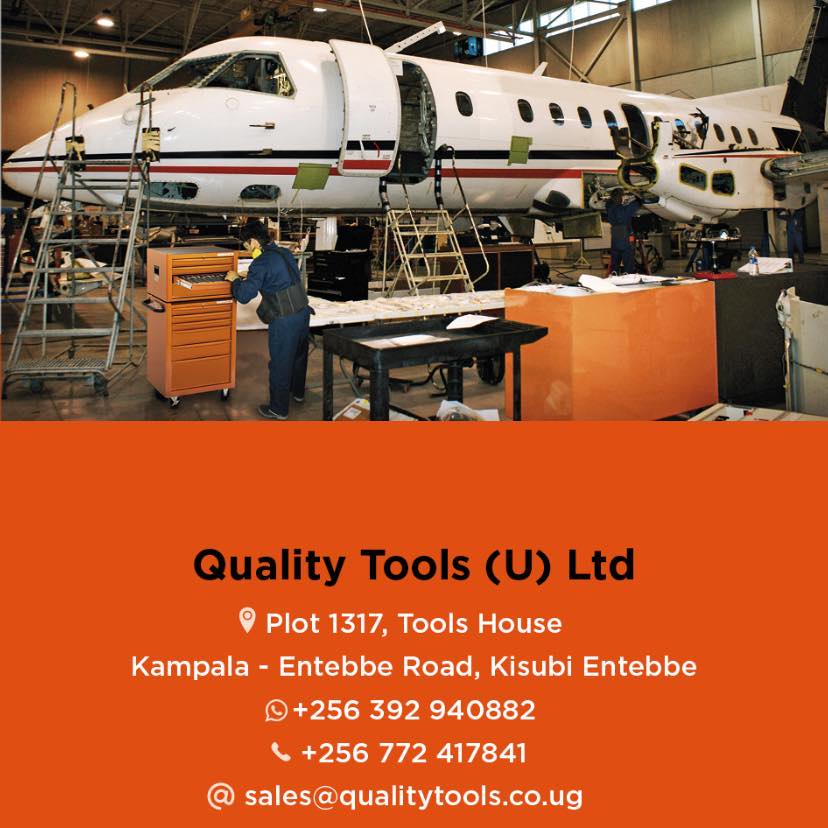
When you’re maintaining and repairing aircraft, there can be no margin for error and that’s why tool control within the aviation industry is so important.
Tool control involves the tracking of tools to reduce the risk of them being left behind in the aircraft, which (if undetected) could result in a serious system malfunction, mid-flight emergency, or complete engine failure.
Being an aircraft mechanic is a highly rewarding career that can take you in many different directions.
Whether you enroll in the armed forces or you accept a job with a commercial airline, training as an aircraft mechanic opens up many different pathways. Here are just a few of the career possibilities open to you if you choose to train in aerospace engineering:
Choosing the right aviation tools boils down to your knowledge of aircraft tooling. When considering which aviation tools to purchase, here are a few things you should keep in mind:
Aviation tools play a vital role in the maintenance and repair of aircrafts of all shapes, and sizes. Whether cargo planes, commercial jets, or military helicopters, the right aviation tools are paramount to ensuring each aircraft makes it to its destination safely.
What Is Aircraft Tooling?
Aircraft tooling is a blanket term for aerospace grade tools. These tools are unique in that they are specifically designed to assist in the machining, inspecting, and assembly of aircrafts.
As such, they must be able to tolerate conditions such as extreme temperatures. In addition, aviation tools must be durable, resistant to corrosion, and able to offer the user extreme precision.
The Most Common Aviation Maintenance Tools
Aircrafts are among the most mechanically complex machines in existence. Comprising millions of component parts and materials, from fuselages to navigation systems, aircraft engineering requires faultless attention to detail and industry grade aircraft tooling. The most common aviation maintenance tools used by aerospace professionals include:
SOCKETS
Socket and rachet sets allow aircraft mechanics to easily tighten a nut or bolt, without having to reposition the tool on the fastener.
The best quality sets will remove the need for a T-fastener, saving you space in your toolkit too.
For aerospace applications, you’ll need adapters in a range of sizes, including drive extensions, swivel socket sets, deep wall socket sets, and standard wall socket sets.
WRENCHES
Wrenches are another essential hand tool for aircraft mechanics. Like sockets and rachet sets, wrenches come in a range of styles and sizes, all of which will allow you to fasten or unfasten different fastener types.
As a minimum, aviation engineers should invest in an adjustable wrench, combination wrench, torque wrench, and socket wrench.
TORQUE WRENCHES
Torque wrenches enable you to turn screws to a precise and predetermined level of torque.
They’re one of the most widely used aviation tools, allowing the operator to calibrate the wrench using a high-performance measuring gauge.
CUTTING TOOLS
Cutting tools are a must-have for aviation applications, used for trimming electrical cables or making an incision in sheet metals and plastics. For aircraft mechanics we recommend adding aviation snips, a box cutter, and a hack saw to your tool kit.
KEYS
It always pays to carry an anti-corrosive set of Allen keys in your aviation tool kits. For ultimate versatility, you may want to consider investing in a set of L-shaped or fold out keys too.
HAMMERS
No aviation mechanic worth their salt would be without a high-quality dead blow hammer.Other hammer styles we recommend for aircraft maintenance and repairs include ball peen hammers and plastic tip hammers or mallets.
MEASURING TOOLS
We can’t stress enough how important precision is to aircraft engineering.
In such an exacting discipline, measuring tools such as a tape measure, feeler gauges, callipers, sharpies, and scales, are in constant use.
PLIERS
Pliers are another tool that aviation mechanics rely on day-to-day. They’re used mainly to twist cables safely as well as for cutting safety wires. The most common plier types for aerospace applications include needle nose and wire twisting pliers but diagonal cutting pliers and duck-bill pliers are also recommended by many techs.
FILES
The most common file types in aviation maintenance are arguably half-round bastard files and mill files. Occasionally, it can be handy to have a riffle file and we also recommend investing in a file card so you can maintain your files.
PUNCHES
An automatic centre punch should be enough to take care of all your aviation mechanic needs.
SCREWDRIVERS
A decent aerospace grade screwdriver set is the backbone of any aviation engineer’s toolkit. As screw heads can differ between manufacturer, we always advocate getting sets in the most common screw styles: slotted screwdrivers, stubby screwdrivers, and Phillips screwdrivers.
IMPACT DRIVERS
Impact drivers are a must-have aviation tool for removing over-tightened or corroded fasteners on aircraft bodies.
INSPECTION TOOLS
Inspection tools you’ll need as an aircraft mechanic include: an inspection mirror, explosion-proof torch, magnetic tools, and a magnifying glass.
TOOL CASE OR CABINET
Keeping your tools well-organized and accountable is key to safety compliance in the aviation industry. To help with tool tracking, and to protect your tools from damage, you should keep your tools safely stored in a trolley, case, or tool cabinet.
From tool bags to tool chests to tool boxes with wheels, tool belts, tool cases, and trade-specific tool storage, we offer high-quality solutions you can count on at Bahco Quality tools Uganda Limited, along Entebbe road.