
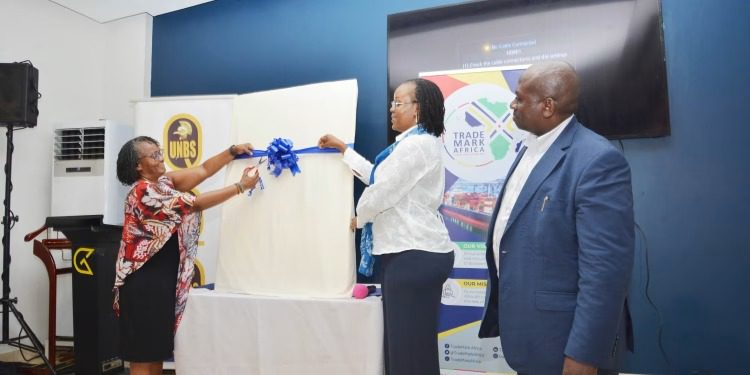
The Uganda National Bureau of Standards (Uganda National Bureau of Standards) in partnership with TradeMark Africa (TMA) on Friday officially launched the ‘Standards & Metrology Media Initiative’ during the Editors ’ Engagement Meeting at Golden Tulip Hotel in Kampala.
The engagement brought together editors, senior journalists, and media leaders to deepen understanding of standards, metrology, certification, and compliance reporting in Uganda.
The initiative seeks to strengthen accurate, evidence-based reporting on quality infrastructure as a driver of national development, public health protection, and export growth.
Speaking at the event, Ms. Anna Nambooze, Country Director at TradeMark Africa – Uganda & South Sudan, emphasized that quality certification is central to Uganda’s export performance.
“If all export products meet quality standards, Uganda will earn more from international markets. Certification enhances credibility, reduces rejection of goods at borders, and strengthens our competitiveness regionally and globally,” she noted.
She reaffirmed TMA’s support toward building a strong quality ecosystem that enables Ugandan producers—particularly MSMEs—to access regional and international markets under frameworks such as the East African Community and the African Continental Free Trade Area.
Delivering a presentation on the UNBS mandate and its role in Uganda’s Vision 2040, Ms. Patricia Bageine Ejalu, Deputy Executive Director–Standards, underscored that adherence to standards is foundational to industrial growth, consumer safety, and export readiness.
She called upon the media to actively support the promotion of mandatory product certification and voluntary management systems standards.
“Uganda’s development requires improved adherence to quality standards by producers, importers, and exporters. Standards are not barriers to trade; they are enablers of competitiveness,” she said.
Ms. Ejalu further highlighted the expansion of UNBS regional laboratory infrastructure, noting that laboratories have been established in Gulu, Mbale, and Mbarara to ease access to product testing services.
These facilities test a range of products—particularly food and agricultural commodities such as edible fats and oils, milk and dairy products, water, fruits and vegetables, cereals, and other value-added products prior to market release.
The decentralization has reduced congestion at the main testing laboratory in Bweyogerere and lowered compliance costs for producers.
UNBS is targeting to test up to 100,000 product samples annually as part of efforts to strengthen conformity assessment and quality assurance nationwide.
On metrology, Ms. Ejalu emphasized the centrality of measurement science in everyday life and economic fairness.
“Measurements are vital in all life. What cannot be measured cannot be controlled. Metrology ensures accurate calibration of industrial machinery and verification of weights and measures, guaranteeing fairness in trade and protecting consumers,” she explained.
Mr. Deus Mubangizi, Ag. Deputy Executive Director–Compliance, emphasized UNBS’ transition from a purely enforcement-driven approach to a corrective, business-support model.
We should be seen as business enablers rather than merely an enforcement agency.
We are hand-holding businesses to help them understand what to certify, where to certify, and why certification is important for marketability, he said.
He reiterated that compliance to standards enhances public health safety, protects consumers from substandard goods, and creates a level playing field for compliant manufacturers.
“The media plays a critical role in helping Ugandans understand that quality products are more marketable, safer, and essential for national development,” he added.
Dr. Ivan Lukanda from Makerere University’s Department of Journalism and Communication highlighted the strategic importance of specialized reporting on standards and metrology.
He encouraged media houses to develop dedicated desks or beats that focus on quality, consumer protection, trade standards, and regulatory accountability, noting that informed reporting strengthens transparency and public trust.
The engagement also featured an interactive discussion session focusing on practical collaboration between UNBS and newsrooms in advancing responsible reporting on substandard goods, certification verification, and consumer awareness.
In his remarks, Eng. James Kasigwa, Executive Director of UNBS, reaffirmed the Bureau’s commitment to transparency, institutional reform, and partnership with the media.
He emphasized that standards protect lives and livelihoods, support ethical businesses, and drive Uganda’s economic transformation.
The event concluded with the official launch of the Standards & Metrology Media Initiative by UNBS and TradeMark Africa, marking the beginning of structured collaboration with media houses, including upcoming regional trainings for journalists.