
Rodrigues-Birkett takes the lead as Uganda’s Olara Otunnu emerges as the race’s biggest climber
The contest to succeed United Nations Secretary-General António Guterres has entered a decisive and increasingly competitive phase, with the second confidential Security Council straw poll dramatically reshaping the political landscape.
The latest poll, conducted on 21 August 2026, placed Guyana’s Carolyn Rodrigues-Birkett at the top with eight “encourage” votes, overtaking Costa Rica’s Rebeca Grynspan, who had led the first poll. Argentina’s Rafael Grossi also received seven encouraging votes, while Uganda’s former senior UN official Olara Otunnu recorded one of the most significant gains of the entire contest.
The results do not constitute an election. They are part of a confidential, non-binding process through which the 15-member Security Council tests the acceptability of candidates before eventually seeking a consensus around one nominee.
The United Nations itself states that a new Secretary-General will be selected in 2026, with the Security Council recommending a candidate to the General Assembly for appointment.
The Second Straw Poll Changes The Race
- The latest reported figures reveal a contest that remains wide open:
Rank| Candidate| Country| Encourage| Discourage| No Opinion
1| Carolyn Rodrigues-Birkett| Guyana| 8| 3| 4
2| Rebeca Grynspan| Costa Rica| 7| 4| 4
3| Rafael Mariano Grossi| Argentina| 7| 6| 2
4| Macky Sall| Senegal| 6| 7| 2
5| Olara Otunnu| Uganda| 5| 5| 5
6| María Fernanda Espinosa| Ecuador| 4| 3| 8
7| Michelle Bachelet| Chile| 2| 6| 7
8| Ivonne A-Baki| Ecuador| 0| 8| 7
The most striking development is not simply who is first, but how quickly the race is changing.
Rodrigues-Birkett has moved into first place. Grynspan has slipped from the top position. Grossi remains competitive but carries a relatively high “discourage” figure. And Otunnu has dramatically improved his standing after entering the race much later than several of his competitors.
Carolyn Rodrigues-Birkett: The New Frontrunner
Guyana’s Carolyn Rodrigues-Birkett now occupies the strongest numerical position.
Her eight “encourage” votes put her just one vote short of the nine affirmative votes normally required for the Security Council to adopt a recommendation.
Her candidacy has attracted attention beyond the numbers. She is seeking to become the first woman and first Caribbean national to serve as UN Secretary-General, giving her candidacy a powerful geographical and gender dimension.
Her supporters can argue that a Rodrigues-Birkett appointment would represent a historic opening for the Caribbean at the highest level of multilateral diplomacy.
But eight votes do not equal victory.
The central question is whether her support can rise from eight to the required threshold while avoiding opposition from any of the five permanent members of the Security Council.
That is the real test facing every candidate.
- Rebeca Grynspan: From Early Leader To Second Place
Costa Rica’s Rebeca Grynspan remains one of the most formidable contenders.
She led the first Security Council straw poll with 10 encouraging votes, making her the initial candidate to watch. In the second poll, however, she recorded seven encouraging votes.
The decline does not eliminate her candidacy. Rather, it demonstrates how fluid the process can be.
Grynspan’s extensive international economic and UN experience continues to make her a serious contender, and her seven positive votes leave her only two short of the key nine-vote threshold.
The race may therefore become a battle between Grynspan’s established early support and Rodrigues-Birkett’s emerging momentum.
RAFAEL GROSSI: Experience, Security And Geopolitical Complexity
Argentina’s Rafael Mariano Grossi occupies third position with seven encouraging votes.
Grossi brings exceptionally strong experience in international security and nuclear diplomacy through his leadership of the International Atomic Energy Agency.
His challenge is visible in the numbers: while he has seven encouraging votes, he also has six “discourage” votes.
This illustrates one of the fundamental realities of the Secretary-General race: having supporters is not enough; a candidate must also be acceptable to the major powers.
Grossi’s candidacy therefore remains highly competitive, but the negative vote count could become a serious obstacle during the later stages.
MACKY SALL: Africa’s Strong Contender
Former Senegalese President Macky Sall has six encouraging votes.
His candidature carries significant African political weight and brings extensive experience in national and international leadership.
However, his seven “discourage” votes present a major challenge.
Sall’s candidacy demonstrates the importance of distinguishing between regional strength and Security Council acceptability.
Africa may have strong arguments for greater representation in global leadership, but the final decision will depend on whether the Security Council’s permanent and elected members can converge around a single candidate.
OLARA OTUNNU: Uganda’s Remarkable Comeback.
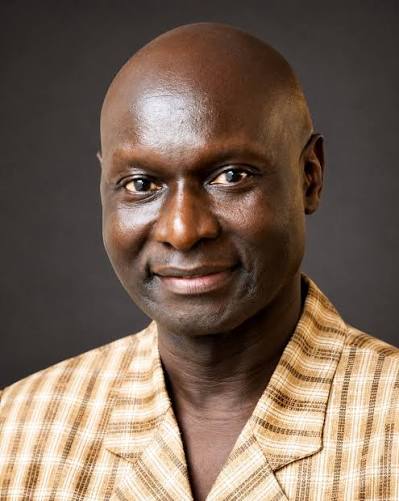
For Uganda, the most important development of the second poll is undoubtedly the performance of Olara Otunnu.
Otunnu was nominated by Uganda on 24 July 2026 and participated in the UN interactive dialogue on 19 August. The UN’s official media record confirms his nomination and appearance in the dialogue.
His second straw-poll result was:
5 Encourage — 5 Discourage — 5 No Opinion.
The significance becomes clearer when compared with the first poll.
Otunnu had previously received only two encouraging votes. His latest result therefore represents a gain of three positive votes, taking him to five.
That makes him one of the biggest movers in the race. PassBlue described Rodrigues-Birkett and Otunnu as the two candidates showing the biggest gains in the second poll.
OTUNNU’S Campaign Message
Otunnu entered the race with a distinctive argument: that the United Nations requires not merely administrative adjustment but institutional reform, moral renewal and restoration of confidence in multilateralism.
During his 19 August dialogue, he emphasized UN reform, peace and security, development financing, climate action and emerging challenges including artificial intelligence. He also invoked the Prayer of St Francis in an appeal for reconciliation and moral leadership.
His campaign is particularly notable because Otunnu is not an outsider to the UN system.
He previously served as Uganda’s Permanent Representative to the United Nations and later became a UN Under-Secretary-General and Special Representative for Children and Armed Conflict.
That history gives him an unusual combination of African diplomatic experience and institutional knowledge of the United Nations.
- From Two Votes To Five
The most important question for Uganda is whether Otunnu’s latest five encouraging votes represent the beginning of a sustained rise or merely a temporary improvement.
He now has five members encouraging his candidacy, five discouraging it and five expressing no opinion.
The five undecided positions are therefore potentially crucial.
If his campaign can convert a substantial portion of those undecided positions while reducing opposition, he could become significantly more competitive.
However, the mathematics remains difficult.
To reach nine encouraging votes, Otunnu needs at least four additional positive votes.
And, critically, he must remain acceptable to the five permanent members of the Security Council.
THE HIDDEN BATTLE: The P5 Veto
The public numbers tell only part of the story.
The Security Council has 15 members, including five permanent members:
– China
– France
– Russia
– United Kingdom
– United States
Any eventual recommendation must navigate the veto power of these permanent members.
This means that a candidate can have a strong overall numerical profile but still fail if one of the permanent members becomes firmly opposed.
Consequently, the most important information that the public does not have is the precise identity of the members behind individual “encourage” and “discourage” votes.
That uncertainty makes the current ranking a barometer of momentum, not a prediction of the final result.
Why The Caribbean, Latin America And Africa Matter
The geographical dimension of the race is becoming increasingly important.
The current field is dominated by candidates from Latin America and the Caribbean, alongside significant African representation.
The next Secretary-General will be chosen against a background of arguments about geographical balance, gender representation and the political legitimacy of the UN’s leadership.
The UN has itself highlighted geography, gender and geopolitics as important factors surrounding the 2026 selection.
Rodrigues-Birkett offers the possibility of the first Caribbean Secretary-General and first woman to occupy the post.
Grynspan and Espinosa offer Latin American experience.
Grossi brings Argentina’s diplomatic and nuclear-security credentials.
Bachelet brings Chilean presidential and human-rights experience.
Sall provides an African former-head-of-state profile.
Otunnu presents a different African proposition: a veteran UN diplomat with direct institutional experience.
IVONNE A-BAKI: The Late Entry
Ecuador’s Ivonne A-Baki became the eighth candidate, entering the race only in August after being nominated by Tonga on 17 August.
The UN confirmed her participation in the interactive dialogue process.
Her latest straw-poll numbers were difficult:
0 Encourage — 8 Discourage — 7 No Opinion.
Yet her late entry makes comparisons with the other candidates complicated.
She did not participate in the first straw poll, meaning she had limited time to build support before the second.
A-Baki has nevertheless presented herself as a candidate for UN renewal, conflict prevention and institutional reform. Reuters reported that she has also criticized the current structure of the Security Council and called for greater representation.
THE BACHELET QUESTION
Former Chilean President Michelle Bachelet remains one of the most internationally recognizable candidates.
However, her second-poll figures—two encouraging votes against six discouraging votes—represent a substantial challenge.
Her seven “no opinion” votes theoretically leave room for recovery, but she would need a significant reversal of current momentum.
At this stage, her political stature exceeds her current numerical position in the Security Council contest.
MARÍA FERNANDA ESPINOSA: The Under-The-Radar Possibility
Ecuador’s María Fernanda Espinosa has four encouraging votes, three discouraging votes and eight “no opinion” votes.
The eight undecided positions are potentially significant.
Unlike candidates with large negative totals, Espinosa has comparatively limited opposition in the reported numbers.
Her challenge is transforming that uncertainty into active support.
She therefore remains a potential compromise candidate if the leading contenders become deadlocked.
THE REAL QUESTION: Who Can Build A Consensus?
The Secretary-General is not chosen through a conventional worldwide popular election.
The Security Council must eventually recommend one candidate, and the General Assembly then formally appoints that candidate.
The process is therefore fundamentally about coalition-building, acceptability and diplomatic compromise.
The current rankings can change rapidly.
A candidate leading one poll can lose momentum in the next.
Grynspan’s movement from ten to seven encouraging votes is an example.
Rodrigues-Birkett’s rise to eight demonstrates how quickly another candidate can overtake an early leader.
Otunnu’s rise from two to five demonstrates that late-stage campaigning can materially alter perceptions.
WHAT OTUNNU NEEDS TO DO NEXT
For Uganda’s candidate, the strategic priorities are clear.
- Convert the undecided votes
Five “no opinion” votes represent the immediate opportunity.
Otunnu must persuade undecided Council members that he is not simply an African candidate but a candidate capable of leading the entire United Nations.
- Reduce opposition
Five “discourage” votes are equally important.
A successful campaign must identify the concerns behind resistance and address them through diplomacy.
- Secure P5 confidence
This may be the most important requirement.
The path to the Secretary-General’s office ultimately runs through the Security Council’s permanent members.
- Strengthen his reform message
Otunnu’s reform agenda differentiates him.
His argument that the UN needs institutional efficiency, moral authority and renewed multilateral cooperation could become particularly attractive at a time when the organization faces conflicts, geopolitical rivalry, climate pressures, financial constraints and technological disruption.
- Present himself as a consensus candidate
The strongest strategic opportunity for Otunnu may be to position himself not as a candidate representing only Uganda or Africa, but as a bridge-builder between competing geopolitical blocs.
GATEWAY NEWS ANALYSIS: The Race Is Not Over
Based on the second straw poll, Gateway News assesses the field as follows:
- Carolyn Rodrigues-Birkett — Guyana
The current numerical leader and a historic candidate with eight encouraging votes.
- Rebeca Grynspan — Costa Rica
The former leader remains highly competitive and could recover.
- Rafael Grossi — Argentina
A powerful technical and diplomatic candidate, but with substantial opposition.
- Macky Sall — Senegal
Strong African credentials but facing significant negative sentiment.
- Olara Otunnu — Uganda
The race’s most notable climber, with the potential to become a consensus candidate if his momentum continues.
- María Fernanda Espinosa — Ecuador
A potentially attractive compromise candidate because of the large undecided bloc.
- Michelle Bachelet — Chile
Globally prominent but currently suffering from weak poll momentum.
- Ivonne A-Baki — Ecuador
A late entrant facing the toughest numerical challenge.
THE AFRICAN QUESTION
For Africa, the contest raises a broader question.
Should the next Secretary-General come from a region that has already provided several holders of the position, or should the international community prioritize a different geographical region?
And if Africa remains a serious contender, which African profile is most capable of attracting the broadest international coalition?
Macky Sall represents the former-head-of-state model.
Olara Otunnu represents the veteran international diplomat and UN reformer model.
The latest poll gives Sall six encouraging votes and Otunnu five.
But Otunnu’s trajectory is stronger.
That distinction could become important if subsequent rounds produce a contest in which candidates are eliminated or withdraw.
A RACE THAT COULD GO INTO THE FINAL MONTHS
The latest reporting suggests that the selection process could continue through the coming months rather than producing an immediate winner.
The current Secretary-General, António Guterres, is due to leave office at the end of December 2026, meaning the Security Council and General Assembly face a significant timetable for completing the selection.
There is therefore still time for candidates to reorganize their campaigns, seek endorsements and build diplomatic coalitions.
The eight-candidate field should consequently be treated as fluid rather than final.
CONCLUSION: The World Is Watching
The 2026 UN Secretary-General race has moved beyond the stage of individual candidacies and into the difficult politics of coalition-building.
Carolyn Rodrigues-Birkett currently leads.
Rebeca Grynspan remains a formidable challenger.
Rafael Grossi remains a serious contender.
Macky Sall retains an important African base.
María Fernanda Espinosa and Michelle Bachelet remain capable of changing the dynamics.
Ivonne A-Baki faces a steep climb.
And Uganda’s Olara Otunnu has achieved the most dramatic numerical improvement.
For Uganda, the message from New York is therefore neither victory nor defeat.
It is momentum.
Otunnu’s movement from two encouraging votes to five is evidence that his candidacy is gaining visibility inside the Security Council process. Whether that momentum can become the nine or more votes required for a recommendation remains the central question.
The next straw poll may provide the answer.
Until then, one conclusion is increasingly clear:
The race for the world’s top diplomatic office is wide open—and Uganda’s Otunnu is no longer merely watching the contest from the sidelines. He is now firmly inside it. (By Don Edwarles MKM )