

By Derrick Akampurira
Tension is simmering once again in Gisha Cell, Central Ward, Chahafi Town Council, Kisoro District, as a protracted domestic dispute between a local family continues to test the patience of leaders and residents.
At the heart of the controversy is Byibesho Benjamin, a long-time resident and family head, whose strained relationship with his first wife, Jane Nyirabatutsi, has evolved into a matter of public concern.
What began as private marital disagreements has now drawn in local authorities, church representatives, police officers, and community elders in repeated attempts to broker peace.
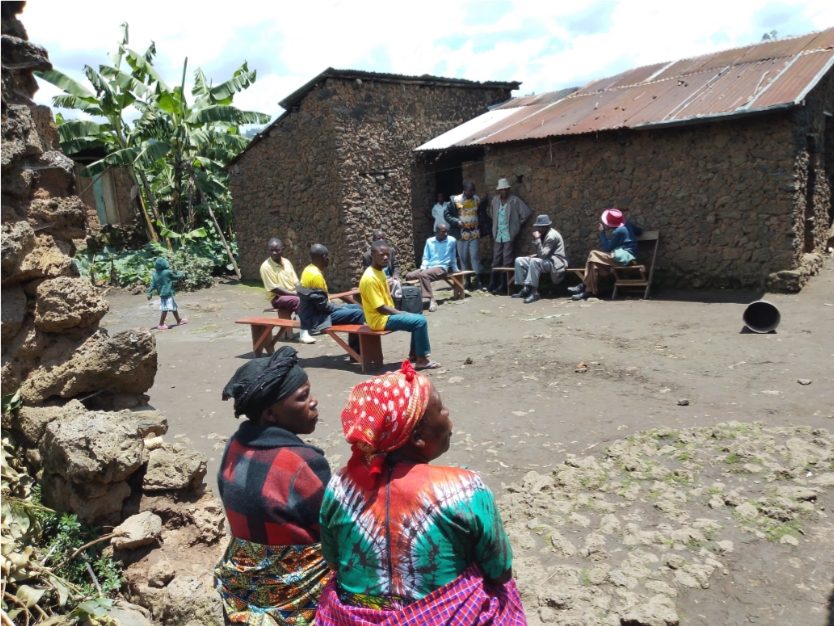
The latest mediation effort, convened on Friday at the couple’s residence, failed to take off after Jane reportedly left the home and sought refuge in a nearby banana plantation upon learning that local leaders had arrived.
Her absence left officials unable to proceed with the planned dialogue, deepening frustration among those who had gathered to help resolve the conflict.
According to Benjamin, the marital tension has persisted for more than four years and intensified after he decided to marry a second wife. He maintains that the decision followed prolonged domestic misunderstandings, alleging emotional distress and lack of support in the home.
He claims that during one particularly difficult period, he was denied food and access to their shared bedroom, prompting him to temporarily seek accommodation in neighboring villages.
A major flashpoint in the dispute emerged when Benjamin requested a portion of the family land to construct a separate house for his second wife. He says the proposal was strongly opposed, triggering frequent quarrels. He further alleges that in January 2024, during one of the disagreements, he was locked inside a toilet for approximately 30 minutes.
Benjamin is now appealing to local leaders and law enforcement authorities to intervene and affirm what he describes as his right to allocate family land, insisting that both women are legally recognized as his spouses.
Residents who attended Friday’s attempted mediation expressed concern over the prolonged nature of the dispute, noting its ripple effect on community harmony.
Margaret Bazira, a resident of the area, said the once-respected family has seen its public image decline due to the recurring conflicts.
She urged the couple, given their advanced age, to embrace reconciliation rather than exhausting resources on continuous mediation and potential legal battles. In her view, constructing a separate house for the second wife could ease tensions.
Another resident, Nyiramuhire Erinah, observed that previous interventions involving local leaders, police, and probation officials have failed to yield a lasting solution. She cautioned that if the matter remains unresolved, it risks deepening divisions within both the family and the wider community.
Emmanuel Turahirwa, Deputy Speaker of Chahafi Town Council, described the dispute as indicative of broader social challenges affecting families in the area.
He expressed disappointment over Jane’s decision to leave during the scheduled mediation, noting that such actions undermine efforts to strengthen community-based conflict resolution mechanisms.
Turahirwa further warned that the increasing number of domestic and land-related disputes being reported reflects growing strain on local leadership structures and signals the need for renewed emphasis on dialogue, mutual respect, and lawful resolution of family conflicts.
As leaders consider their next course of action, residents hope that renewed engagement and cooperation from both parties will pave the way for a peaceful settlement and restore stability within the household and the community at large.