
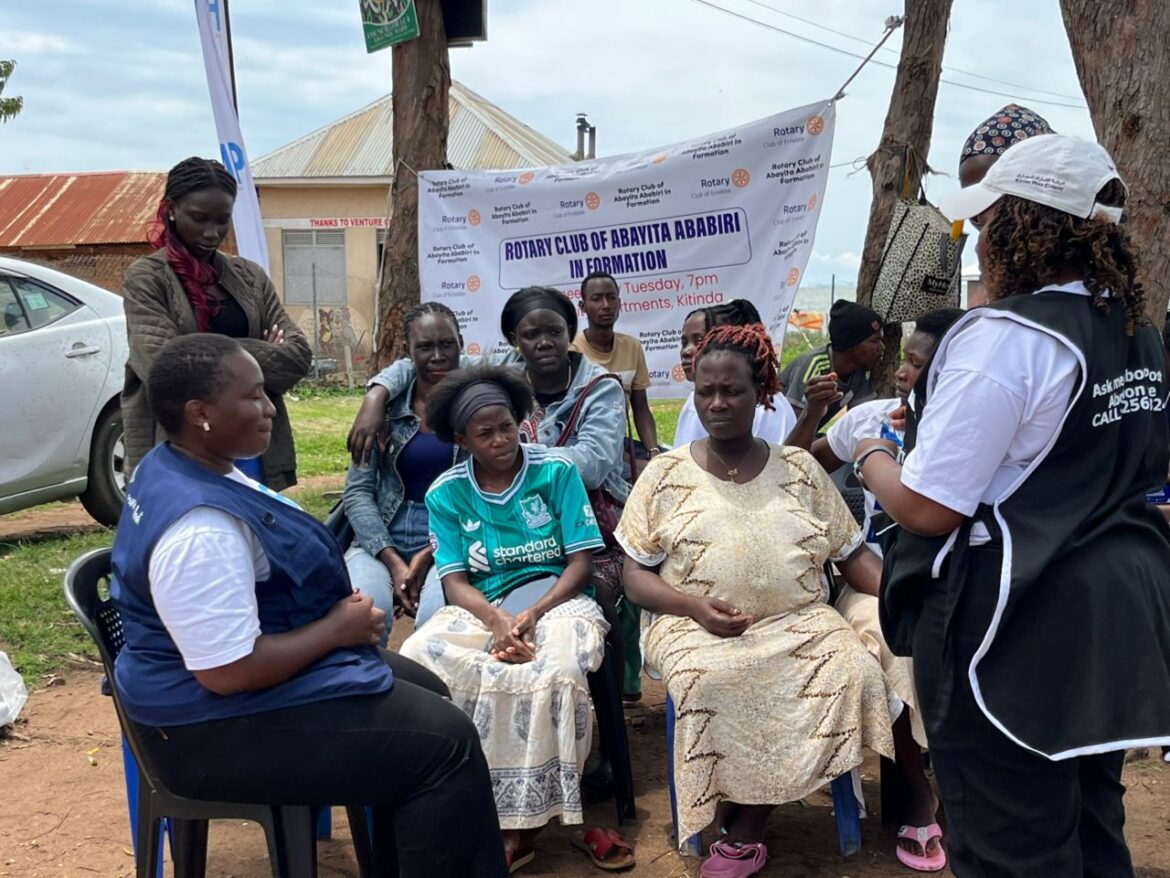
Residents of Kigungu’s Makusa landing site on the shores of Lake Victoria gathered quietly under the tree on February 14, not for Valentine’s celebration, but for something many said was far more urgent, access to healthcare and legal information.
The community outreach, led by Family Medical Point in collaboration with the Rotary Club of Abaita Ababiri in Formation, provided free medical, counselling and legal support services to women and girls, a group health workers describe as among the most exposed to health and safety risks in fishing settlements.
Organizers said the initiative, locally known as a “Musawo Session,” focused on sexual and reproductive health, an area often underserved in remote lakeside communities.
“We wanted to bring essential services closer to those who rarely reach formal healthcare facilities,” Pauline Nabwire, Head of Programs at Family Medical Point, said during the outreach. “Beyond treatment, we focused on prevention, awareness and empowering women and girls to make informed decisions about their health and safety.”
Medical teams conducted HIV testing, treated sexually transmitted infections, and distributed condoms, lubricants and provide modern contraceptives services. Counsellors also held private sessions addressing stigma, treatment adherence and emotional wellbeing.
For many residents, the outreach filled a long-standing gap. “Makusa faces many challenges, especially related to sexual health,” said Nampeera Doreen, a 43-year-old resident. “Services like these help protect our community. We feel remembered.”
The initiative also integrated legal education, delivered by Center for Women Justice Uganda, highlighting the link between health vulnerability and social inequality in fishing communities.
“Many women here face issues like violence, child neglect and separation but lack access to legal help,” said Amito Mercy, a legal officer with the organisation. “We informed them of their rights and the free legal support available to them.”
Fishing communities around Lake Victoria have long been identified by public health researchers as high-risk areas for HIV, sexually transmitted infections and gender-based violence, driven by mobility, economic instability and limited access to healthcare.
Outreach programmes such as these aim to bridge that gap by bringing services directly to vulnerable populations.
Rotary representatives said their involvement reflected a broader humanitarian mission. “This was our way of sharing compassion through service,” said Nakito Mariam, Public Relations Officer at the Rotary Club of Abaita Ababiri in Formation. “The response showed how deeply these services are needed.”
For 21-year-old Nanteeza Latifa, the day brought immediate relief. After testing positive for a sexually transmitted infection, she received treatment on site. “I had symptoms but no money for care,” she said softly. “Today I got help.”
Although organizers had planned to serve about 50 participants, turnout surpassed expectations, underscoring the growing demand for accessible healthcare in marginalized communities.
Health workers say such interventions go beyond medicine, restoring dignity, strengthening awareness and improving personal safety, critical steps toward long-term wellbeing in Uganda’s often overlooked fishing settlements.