
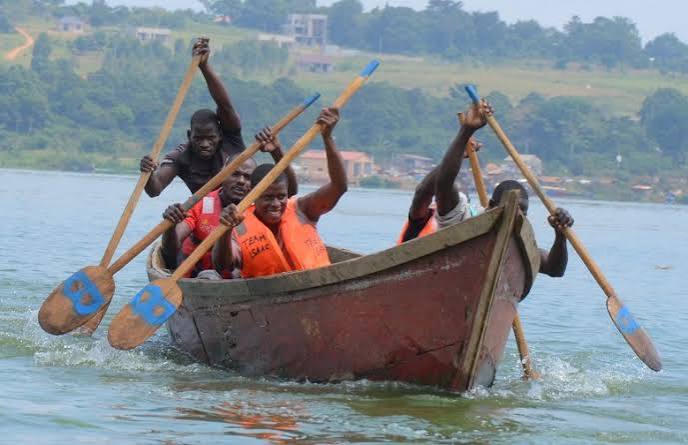
The government has secured 1.3 trillion shillings from South Korea to construct a bridge linking Nakiwogo Landing Site in Entebbe to Buwaya Landing Site in Mpigi and Wakiso districts.
The move is intended to reduce travel time and improve connectivity for communities that depend on water transport.
Works and Transport Minister Fred Byamukama said on Tuesday that the proposed 40-meter bridge is expected to cut the journey between the two landing sites from about 75 minutes to no more than 30 minutes.
Speaking to journalists at the Uganda Media Centre, Byamukama said the bridge would complement existing ferry services and improve movement between the communities.
He said Uganda would engage international experts to undertake the construction because the country currently lacks the specialized expertise required to build such bridges over water.
The government also plans to construct another bridge in Moyo District to replace the Lalop ferry, which serves communities that rely on water transport.
The two projects are part of wider government plans to invest in inland water transport infrastructure, maritime safety and regional shipping in an effort to reduce transportation costs, improve connectivity and create employment.
Byamukama said the government was prioritizing water transport as an alternative to road transportation because it could lower cargo transport costs, ease pressure on roads and stimulate economic activity in lakeside communities.
The government is also advancing the second phase of the Bukasa Port project following the completion of the first phase.
Other planned interventions include rehabilitation and upgrading of Port Bell, Jinja Port and Ntoroko Port to improve their capacity to handle cargo and passengers.
Uganda also intends to strengthen cargo transportation through regional ports, particularly Kisumu in Kenya and Mwanza in Tanzania, as part of efforts to integrate the country into the regional maritime transport network.
On ferry services, Byamukama said Uganda currently operates 13 ferries. Two additional ferries have been commissioned, while another two are under construction.
The government also plans to assess the transport needs of island communities and rehabilitate aging ferries to improve safety and accessibility.
Byamukama said ferry services remain essential to island communities, whose residents depend on them to reach markets, health care facilities, schools and other services.
The minister also highlighted the cost of transporting goods along the Mombasa-Kampala trade corridor, saying road transport is estimated at $1.80 per container per kilometer, compared with a global average of $1. On maritime insurance, he said retaining marine cargo insurance business within Uganda was saving the country more than 270 billion shillings.
Uganda is also planning to establish a regional maritime university to train young people in specialized skills and professional qualifications required to work aboard international vessels.
The announcements come ahead of the 19th Association of African Maritime Administrations Annual Conference and General Assembly, which Uganda will host in Kampala from Nov. 17 to 19, 2026.
Byamukama said the meeting would bring together African maritime administrators to discuss ways of advancing the continent’s maritime sector.
It will be held under the theme “From Policy to Practice: Advancing African Maritime Transformation Through Effective Governance, Innovation and Sustainable Blue Economy.”
On maritime safety, the minister said the government had established search and rescue centers across the country’s major water bodies, equipped with rescue boats and communication equipment.
The centers will be coordinated through a Marine Rescue Coordination Centre in Entebbe to improve emergency response, particularly in areas with limited mobile network coverage.
Byamukama said Uganda loses more than 3,000 people annually to drowning, making improved emergency response and safety measures necessary as the country expands the use of its inland waterways.
The government has also established a maritime survival training center in Entebbe to equip local boat operators with safety knowledge and practical skills.
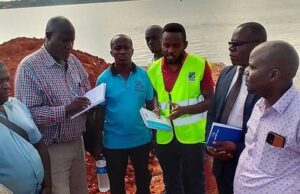
The minister urged boat operators to observe safety regulations, including wearing life jackets, registering their vessels and avoiding night operations.