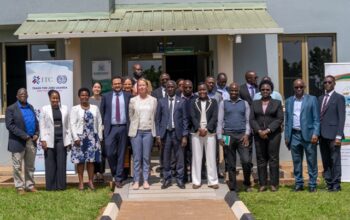

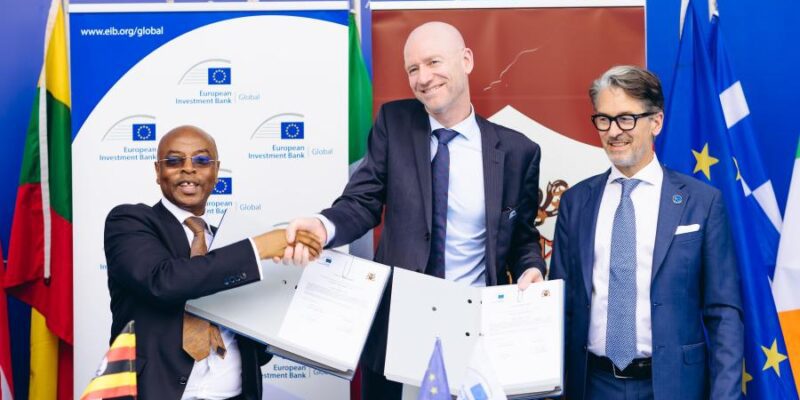
Ugandan banks are being prepared to take a closer look at the climate risks associated with the projects they finance, under a new partnership between the Bank of Uganda (BoU) and the European Investment Bank (EIB) Global.
The two institutions signed a cooperation agreement on last month under the EIB’s €30 million Greening Financial Systems Technical Assistance (GFS TA) programme, which will support the central bank in strengthening climate-risk supervision and improving how financial institutions assess and report such risks.
Financed by Germany and Luxembourg GFS will fund technical assistance and capacity-building in not only Uganda but also Kenya, Rwanda, Nigeria, and Ethiopia.
Uganda is currently pursuing major investments in oil and gas, mining, electricity and infrastructure, while seeking to expand financing for renewable energy and climate-resilient projects.
For banks, this means looking beyond a borrower’s financial projections to consider how climate change and the global transition to cleaner energy could affect the long-term viability of investments.
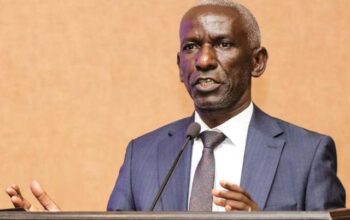
“Droughts, floods, and energy disruptions can adversely affect production, damage infrastructure, and disrupt supply chains, thereby reducing incomes, weakening borrowers’ capacity to service their debts, and increasing risks within the financial system,” Bank of Uganda Deputy Governor, Prof. Augustus Nuwagaba said.
Such disruptions can increase non-performing loans and expose banks to losses, with wider implications for financial stability.
Edward Claessen, EIB Regional Hub Head for East and Central Africa, said the support would help BoU develop a roadmap for greening the financial sector, strengthen climate-risk reporting and improve its capacity to supervise how financial institutions manage these risks.
“Basically, we are providing the technical assistance to help Bank of Uganda implement better ways to monitor climate change and to make it more structured,” Claessen said.
The programme will also support implementation of Uganda’s National Green Taxonomy, launched in 2025.
The taxonomy provides a common framework for identifying environmentally sustainable economic activities, helping banks and investors assess projects against consistent standards.
Selected commercial banks will also receive support.
Housing Finance Bank is the first Ugandan lender identified for targeted assistance to strengthen its climate-risk management, disclosure and green-lending policies.
The changes could influence how banks assess financing proposals across Uganda’s energy and infrastructure sectors.
A project’s ability to generate revenue will remain important, but lenders will increasingly need to consider its exposure to climate-related disruptions and changes in technology, energy markets and environmental regulations.
This is particularly relevant for long-term investments. A power plant, pipeline or industrial facility can operate for decades.
If market conditions or technology change significantly during that period, investors and lenders could be left exposed to assets that are less profitable than originally expected.
The experience of coal-fired power investments in parts of Southeast Asia illustrates this challenge.
Long-term contracts and construction debts made it difficult for some utilities to move away from coal, even as renewable energy like solar became increasingly cheaper.
Uganda’s oil and gas developments, including the East African Crude Oil Pipeline (EACOP), also faced a changing global financing environment.
EACOP, which is now nearing completion, secured its first external financing tranche in March 2025, following years of financing challenges partly linked to environmental and social concerns.
The wider ambition is to make Uganda’s financial system better equipped to channel investment into climate action.
Nuwagaba noted that the country requires $28.1 billion by 2030 to finance its climate priorities – money that will need not only public but private funders to raise.
Gloria Namazzi, the NDC Partnership’s Country Engagement Specialist for Anglophone and Lusophone Africa, said less than 10 percent of the country’s estimated climate financing requirement had been secured.
“Closing this gap will require us to strengthen the financial system,” Namazzi said, pointing to the role of central banks in identifying climate-related financial risks and creating conditions that attract responsible private investment.
Jan Sadek, EU Ambassador to Uganda said strengthening the financial sector’s ability to channel resources towards sustainable investments was essential to translating climate ambitions into tangible benefits.