
The former Assistant Commissioner, Technical Planning at the Ministry of Energy & Mineral Development is under fire at the supreme of the Uganda National Mining Company.
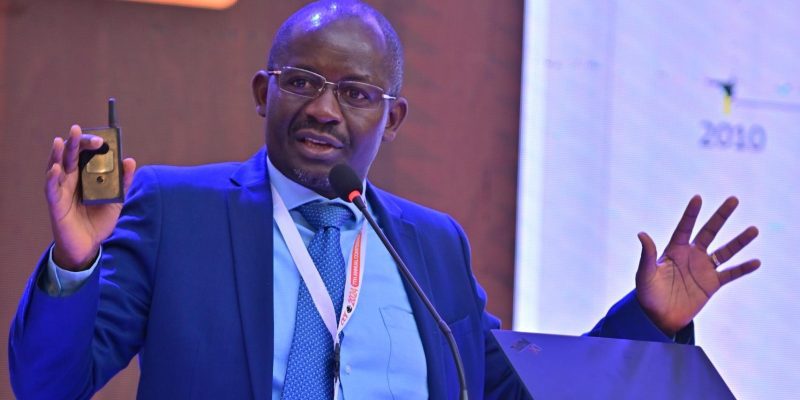
Dr Gerald Banaga-Baingi, the Chief Executive Officer (CEO), at the Uganda National Mining Company (UNMC) says he is “surprised” by his interdiction amidst a graft probe by the Inspectorate of Government (IG).
Banaga-Baingi also the first CEO at the UNMC is having a paining head after the Inspectorate of Government (IG) pushing him to the wall with the company secretary Leila Bwambale over several allegations in the government owned agency.
A press statement dated October 22, 2026, the IG directed the Chairperson of the Board of Directors, Maria Kiwanuka to take action with immediate effect.
Article 230(2) of the 1995 Constitution of the Republic of Uganda and Section 13(6) of the IG Act, Cap 32, gives the Inspector General of Government (IGG), the powers to enforce these interventions, where necessary, says report.
As Parliament conducts a validation exercise to establish whether its employees were recruited through proper procedures and possess the required qualifications, similar concerns over irregular recruitment, nepotism, financial mismanagement and obstruction of oversight have intensified the governance crisis at the Uganda National Mining Company (UNMC).
The parliamentary exercise has brought renewed attention to recruitment practices in public institutions, including the appointment of unqualified personnel and relatives of influential individuals.
At UNMC, complaints concerning recruitment practices include the appointment of employees without the required qualifications and the influence of personal connections, favoritism and tribal considerations over professional competence and merit.
Among the concerns raised is the placement of children of at least two board directors on the company’s payroll before the relevant positions were formally advertised, raising questions about nepotism and conflicts of interest.
The recruitment controversy has also exposed tensions between the company’s board and executive management, particularly over access to recruitment and procurement records.
Chief Executive Officer Dr Gerald Banaga-Baingi is accused of resisting requests by the board to provide information concerning staffing decisions and procurement transactions.
The company’s chief corporate and legal affairs officer and company secretary, Lelia K. Bwambale, is accused of supporting the CEO’s refusal instead of advising him to comply with the board’s oversight requirements
The board requires access to corporate records to scrutinize executive decisions, expenditure and compliance with governance procedures.
The dispute reportedly prompted Finance Ministry Permanent Secretary and Secretary to the Treasury Ramathan Ggoobi to order a governance or forensic audit into the company’s operations.
Further concerns emerged when Banaga-Baingi assigned the company secretary to oversee the audit’s logistics, planning and coordination, despite UNMC having a senior administration officer and a chief financial officer.
The decision attracted scrutiny because the company secretary was implicated in the withholding of information sought by the board on matters that triggered the governance dispute.
The escalating concerns culminated in an October 22 directive by the Inspectorate of Government ordering the interdiction of Banaga-Baingi and Bwambale to facilitate investigations into allegations of mal-administration, financial mismanagement and abuse of office.
The Inspectorate directed the board chairperson to make interim arrangements to ensure continuity of operations while investigations proceed.
Despite the Inspectorate’s directive, reports from the company indicate that Banaga-Baingi continued reporting to the office and issuing instructions to staff.
He reportedly returned to the office on Thursday evening, October 22, and again on Friday, October 23, notwithstanding the interdiction.
Complaints concerning his continued access to company premises include accusations of interference with records and attempts to delete or conceal information potentially relevant to investigations.
His reported continued exercise of executive authority has raised concerns about enforcement of the interdiction and the security of procurement, recruitment and financial records.
The Inspectorate had emphasized that officials under investigation should be suspended from exercising their powers to protect the integrity of the process.
The ministry’s position on the implementation of the interdiction, the status of the governance audit and measures to safeguard company records is important as investigations proceed, revealed our police under dog.
Beyond the recruitment dispute and reported defiance of the interdiction, UNMC CEO faces additional accusations relating to procurement, financial controls and management conduct.
Findings attributed to the Auditor General indicate that the company made payments totalling Shs76.2 million for air tickets, catering and other goods and services without the requisite supporting procurement files.
Further concerns relate to expenditure incurred without adequate documentation or necessary board approvals.
The company also reportedly executed only 32.2% of its planned procurement by value, with completed contracts worth Shs921 million against a planned Shs2.86 billion.
Other concerns include contracts reportedly awarded without formally appointed contract managers or contract-management plans, exposing weaknesses in procurement oversight.
Complaints also accuse the CEO of favoring companies associated with friends and preferred associates when awarding contracts, raising questions about compliance with Public Procurement and Disposal of Public Assets principles.
Further accusations concern a female employee said to have a personal relationship with the CEO, whose appointment to a senior position and responsibilities beyond her formal job description have attracted scrutiny.
Her duties reportedly span procurement, engineering, budget allocation, investments and administration.
She is also accused of influencing contracts committee decisions in favor of bidders preferred by the CEO.
The allegations raise questions about conflicts of interest, recruitment practices, procurement integrity and the concentration of executive authority.
For UNMC, which manages Uganda’s commercial interests in the mining sector, the widening governance dispute places renewed scrutiny on accountability, protection of public resources and effective board oversight.
Meanwhile In January 2026, UNMC entered into a Mineral Production Sharing Agreement (MPSA) with a joint private consortium consisting of Sarrai Group Ltd and Nile Fibreboard Ltd to develop the Kilembe copper mines project.
The Ministry of Energy and Mineral Development holds a 51 percent stake in UNMC, while the Ministry of Finance, Planning and Economic Development holds the rest.
Meanwhile recently, Mr. James Mukasa Ssebugenyi also board chairperson & his deputy James Byagaba where kicked out with a few other staff members as the former Finance Minister, Kiwanuka, who was a board member was elevated to chairperson in acting capacity.