

As Uganda celebrates 64 years of Independence, the story of Engineer Brian Kibuule highlights the importance of homegrown engineering expertise in building a connected, resilient and economically prosperous nation.
Uganda’s 64th Independence anniversary provides an opportunity to reflect not only on the country’s political journey since 9 October 1962, but also on the professionals whose knowledge, technical expertise and dedication help transform national aspirations into practical development.
Among the professionals whose careers deserve examination is Engineer Brian Kibuule, a Ugandan registered practicing civil engineer whose reported experience spans structural engineering, construction, bridge design and infrastructure supervision.
His professional journey offers an important perspective on the relationship between engineering, national development and Uganda’s pursuit of reliable public infrastructure.
As the country celebrates the reopening of the reconstructed Katonga Bridge along the Kampala–Masaka Highway, attention has naturally turned to the engineers, contractors, consultants, technicians and public institutions whose combined efforts made the restoration possible.
For motorists and traders, the bridge represents restored mobility. For farmers, it offers a more dependable route to markets. For transport operators, it represents an opportunity to reduce costly diversions. For Uganda, it is a reminder that the quality of engineering infrastructure can influence the pace and direction of economic development.
But beyond the concrete, steel and structural calculations lies a broader question: How have Ugandan engineering professionals such as Brian Kibuule contributed, directly or indirectly, to the country’s development?
KATONGA BRIDGE: A SYMBOL OF RESILIENCE AND NATIONAL CONNECTIVITY
The reconstruction of Katonga Bridge is one of the significant infrastructure stories shaping Uganda’s development narrative in 2026.
Located along the Kampala–Masaka Highway, the bridge forms part of a strategic transport corridor linking the capital and central Uganda with Masaka, southwestern Uganda and regional markets connected to Tanzania, Rwanda, Burundi and the Democratic Republic of the Congo.
In May 2023, flooding severely damaged the former bridge, disrupting traffic and forcing motorists to use alternative routes. The resulting delays increased travel distances, fuel consumption and transportation costs, while businesses along the affected corridor experienced reduced customer traffic.
The disruption demonstrated how the failure of a single piece of infrastructure can affect an extensive network of economic and social relationships.
According to reporting by New Vision and other Ugandan news organisations, the reconstruction involved a raised 80 meters span bridge, approach-road works and improvements intended to make the crossing more resilient to flooding. The project was undertaken by China Communications Construction Company in partnership with the Government of Uganda, under a programme reported to be worth approximately UGX191 billion.
Normal traffic resumed following the reopening of the reconstructed bridge in October 2026.
These developments illustrate the importance of engineering solutions that consider not only the immediate need to restore traffic, but also the long-term behaviour of rivers, floodplains, foundations and surrounding transport infrastructure.
Sources: New Vision, reporting on the reopening of Katonga Bridge; Nilepost, 2 October 2026.
WHO IS ENGINEER BRIAN KIBUULE?
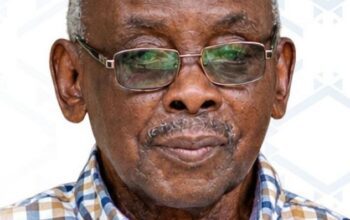
Engineer Brian Kibuule is a licensed civil engineer registered with the Uganda Engineers Registration Board (ERB).
He holds a Bachelor of Science in Civil Engineering from Makerere University and has attained several professional certifications, including Project Management Professional (PMP) from the Project Management Institute (USA), Occupational Safety and Health Professional from OSH Academy (USA), and Road Safety Engineering from the European Bank for Reconstruction and Development (EBRD).
His career spans major infrastructure projects in Uganda. He began as a civil engineer with Sino Hydro Co. Ltd, contributing to construction works on the Karuma Hydropower Project.
He later served as a structural engineer at KOM Consult Ltd, where he was engaged in bridge design and supervision of construction works.
He advanced to the role of Bridge Engineer at Kaburu Okelo Consulting Engineers Ltd, overseeing the design and construction supervision of bridges and drainage structures.
Currently, Engineer Kibuule serves as Regional Project Engineer – Roads and Bridges under the Office of the Prime Minister, working on DRDIP II Projects. His responsibilities include managing road and bridge infrastructure to support regional development, ensuring compliance with technical standards, and supervising construction for quality and safety.
These areas of professional practice are central to the development of durable infrastructure.
Civil engineers translate technical designs into roads, bridges, drainage systems and other facilities that support daily economic activity. Structural engineers examine how infrastructure responds to loads, movement, environmental conditions and other forces that could affect its safety and performance.
Bridge engineers combine these disciplines to develop crossings capable of carrying traffic safely while responding to the characteristics of the rivers, soils and landscapes in which they are constructed.
The Engineers Registration Board’s published professional record lists Kibuule Brian under registration number ERB.1810, with a registration date of 4 April 2024.
This provides a historical reference for his professional recognition in Uganda. His current registration and practising status should be confirmed with the regulator when required.
Source: Engineers Registration Board of Uganda, professional profile published in connection with World Engineering Day 2025.
THE KATONGA QUESTION: WAS BRIAN KIBUULE PART OF THE ENGINEERING TEAM?
The reconstructed Katonga Bridge provides an important starting point for examining the relationship between Brian Kibuule’s professional expertise and Uganda’s infrastructure transformation.
His reported specialisation in bridge engineering makes his professional field directly relevant to the technical challenges associated with the project.
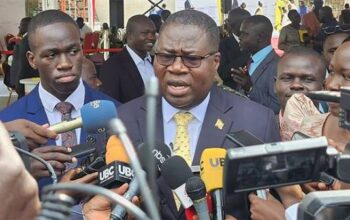
In an Interview with Engineer Brian Kibuule regarding – Katonga Bridge Project
On 9 October 2026, Engineer Brian Kibuule shared insights into the parties involved in the reconstruction of the Katonga Bridge and his personal role as a bridge engineer.
He identified China Communications Construction Company (CCCC) as the contractor responsible for the reconstruction, working in collaboration with PROME Consult Ltd, the engineering consultants representing the Ministry of Works and Transport (Government of Uganda).
Engineer Kibuule was deployed by PROME Consult as a Resident Assistant Bridge Engineer. Given that the project was delivered under a Design and Build Contract, he contributed to the structural analysis and design review of the Katonga Bridge and was part of the team overseeing construction supervision throughout the project.
His professional engagement therefore illustrates the broader role of Uganda’s engineers in delivering complex national infrastructure. His experience on the Katonga Bridge provides a valuable lens through which to appreciate how the country’s engineering profession contributes to national development and resilience in transport infrastructure.
BEYOND CONCRETE AND STEEL: THE SCIENCE OF BRIDGE ENGINEERING
A bridge is much more than a structure connecting two sides of a river.
It is an engineered system involving structural loads, foundations, soil behaviour, water movement, environmental exposure, construction quality and long-term maintenance.
The Katonga disaster demonstrated the consequences of infrastructure vulnerability to flooding. The reconstruction, in turn, highlighted the need for engineering solutions that consider the environmental conditions that contributed to the original failure.
Bridge engineers must understand the relationship between the structure and its surroundings.
River crossings require appropriate assessment of water levels, flow conditions, erosion risks, foundation stability and the capacity of the structure to accommodate anticipated traffic.
Where flooding is a major risk, simply rebuilding the previous structure may not provide a satisfactory long-term solution. Engineers must examine whether changes in bridge elevation, span, drainage and approach-road design are necessary.
Kibuule’s publicly reported specialization in bridge design and drainage supervision places his professional field within this important area of national development.
His published technical discussion of integral bridges further illustrates his engagement with advanced structural and geotechnical concepts.
Integral bridges are designed so that the deck and abutments act together without conventional expansion joints and bearings at the abutments. Their behaviour requires careful consideration of temperature changes, soil pressure, foundation response and repeated movement over time.
Such technical subjects demonstrate why modern infrastructure development depends on engineers who can integrate structural analysis with an understanding of geotechnical conditions.
Uganda’s future infrastructure resilience will depend partly on the capacity of its engineering profession to apply such knowledge to the country’s diverse physical environments.
KARUMA HYDROPOWER PROJECT: EXPERIENCE IN A STRATEGIC NATIONAL DEVELOPMENT
Another significant aspect of Engineer Brian Kibuule’s professional background is his involvement with Sino Hydro Co. Ltd during the construction of the 600 MW Karuma Hydropower Project in Northern Uganda.
The project comprised extensive civil and structural works, including a dam with a design span of 314.4 m, a height of 14 m, and a crest width of 6 m. Major underground works featured six tailrace branch tunnels, two main tailrace tunnels, and intake shafts each 70 m deep with a diameter of 7.7 m. The headrace tunnels extended 146 m, while the tailrace tunnels reached approximately 8.7 km in length.
As a Civil Engineer/Quality Controller under Sino Hydro, Engineer Kibuule contributed to critical aspects of the project. His responsibilities included drafting and reviewing work methods for excavation of underground tunnels, concrete placement, anchor bar installations, and grouting operations. He also undertook inspection and supervision of civil works on site, covering steel fabrication, concrete works, excavation and rock blasting for tailrace tunnels, anchor bar installation, grouting, and repair works.
The Karuma Hydropower Project is a cornerstone of Uganda’s electricity infrastructure. Delivering such a facility demands rigorous civil engineering expertise in structural coordination, construction sequencing, quality assurance, and multidisciplinary collaboration. Engineers working on projects of this scale must address complex requirements in concrete structures, foundations, and compliance with technical specifications.
Reliable electricity underpins manufacturing, commerce, education, healthcare, communications, and household welfare. By contributing to Karuma’s development, Engineer Kibuule exemplifies how technical professionals indirectly drive national development, enabling the infrastructure upon which other sectors depend.
ENGINEERING AND UGANDA’S ECONOMIC TRANSFORMATION
Uganda’s development ambitions depend on more than the availability of financial resources. They also require the technical capacity to plan, design, construct, operate and maintain infrastructure that supports productive economic activity.
Roads and bridges reduce physical barriers between producers and markets. Electricity infrastructure supports commercial and industrial operations. Drainage systems protect transport networks and settlements from water-related damage.
These relationships help explain why the development of local engineering expertise should be treated as a national priority.
Professionals such as Brian Kibuule work within a technical discipline that has implications for economic productivity, public safety and the efficient use of public resources.
Their potential contribution can be examined through several development pathways.
1. Improving transport connectivity
Well-designed bridges help connect communities that would otherwise face difficult or unreliable crossings.
For agricultural communities, dependable road infrastructure can improve access to produce markets, storage facilities, processing centres and distribution networks.
For businesses, it can make delivery schedules more predictable and reduce transport-related uncertainty.
The reopening of Katonga Bridge illustrates the importance of restoring reliable connectivity along a major national transport corridor.
2. Supporting regional trade
The Kampala–Masaka Highway carries passengers and goods between central Uganda, southwestern districts and regional destinations.
Disruption along this corridor can affect transport operators, exporters, importers, wholesalers, retailers and consumers.
Reliable bridge infrastructure helps reduce interruptions along these interconnected supply chains.
Engineering professionals who contribute to the design, supervision and maintenance of such infrastructure can therefore support the wider environment in which regional trade takes place.
3. Protecting public investment
Infrastructure projects often require substantial public expenditure.
Engineering analysis, proper supervision, material testing and effective quality assurance can help reduce avoidable construction defects and premature deterioration.
Where a design responds appropriately to flooding, soil conditions and traffic demand, the resulting structure may provide more dependable service over its intended lifespan.
The economic value of engineering expertise is therefore not measured only by the structures completed. It must also be assessed through their durability, safety, performance and maintenance requirements.
4. Strengthening public safety
Bridges are critical public assets. Their failure can cause injuries, fatalities, economic losses and the isolation of communities.
Professional engineering practices help identify risks, assess structural performance and establish appropriate construction and maintenance standards.
The responsibility of bridge engineers extends beyond completing a project: it includes ensuring that the design and construction process meets applicable technical and safety requirements.
5. Expanding access to essential services
Transport infrastructure influences whether people can reach schools, hospitals, markets, workplaces and administrative centres within reasonable time and cost.
A dependable bridge can improve access to these services for communities on both sides of a river.
The social value of infrastructure is therefore measured not only in kilometres constructed, but also in the opportunities made accessible to the population.
THE HUMAN SIDE OF ENGINEERING: COMMUNITIES, FARMERS AND SMALL BUSINESSES
When a major bridge becomes impassable, the consequences are felt by ordinary people long before they appear in national economic statistics.
A farmer may struggle to transport perishable produce. A trader may face higher delivery costs. A patient may encounter delays while travelling to a health facility. A student may spend more time travelling to school.
Small businesses near an affected transport corridor may experience a decline in customers as vehicles are diverted elsewhere.
The disruption caused by the Katonga floods demonstrated these connections between infrastructure and everyday life.
Restoring the crossing consequently represents more than an engineering achievement. It is also a step towards restoring economic and social relationships that depend on reliable movement.
This is why Uganda should recognize engineering as a public service profession whose benefits extend across social and economic boundaries.
The contribution of an engineer is not always visible to the people who use a bridge. Yet the quality of the engineering work can influence whether a journey is safe, whether goods arrive on time and whether a community remains connected during difficult weather conditions.
HOMEGROWN ENGINEERING TALENT AND NATIONAL DEVELOPMENT
As Uganda celebrates 64 years of independence, the development of local technical capacity deserves renewed attention.
The country needs engineers capable of undertaking increasingly complex assignments, understanding local environmental conditions and applying internationally recognized technical standards.
Makerere University and other institutions of higher learning play an important role in preparing the professionals who enter these fields.
Professional bodies and regulators also have responsibilities in maintaining standards, promoting ethical practice and encouraging continuing professional development.
Kibuule’s reported educational background at Makerere University and subsequent professional experience illustrate one pathway through which engineering graduates can enter the infrastructure sector.
However, the long-term value of engineering education depends on the opportunities available to graduates to develop their skills, gain practical experience and participate in increasingly demanding assignments.
Uganda must therefore continue investing in engineering education, laboratory facilities, research, technical training and collaboration between universities, consulting firms, contractors and government institutions.
Local professionals should be given opportunities to participate meaningfully in national infrastructure projects, including technical design, construction supervision, research and project management.
Such participation can strengthen institutional memory, develop specialised skills and increase the country’s capacity to maintain infrastructure over time.
FROM PROJECT DELIVERY TO KNOWLEDGE TRANSFER
Major infrastructure projects can provide opportunities for knowledge transfer between Ugandan and international professionals.
International contractors may bring specialized equipment, technical systems and experience from projects undertaken in other countries. Ugandan engineers contribute knowledge of local conditions, regulatory requirements, construction environments and national development priorities.
When these capabilities are combined effectively, infrastructure projects can become platforms for professional development as well as physical construction.
The challenge is to ensure that knowledge transfer is deliberate rather than incidental.
Uganda can strengthen this process by encouraging structured mentoring, technical documentation, graduate-engineer placements, professional training and collaboration between contractors and local engineering institutions.
Engineers with experience in structural design, bridges and drainage systems can also contribute to continuing professional education by sharing technical lessons from completed projects and explaining how design decisions influence infrastructure performance.
Kibuule’s publicly available technical discussion of integral bridges is an example of how engineering knowledge can be communicated beyond the immediate construction site.
Such knowledge-sharing activities can help students and young professionals appreciate the analytical thinking required to develop safe and durable structures.
CLIMATE CHANGE AND THE FUTURE OF UGANDA’S INFRASTRUCTURE
The Katonga experience also raises a broader national question: Is Uganda’s infrastructure sufficiently resilient to extreme weather events?
Flooding, erosion, drainage failure and changing environmental conditions can damage roads, bridges and public facilities.
Infrastructure planning must therefore consider not only historical conditions but also the possibility of more demanding future conditions.
For bridge engineers, this means giving appropriate attention to hydrological assessment, waterway capacity, scour, foundation protection, structural performance and the condition of approach roads.
For road authorities and policymakers, it means prioritizing vulnerable infrastructure, maintaining drainage systems and ensuring that rehabilitation programmes address the underlying causes of repeated damage.
The lessons of Katonga should inform planning for other vulnerable crossings and road sections throughout the country.
Uganda cannot eliminate every natural hazard. It can, however, improve its preparedness through sound engineering, reliable monitoring, effective maintenance and evidence-based investment decisions.
The national objective should be infrastructure that does not merely function under ordinary conditions, but also has an appropriate capacity to withstand foreseeable environmental stresses.
ACCOUNTABILITY, PROFESSIONAL RECOGNITION AND THE IMPORTANCE OF EVIDENCE
Celebrating Uganda’s engineers should go hand in hand with maintaining high standards of accountability.
Large infrastructure projects involve numerous participants, including government agencies, project owners, contractors, design consultants, supervising engineers, material suppliers, surveyors and technicians.
Each participant may have a distinct role in delivering the final structure.
Recognizing an individual engineer’s achievements therefore requires evidence of the person’s actual responsibilities and contributions.
In Kibuule’s case, the available public profile establishes a professional background relevant to bridge engineering, structural engineering and infrastructure construction.
However, a direct claim that he was the principal engineer behind the reconstructed Katonga Bridge requires confirmation from project records.
Such confirmation could come from the project’s engineering organisation chart, consultant documentation, technical reports, signed design records or an authoritative statement from the contractor or supervising consultant.
These records would allow the public to understand his specific contribution without confusing professional expertise with project assignment.
Responsible recognition is important because it protects the integrity of both the individual professional and the wider engineering profession.
It also ensures that the engineers, technicians and institutions responsible for major national achievements receive appropriate credit.
WHAT UGANDA CAN LEARN FROM THE KATONGA EXPERIENCE
The reconstruction of Katonga Bridge offers several lessons for the country’s infrastructure policy.
First, prevention and resilience matter. Infrastructure should be designed with appropriate consideration of the environmental conditions that can threaten its performance.
Second, maintenance is a development investment. Routine inspection, drainage maintenance and timely repairs can help prevent relatively small defects from becoming major failures.
Third, technical competence must be supported by effective institutions. Engineers require sound procurement systems, reliable project information, professional independence and appropriate supervision to deliver quality infrastructure.
Fourth, local engineering expertise should be strengthened. Ugandan engineers need opportunities to participate in research, design, construction supervision and the management of strategic projects.
Fifth, public infrastructure must deliver measurable benefits. Project evaluation should examine safety, durability, traffic performance, maintenance costs and the extent to which communities and businesses benefit.
Finally, professional recognition should be evidence-based. Celebrating individual engineers is most meaningful when their responsibilities and achievements are clearly documented.
These lessons extend beyond Katonga to Uganda’s wider network of roads, bridges, drainage structures, power facilities and public buildings.
ENGINEER BRIAN KIBUULE AND THE NEXT CHAPTER OF UGANDA’S DEVELOPMENT
Brian Kibuule’s reported career offers an opportunity to recognize the importance of professional engineering in Uganda’s national transformation.
His reported experience in civil engineering, structural engineering, hydropower construction and bridge design reflects the range of technical capabilities required to deliver modern infrastructure.
His professional profile also illustrates the importance of combining academic preparation with practical experience and continuing engagement with engineering knowledge.
Nevertheless, the strongest assessment of his individual impact will depend on further documentation of the projects he has handled, the responsibilities he has undertaken and the outcomes associated with his work.(By Don Edwarles MKM/Gateway News)